

Importance and research progress of membrane proteins in biopharmaceuticals


Membrane proteins are important components of cell membranes, accounting for more than 25% of all cell proteomes. They play a key role in physiological activities such as cell signaling, material transport, cell adhesion and transmembrane transport.
- Recent Advances
- Product Information
Importance and research progress of membrane proteins in biopharmaceuticals
Membrane proteins are important components of cell membranes, accounting for more than 25% of all cell proteomes. They play a key role in physiological activities such as cell signaling, material transport, cell adhesion and transmembrane transport. Due to these important functions of membrane proteins, they have extremely high drug value in drug development, accounting for about 50% of known potential drug targets. In addition, membrane proteins are also natural entry or anchoring sites for infectious pathogens, and their dysfunction is associated with a variety of diseases, such as cystic fibrosis and Alzheimer's disease. Therefore, studying the structure and function of membrane proteins is of great significance for the development of new treatments.
Challenges of membrane protein expression
Despite the important value of membrane proteins in biopharmaceuticals, their research and production face many challenges. First, the expression and purification process of membrane proteins is complicated because they need to bind to the cell membrane to function. Second, the correct folding and function of membrane proteins depend on the specific environment within the cell, which makes it difficult to maintain their native conformation when expressing and purifying membrane proteins in vitro. In addition, the hydrophobicity of membrane proteins makes them easy to aggregate during purification, further increasing the difficulty of research.
Comparison between prokaryotic and eukaryotic expression systems
To overcome these challenges, researchers have developed a variety of membrane protein expression systems, mainly including prokaryotic expression systems and eukaryotic expression systems.
Prokaryotic expression system: Prokaryotic expression systems represented by Escherichia coli (E. coli) are widely used because of their simple operation, low cost, and clear genetic background. E. coli grows rapidly and can produce a large amount of protein in a short time, which is suitable for large-scale production. However, prokaryotic systems lack the post-translational modification mechanisms in eukaryotic cells, such as glycosylation and phosphorylation, which may make the expressed membrane proteins lack natural activity. In addition, membrane proteins expressed in prokaryotic systems often exist in the form of inclusion bodies and need to be renatured to restore their natural conformation.
Eukaryotic expression system: Eukaryotic expression systems are capable of complex post-translational modifications, making the expressed membrane proteins closer to the natural state. For example, eukaryotic systems such as yeast, insect cells, and mammalian cells can perform modifications such as glycosylation and phosphorylation to improve the activity of membrane proteins. However, the operation of eukaryotic systems is relatively complex, the cost is high, and the expression level is usually low.
Role of holo-translocon (HTL)
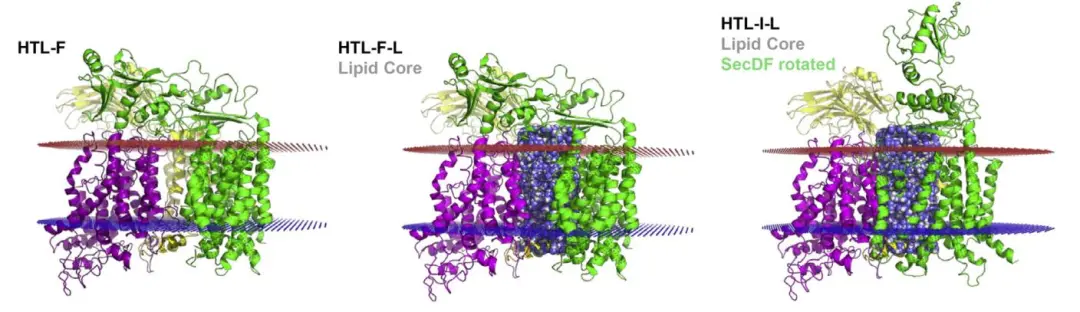
In order to improve the expression efficiency of membrane proteins, researchers began to focus on the membrane protein transport machine in Escherichia coli - holo-translocon (HTL). HTL is a large membrane protein complex composed of the bacterial core translocation protein SecYEG and the auxiliary subcomplexes SecDF-YajC and YidC. HTL can efficiently insert membrane proteins into the cell membrane and mediate the secretion of outer membrane proteins. Compared with SecYEG alone, HTL is more effective in the co-translational insertion and post-translational secretion of membrane proteins.
Research progress of holo-translocon (HTL)
In recent years, researchers have successfully isolated HTL through genetic engineering technology and conducted in-depth research on its structure and function. Studies have shown that HTL can not only insert membrane proteins into the cell membrane, but also promote the post-translational secretion of outer membrane proteins. In addition, the activity of HTL can be regulated by binding to different auxiliary subcomplexes, which provides the possibility of improving the secretion and insertion ability of HTL according to different transport substrate requirements.
Conclusion
Membrane proteins have important application prospects in biopharmaceuticals, but their expression and purification processes face many challenges. Prokaryotic and eukaryotic expression systems each have their own advantages and disadvantages, and the selection of a suitable expression system needs to be weighed according to the specific research purpose and experimental conditions. HTL, as an efficient membrane protein transport machine, provides a new idea for improving the expression efficiency of membrane proteins. In the future, with further research on the structure and function of HTL, it is expected that more effective membrane protein expression and purification methods will be developed to promote the development of the biopharmaceutical field.
This article is reviewed and published by the technical expert team of UA
Disclaimer: This article partially utilizes artificial intelligence assistance in its creation. If any content involves copyright or intellectual property issues, please let us know and we promise to verify and remove it as soon as possible.
Purchase recombinant protein, choose 
UA protein focuses on providing various protein reagents, raw materials, and services required for drug research and development, cell therapy, gene therapy, and basic scientific research, including drug target proteins, immune checkpoint proteins, cytokines, tool enzymes, customized protein expression, and full-length transmembrane protein development. Nanjing Univ is committed to providing customers with high-quality products and professional services, and building a High-tech Biological Enterprise with International Competitiveness.







 Business license (three certificates in one)