Cell cultured meat: a new choice for future food


Cell cultured meat is edible meat produced by animal cell culture, which has many potential advantages such as reducing animal slaughter, shortening the meat production cycle, and being green and efficient.
- Recent Advances
- Product Information
Cell cultured meat: a new choice for future food
With the continuous growth of the global population, traditional animal husbandry faces problems such as high resource consumption, serious environmental pollution and animal welfare. As an emerging food technology, cell cultured meat has gradually entered the public's field of vision. Cell cultured meat is edible meat produced by animal cell culture, which has many potential advantages such as reducing animal slaughter, shortening the meat production cycle, and being green and efficient.
Production process of cell cultured meat
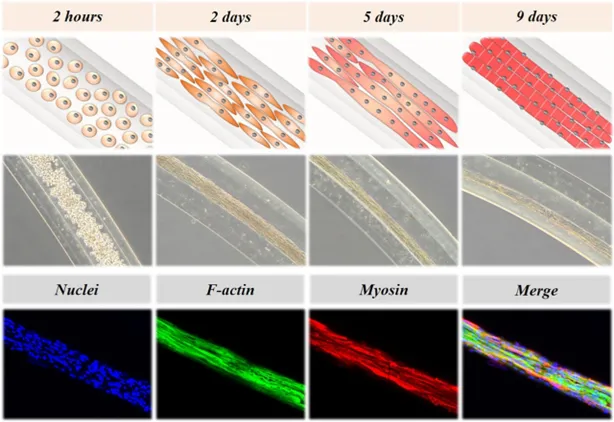
The production of cell cultured meat mainly includes the following steps: first, a small part of cells is extracted from the animal as "seeds", which becomes the starting point for the cultivation and expansion of cell cultured meat; then, the growth environment of cells in the animal body is simulated to provide them with sufficient nutrients to help them achieve exponential expansion; then, biological scaffolds or 3D printing technology are used to make cells form the tissue structure of meat; finally, the taste and texture of meat are further restored through food science.
Advantages of cell cultured meat
Cell cultured meat has many advantages. First, it can reduce the negative impact of traditional animal husbandry on the environment, such as reducing greenhouse gas emissions and saving land and water resources. Secondly, the production process of cell-cultured meat is more controllable, which can avoid problems such as antibiotic residues and hormone residues that may occur in traditional meat production, thereby improving food safety. In addition, the production cycle of cell-cultured meat is short, and it can supply the market more stably, and is not affected by natural disasters, epidemics and other factors.
Research progress of cell-cultured meat
In recent years, the research of cell-cultured meat has made significant progress. Professor Zhou Guanghong's team at Nanjing Agricultural University has made many breakthroughs in the field of cell-cultured meat, such as successfully separating high-purity pig muscle stem cells and cattle muscle stem cells, and developing China's first muscle stem cell cultured meat. In addition, the team has greatly improved the production efficiency of cell-cultured meat by optimizing culture conditions and technological innovation.
Challenges faced by cell-cultured meat
Although cell-cultured meat has many advantages, it still faces some challenges. First, the production cost of cell-cultured meat is high, which limits its large-scale commercialization. Secondly, consumers have a low acceptance of cell-cultured meat, mainly because of concerns about its safety, taste and nutritional value. In addition, the production technology of cell-cultured meat still needs to be further improved, such as improving the proliferation and differentiation efficiency of cells and optimizing the composition of the culture medium.
Future Prospects of Cell-cultured Meat
Cell-cultured meat, as a sustainable way of meat production, has broad development prospects. With the continuous advancement of technology and the reduction of costs, cell-cultured meat is expected to become an important supplement to traditional meat in the future. At the same time, the government and relevant agencies are also actively promoting the standardization and regulatory system construction of cell-cultured meat to ensure its safety and market competitiveness.
In short, as a new type of food technology, cell-cultured meat can not only meet people's demand for meat, but also reduce the impact on the environment and improve food safety. With the deepening of research and the maturity of technology, cell-cultured meat is expected to become a common food on people's tables in the future.
This article is reviewed and published by the technical expert team of UA
Disclaimer: This article partially utilizes artificial intelligence assistance in its creation. If any content involves copyright or intellectual property issues, please let us know and we promise to verify and remove it as soon as possible.
Purchase recombinant protein, choose 
UA protein focuses on providing various protein reagents, raw materials, and services required for drug research and development, cell therapy, gene therapy, and basic scientific research, including drug target proteins, immune checkpoint proteins, cytokines, tool enzymes, customized protein expression, and full-length transmembrane protein development. Nanjing Univ is committed to providing customers with high-quality products and professional services, and building a High-tech Biological Enterprise with International Competitiveness.







 Business license (three certificates in one)