




Exploring the "social network" of proteins: four major technologies to reveal the secrets of protein interactions


Proteins are the core executors of life activities. They interact with each other to form complex networks and regulate every function of the cell. These interactions are like the "social network" within the cell, which determines how proteins work together to maintain the normal operation of life.
- Recent Advances
- Product Information
Exploring the "social network" of proteins: four major technologies to reveal the secrets of protein interactions
Proteins are the core executors of life activities. They interact with each other to form complex networks and regulate every function of the cell. These interactions are like the "social network" within the cell, which determines how proteins work together to maintain the normal operation of life. However, it is not easy to study the interactions between proteins, especially those that are short-lived, weak, or occur under specific conditions. Fortunately, scientists have developed a series of powerful technologies to help us unveil the mystery of protein interactions. Today, let's take a look at the "four great kings" of these technologies: co-immunoprecipitation (Co-IP), GST pull down, yeast two-hybrid (Y2H) and AP-SWATH.
1. Co-immunoprecipitation (Co-IP): Capturing "real social interaction"
Co-immunoprecipitation is a classic protein interaction research technology that can capture the interaction between proteins in an environment close to physiological conditions. The principle is to use specific antibodies to recognize and bind to the target protein, and then precipitate the antibody-protein complex through protein A/G gel. Through this method, we can detect whether two target proteins interact in vivo (either directly or indirectly), and even use mass spectrometry to find all interacting proteins of a protein in vivo.
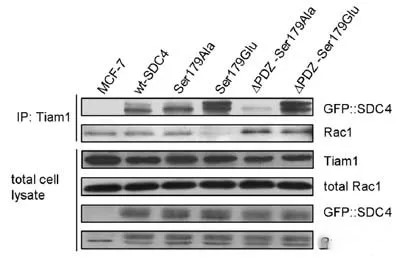
2. GST pull down: in vitro "fishing" experiment
GST pull down technology is a method for detecting protein interactions in vitro. It uses glutathione S-transferase (GST) tag protein as "bait" to "fish out" proteins that interact with it from cell lysate. This method can help us determine the interaction relationship between known proteins, and even detect protein interactions from in vitro translation systems.
3. Yeast two-hybrid (Y2H): sensitive "protein matchmaking"
Yeast two-hybrid technology is a powerful tool for studying protein interactions, especially for low-expression or transiently expressed proteins. Its principle is to use transcription factors in yeast cells to activate the expression of reporter genes. When two target proteins interact, the reporter gene is activated, resulting in a detectable signal. This method can not only screen interacting proteins, but also verify the interaction between proteins.
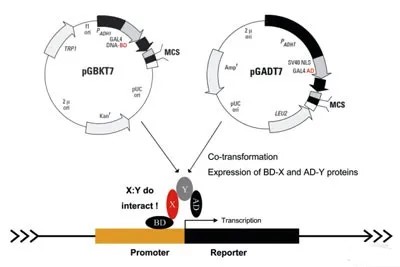
4. AP-SWATH: Drawing a "social map" of proteins
AP-SWATH is an advanced method that combines affinity purification (AP) and SWATH mass spectrometry. It captures the target protein and its interacting partners through specific tags, and then uses SWATH mass spectrometry for high-throughput and high-sensitivity protein identification. This method can capture protein complexes under near-physiological conditions and draw detailed protein interaction networks.
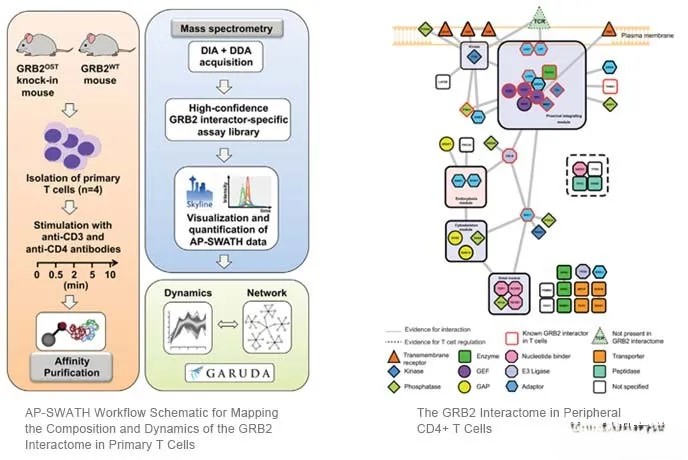
Conclusion: The future of protein interaction research
Protein interaction is one of the core issues in life sciences, and technologies such as co-immunoprecipitation, GST pull down, yeast two-hybrid and AP-SWATH provide us with powerful tools to help us deeply understand the complex relationships between proteins. These technologies have their own advantages. Co-immunoprecipitation can provide interaction information close to physiological conditions, GST pull down is suitable for in vitro verification of direct interactions, yeast two-hybrid has high sensitivity to low-expressed proteins and transient interactions, and AP-SWATH can draw detailed protein interaction networks. With the continuous advancement of technology, we are expected to reveal the "social network" of proteins more comprehensively and provide new ideas and methods for disease treatment and drug development.
This article is reviewed and published by the technical expert team of UA
Disclaimer: This article partially utilizes artificial intelligence assistance in its creation. If any content involves copyright or intellectual property issues, please let us know and we promise to verify and remove it as soon as possible.
Purchase recombinant protein, choose Nanjing UA-Bio
UA protein focuses on providing various protein reagents, raw materials, and services required for drug research and development, cell therapy, gene therapy, and basic scientific research, including drug target proteins, immune checkpoint proteins, cytokines, tool enzymes, customized protein expression, and full-length transmembrane protein development. Youai is committed to providing customers with high-quality products and professional services, and building a High-tech Biological Enterprise with International Competitiveness.







 Business license (three certificates in one)