




Ficin and Vitamin C Detection


Ficin is a thiol protease extracted from fig tree latex and immature fruit latex, with multiple biological activities.
- Recent Advances
- Product Information
Ficin and Vitamin C Detection
Ficin is a thiol protease extracted from fig tree latex and immature fruit latex, with multiple biological activities. In addition to the traditional proteolytic function, recent studies have found that ficin also has peroxidase mimetic activity, which can catalyze hydrogen peroxide (H₂O₂) to produce hydroxyl radicals (·OH), thereby oxidizing a series of substrates, such as 2,2'-azobis(3-ethylbenzothiazoline-6-sulfonic acid) diammonium salt (ABTS), etc., to produce a color reaction. This characteristic makes it show great application potential in the field of biological detection.
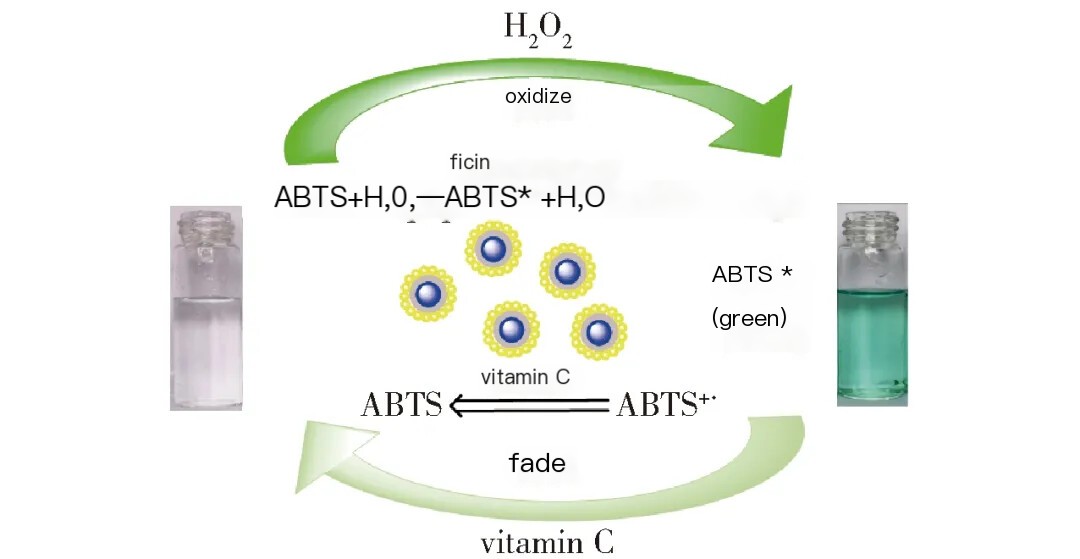
Vitamin C (ascorbic acid) is an important antioxidant, widely present in fresh fruits and vegetables, and has many benefits to human health, such as enhancing immunity and preventing diseases. However, vitamin C is easily oxidized during food processing and storage, so accurate detection of vitamin C content in food is crucial for evaluating the nutritional value and quality of food.
Based on the peroxidase-mimicking activity of ficin, a research team from the School of Food Engineering at Harbin University of Commerce established a rapid and sensitive colorimetric detection method for detecting the vitamin C content in food. The core principle of this method is that ficin can catalyze H₂O₂ to produce hydroxyl radicals, which in turn oxidize the ABTS substrate to cause a color reaction and generate green ABTS+·. Vitamin C has strong antioxidant properties and can scavenge free radicals, thereby inducing the green ABTS+· to be reduced to colorless ABTS. As the vitamin C content increases, the green system gradually becomes lighter until it completely fades. By measuring the absorbance change of the solution, the quantitative analysis of the vitamin C content can be achieved.
The research team optimized the detection method and determined the optimal reaction conditions: H₂O₂ concentration of 0.5 mol/L, ficin mass concentration of 0.5 μg/mL, reaction temperature of 50°C, and incubation time of 30 seconds. Under these conditions, the vitamin C concentration showed a good linear relationship with the absorbance in the range of 0.001 to 0.080 mmol/L, the linear regression equation was y=7.381x+0.1091, the correlation coefficient R² value was 0.9923, and the detection limit was 0.43 μmol/L. This shows that the method has high sensitivity and good linearity.
In addition, the spike recovery rate of the colorimetric detection method was between 95% and 105%, indicating good selectivity and stability. This means that the method can not only accurately detect the vitamin C content in food, but also has high reliability and repeatability in practical applications.
As a natural plant protease, fig protease has the advantages of abundant sources, low cost, safety and reliability, and no toxic side effects. Compared with traditional chemical reagents, the application of fig protease in food detection is more environmentally friendly and economical. In addition, the peroxidase-mimicking activity of fig protease enables it to maintain a high catalytic efficiency in a wide acid-base environment, temperature range, and the presence of inhibitors, which makes the detection method more adaptable and stable in practical applications.
In summary, the colorimetric detection method of vitamin C based on the peroxidase mimetic activity of ficin not only has the advantages of high sensitivity, high selectivity and rapid detection, but also shows broad application prospects in food analysis, biochemistry and pharmaceutical applications. With further research and development, this method is expected to become a standard vitamin C detection method, providing strong support for food quality and safety testing.
This article is reviewed and published by the technical expert team of UA
Disclaimer: This article partially utilizes artificial intelligence assistance in its creation. If any content involves copyright or intellectual property issues, please let us know and we promise to verify and remove it as soon as possible.
Purchase recombinant protein, choose Nanjing UA-Bio
UA protein focuses on providing various protein reagents, raw materials, and services required for drug research and development, cell therapy, gene therapy, and basic scientific research, including drug target proteins, immune checkpoint proteins, cytokines, tool enzymes, customized protein expression, and full-length transmembrane protein development. Youai is committed to providing customers with high-quality products and professional services, and building a High-tech Biological Enterprise with International Competitiveness.







 Business license (three certificates in one)