




B7-H3 and B7-H4: New Targets for Immunotherapy


In the battlefield of cancer treatment, immunotherapy is gradually becoming a key force to change the rules of the game. In recent years, scientists have discovered a new class of immune checkpoint proteins - B7-H3 and B7-H4, which are abnormally expressed in many cancers and have become new targets for immunotherapy.
- Recent Advances
- Product Information
B7-H3 and B7-H4: New Targets for Immunotherapy
In the battlefield of cancer treatment, immunotherapy is gradually becoming a key force to change the rules of the game. In recent years, scientists have discovered a new class of immune checkpoint proteins - B7-H3 and B7-H4, which are abnormally expressed in many cancers and have become new targets for immunotherapy.
B7-H3 and B7-H4: New members of immune checkpoints
B7-H3 and B7-H4 are type I transmembrane proteins and belong to the B7 family. The B7 family is a class of co-stimulatory molecules found on activated antigen-presenting cells. More than 10 B7 protein molecules have been discovered, among which B7-1 (CD80), B7-2 (CD86), B7-H1 (PD-L1) and B7-H2 have been studied more. In recent years, the research on B7-H3 and B7-H4 has also gradually increased.
Studies have shown that abnormal expression of B7-H3 and B7-H4 is closely related to a variety of cancers, such as colon cancer, breast cancer, liver cancer, and lung cancer. For example, a recent study by Zhao et al. in Science found that in prostate cancer with PTEN and TP53 defects, tumor cells specifically upregulated the expression of the immune checkpoint B7-H3. Kenneth et al. reported in Immunity that inhibiting the expression of B7-H3 and B7-H4 may benefit a wider group of colorectal cancer patients. B7-H4 is also highly expressed in a variety of human tumors, such as endometrial cancer (94%), cholangiocarcinoma (89%), breast cancer (HER2-positive 78%, TNBC 74%, ER-positive 74%), and ovarian cancer (77%).
B7-H3 and B7-H4: New Targets for Immunotherapy
Despite the increasing importance of B7-H3 and B7-H4, there are no FDA-approved treatments or drugs targeting B7-H3 and B7-H4 to date. However, scientists have explored a variety of anti-B7-H3 and B7-H4 methods, including monoclonal antibodies (mAbs), antibody-dependent cell-mediated cytotoxicity (ADCC),
CAR-T therapy, and antibody-drug conjugates (ADCs).
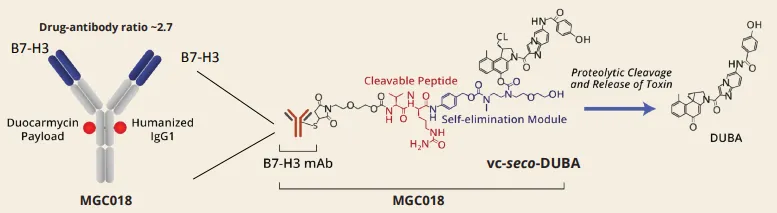
Among them, antibody-drug conjugates (ADCs) are one of the fastest-growing areas in recent years. ADCs are a class of biological drugs designed as targeted therapies for the treatment of cancer, consisting of three parts: an effective cytotoxic anticancer agent, a biodegradable linker, and an antibody. Antibodies bind to specific markers on the surface of cancer cells and selectively deliver cytotoxins to tumor cells, thereby improving efficacy and safety.
At present, 16 different ADCs have been approved for marketing worldwide, of which 7 ADC products have been approved for marketing in China, involving targets including HER2, CD22, Trop-2, and EGFR. Although no ADC products for B7-H3 and B7-H4 have been approved for marketing, there are already several ADC products under clinical development, such as MGC018 and DS-7300a targeting B7-H3, and AZD8205 targeting B7-H4.
B7-H3 and B7-H4: Future Therapeutic Hope
As emerging immunotherapy targets, B7-H3 and B7-H4 have great development potential. With further research on the functions and mechanisms of B7-H3 and B7-H4, scientists are expected to develop more effective targeted drugs. For example, the discovery of the B7-H3 receptor will greatly accelerate the development of effective B7-H3 targeted drugs.
In addition, the continuous advancement of ADC technology has also provided new possibilities for the targeted treatment of B7-H3 and B7-H4. By optimizing the design of ADC and improving its stability and targeting, scientists can further improve the efficacy and safety of ADC. It is estimated that by 2027, the market size of ADC drugs will reach US$27.65 billion, which shows that the ADC field has broad development prospects.
Conclusion
As emerging immunotherapy targets, B7-H3 and B7-H4 have brought new hope for cancer treatment. Although there are currently no FDA-approved drugs targeting B7-H3 and B7-H4, with the continuous deepening of research and continuous advancement of technology, it is believed that more effective B7-H3 and B7-H4 targeted drugs will be available in the future, bringing more treatment options for cancer patients.
This article is reviewed and published by the technical expert team of UA
Disclaimer: This article partially utilizes artificial intelligence assistance in its creation. If any content involves copyright or intellectual property issues, please let us know and we promise to verify and remove it as soon as possible.
Purchase recombinant protein, choose Nanjing UA-Bio
UA protein focuses on providing various protein reagents, raw materials, and services required for drug research and development, cell therapy, gene therapy, and basic scientific research, including drug target proteins, immune checkpoint proteins, cytokines, tool enzymes, customized protein expression, and full-length transmembrane protein development. Youai is committed to providing customers with high-quality products and professional services, and building a High-tech Biological Enterprise with International Competitiveness.







 Business license (three certificates in one)