




"BT+IT": Unlocking the door to the future of synthetic biology


In today's era of rapid technological development, biotechnology (BT) and information technology (IT) are changing our lives at an unprecedented speed. When these two powerful technologies meet, a new technological revolution is quietly unfolding. Today, let us step into the wonderful world of "BT+IT" and find out.
- Recent Advances
"BT+IT": Unlocking the door to the future of synthetic biology
In today's era of rapid technological development, biotechnology (BT) and information technology (IT) are changing our lives at an unprecedented speed. When these two powerful technologies meet, a new technological revolution is quietly unfolding. Today, let us step into the wonderful world of "BT+IT" and find out.
The "marriage" of biotechnology and information technology
Biotechnology, as the name suggests, is the use of the characteristics of organisms to develop new technologies and products. From gene editing to biopharmaceuticals, from synthetic biology to biosensors, the application of biotechnology is broad and far-reaching. Information technology covers computer science, communication technology, artificial intelligence and other aspects, making the processing and transmission of information more efficient and convenient than ever before.
What wonderful chemical reactions will happen when biotechnology meets information technology? The answer is: unlimited possibilities. This interdisciplinary fusion is called "BT+IT", which not only breaks the boundaries of traditional disciplines, but also provides new ideas and methods for solving complex scientific problems.
The birth of living functional materials
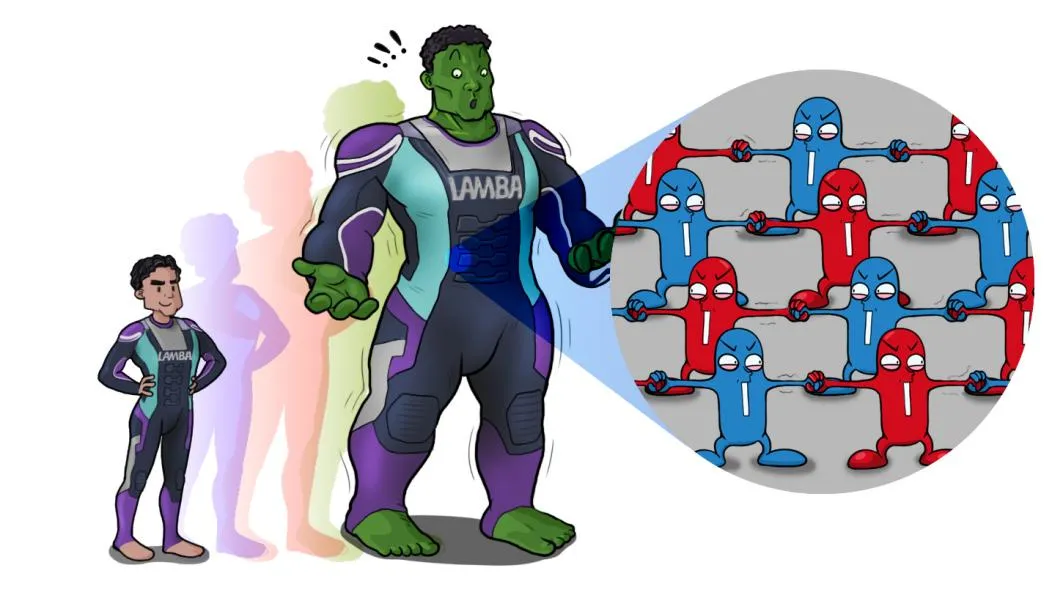
In the fusion of "BT+IT", the emergence of living functional materials is a typical example. Recently, the research groups of Dai Zhuojun and Liu Zhiyuan from the Shenzhen Institute of Advanced Technology of the Chinese Academy of Sciences have developed a new type of living material that can be repaired quickly - LAMBA. This material not only has strong self-repairing ability, but also can realize a variety of intelligent functions through biological programming.
Traditional self-repairing materials often rely on physical or chemical methods, with slow repair speed and single function. LAMBA materials use the antigen-antibody specific binding principle in biotechnology and realize the rapid self-repair of materials through the surface display technology of engineering strains.
This repair process takes only a few minutes, which is dozens or even hundreds of times faster than traditional methods.
Infinite possibilities of smart materials
The intelligence of LAMBA materials lies not only in their rapid repair ability, but also in their programmability. By displaying different enzymes or catalysts on the surface of engineering strains, LAMBA materials can realize a variety of functions. For example, it can decompose toxic pesticides into low-toxic substances, or convert starch into useful products such as trehalose. This programmability gives LAMBA materials great application potential in the fields of environmental protection and bioenergy.
Even more exciting is that LAMBA materials can also be combined with information technology to make wearable devices and biosensors. Due to its excellent stretchability and conductivity, LAMBA materials can be made into flexible sensors for monitoring physiological signals of the human body. These sensors can not only be used for daily health monitoring, but also help people with disabilities control auxiliary equipment such as prostheses or exoskeletons.
Future Outlook
The integration of "BT+IT" not only brings new breakthroughs to materials science, but also provides new ideas for the development of other fields. For example, in the medical field, the combination of biotechnology and information technology can develop more accurate diagnostic tools and more effective treatments; in the agricultural field, this integration can improve the disease resistance and yield of crops; in the field of environmental protection, the combination of biotechnology and information technology can better monitor and control environmental pollution.
In short, "BT+IT" opens a door to the future for us. Through this interdisciplinary integration, we can create more intelligent and adaptive materials and equipment, so that technology can better serve human life. As Dai Zhuojun said: "We hope to explore more interesting research directions through this innovative 'BT+IT' collaborative manufacturing model, and believe that synthetic biology can bring unlimited possibilities."
This article is reviewed and published by the technical expert team of UA
Disclaimer: This article partially utilizes artificial intelligence assistance in its creation. If any content involves copyright or intellectual property issues, please let us know and we promise to verify and remove it as soon as possible.
Purchase recombinant protein, choose Nanjing UA-Bio
UA protein focuses on providing various protein reagents, raw materials, and services required for drug research and development, cell therapy, gene therapy, and basic scientific research, including drug target proteins, immune checkpoint proteins, cytokines, tool enzymes, customized protein expression, and full-length transmembrane protein development. Youai is committed to providing customers with high-quality products and professional services, and building a High-tech Biological Enterprise with International Competitiveness.







 Business license (three certificates in one)