




B-type natriuretic peptide (BNP): "Warning signal" for heart health


In the medical field, there is a magical biomarker - B-type natriuretic peptide (BNP), which is like a "warning signal" for heart health, helping doctors to quickly and accurately diagnose and evaluate heart disease, especially heart failure. Today, let us walk into the world of BNP and understand its important role in heart health.
- Recent Advances
- Product Information
B-type natriuretic peptide (BNP): "Warning signal" for heart health
In the medical field, there is a magical biomarker - B-type natriuretic peptide (BNP), which is like a "warning signal" for heart health, helping doctors to quickly and accurately diagnose and evaluate heart disease, especially heart failure. Today, let us walk into the world of BNP and understand its important role in heart health.
What is BNP?
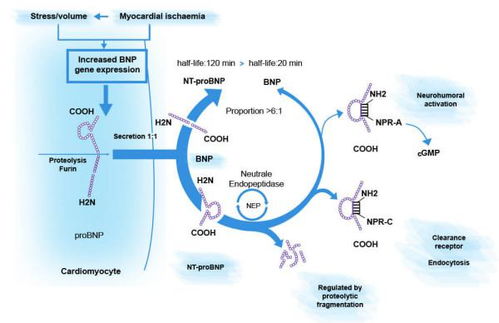
BNP is a hormone mainly secreted by the ventricles. When the ventricles are under increased pressure or the ventricles are dilated, the secretion of BNP will increase. This hormone has many important functions in the body, such as natriuresis, diuresis, vasodilation and lowering blood pressure. It can also inhibit the proliferation of vascular smooth muscle cells and fibroblasts, and plays a key role in vascular remodeling and blood pressure regulation.
The role of BNP in heart disease
BNP plays an important role in many heart diseases. For example, in diseases such as heart failure, hypertension, acute myocardial infarction, myocardial hypertrophy and cardiomyopathy, the gene expression and secretion of BNP will increase significantly. This may be a compensatory and protective mechanism of the body in a diseased state, relieving the burden of the heart by increasing the secretion of BNP.
Clinical application of BNP
1. Differential diagnosis of dyspnea
Dyspnea is a common symptom that may be caused by heart or lung disease. However, distinguishing between "cardiogenic asthma" and "pulmonary asthma" is often difficult for doctors. Studies have shown that BNP levels in patients with heart failure are significantly higher than those in patients with lung disease. Therefore, by testing BNP levels, the cause of dyspnea can be quickly and accurately identified, providing doctors with important diagnostic basis.
2. Early detection of heart failure
Heart failure is a serious disease, and early diagnosis is crucial to improving prognosis. Traditional detection methods often make it difficult to detect heart failure in the early stages, while BNP testing has unique advantages. As the degree of heart failure worsens, BNP levels will gradually increase. Therefore, BNP can be used as an early screening tool to help doctors detect potential heart failure patients in a timely manner.
3. Prognosis evaluation of heart failure
BNP levels not only help diagnose heart failure, but also assess the severity and prognosis of the disease. Studies have shown that the higher the BNP level, the worse the prognosis of patients with heart failure. For high-risk patients with high BNP levels, active treatment can improve prognosis. For patients whose BNP levels have not significantly decreased after adequate treatment, more active intervention measures, such as the use of cardiac assist devices, may be needed.
Application of BNP in other diseases
In addition to heart disease, BNP also has important value in the diagnosis and evaluation of other diseases. For example, in patients with hypertension, BNP concentration is closely related to the severity of the disease and can be used as one of the indicators for evaluating hypertension. In patients with atrial fibrillation, BNP levels are related to factors such as thrombosis and left atrial diameter, which helps to assess the patient's condition and risk. In addition, BNP levels are also closely related to cardiac function and the degree of coronary artery lesions in patients with angina pectoris, and can be used as an important indicator for evaluating cardiac function.
Conclusion
As an important biomarker, BNP plays an irreplaceable role in the diagnosis, evaluation and treatment of heart disease. It can not only help doctors quickly and accurately identify the cause of dyspnea, but also detect heart failure patients early and assess the severity and prognosis of the disease. With the continuous advancement of medical technology, the scope of application of BNP will be further expanded, bringing good news to more patients. If you or your family members have symptoms of heart disease, it is recommended that you seek medical attention promptly and ask your doctor whether you need a BNP test to better understand your heart health.
This article is reviewed and published by the technical expert team of UA
Disclaimer: This article partially utilizes artificial intelligence assistance in its creation. If any content involves copyright or intellectual property issues, please let us know and we promise to verify and remove it as soon as possible.
Purchase recombinant protein, choose Nanjing UA-Bio
UA protein focuses on providing various protein reagents, raw materials, and services required for drug research and development, cell therapy, gene therapy, and basic scientific research, including drug target proteins, immune checkpoint proteins, cytokines, tool enzymes, customized protein expression, and full-length transmembrane protein development. Youai is committed to providing customers with high-quality products and professional services, and building a High-tech Biological Enterprise with International Competitiveness.







 Business license (three certificates in one)