




CD47-SIRPα axis: new hope for tumor immunotherapy


In the field of tumor immunotherapy, immune checkpoint inhibitors have achieved great success. However, in addition to drugs that regulate T cell activity, therapies targeting the innate immune system are gradually emerging. The CD47-SIRPα axis is one of the important targets, which has shown great potential in tumor immunotherapy.
- Recent Advances
- Product Information
CD47-SIRPα axis: new hope for tumor immunotherapy
In the field of tumor immunotherapy, immune checkpoint inhibitors have achieved great success. However, in addition to drugs that regulate T cell activity, therapies targeting the innate immune system are gradually emerging. The CD47-SIRPα axis is one of the important targets, which has shown great potential in tumor immunotherapy.
CD47-SIRPα axis: the key "brake" of innate immunity
In our immune system, innate immunity is the first line of defense, which can quickly identify and eliminate invading pathogens and abnormal cells. However, tumor cells are very cunning, and they will use the CD47-SIRPα axis to escape the attack of the innate immune system.
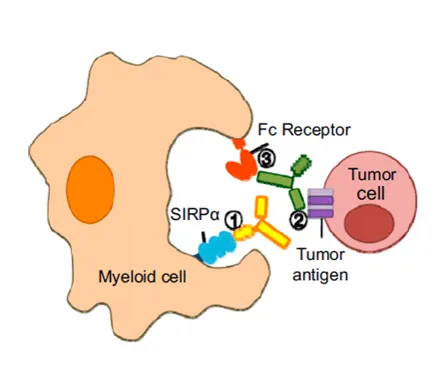
CD47 is a protein widely expressed on the cell surface, which is like a "don't eat me" signal. SIRPα (signal regulatory protein α) is mainly expressed on innate immune cells such as macrophages. When SIRPα binds to CD47, it will send a "brake" signal to prevent macrophages from engulfing tumor cells. Therefore, tumor cells evade the attack of the immune system by highly expressing CD47.
Targeting CD47 and SIRPα: A new strategy for immunotherapy
In order to break this escape mechanism of tumor cells, scientists have developed a variety of drugs targeting CD47 and SIRPα. These drugs include anti-CD47 antibodies, anti-SIRPα antibodies, and SIRPα-Fc fusion proteins. Their mechanism of action is to block the binding of CD47 to SIRPα, thereby releasing the "brake" signal and activating the phagocytosis of tumor cells by macrophages.
SIRPα: A more advantageous target
Although CD47 is an important target, it is also highly expressed in normal tissues, which may cause some safety issues. In contrast, SIRPα is mainly expressed on immune cells, and its expression in normal tissues is relatively limited. Therefore, targeting SIRPα may have a lower risk of side effects and require a lower therapeutic dose, which has cost advantages.
However, the polymorphism of SIRPα poses a challenge to drug development. There are multiple variants of the human SIRPα gene, such as SIRPα v1 and v2. These variants vary in distribution among different populations, and their ability to bind to CD47 is also different. Studies have shown that antibodies that can block both SIRPα v1 and v2 are more effective in anti-tumor effects.
Discovery strategy for SIRPα-targeted antibodies
In order to develop antibodies that can bind to both SIRPα v1 and v2, ALX Oncology has adopted a unique strategy. They used human SIRPα v1 and v2 antigens to alternately immunize chickens, and then screened antibodies that can bind to multiple SIRPα subtypes through single-cell cloning technology. This approach not only improves the diversity and specificity of antibodies, but also provides the possibility of developing broad-spectrum inhibitors against SIRPα.
Future Outlook
Tumor immunotherapy of the CD47-SIRPα axis is becoming a new hot spot in the field of immunotherapy. Compared with targeting CD47, targeting SIRPα may have lower side effects and higher therapeutic effects. With more in-depth research and technological breakthroughs, I believe this field will bring more hope and options to cancer patients.
If you or your family are paying attention to tumor immunotherapy, you might as well learn more about the CD47-SIRPα axis. In the future, the development of this field may bring new breakthroughs in cancer treatment.
This article is reviewed and published by the technical expert team of UA
Disclaimer: This article partially utilizes artificial intelligence assistance in its creation. If any content involves copyright or intellectual property issues, please let us know and we promise to verify and remove it as soon as possible.
Purchase recombinant protein, choose Nanjing UA-Bio
UA protein focuses on providing various protein reagents, raw materials, and services required for drug research and development, cell therapy, gene therapy, and basic scientific research, including drug target proteins, immune checkpoint proteins, cytokines, tool enzymes, customized protein expression, and full-length transmembrane protein development. Youai is committed to providing customers with high-quality products and professional services, and building a High-tech Biological Enterprise with International Competitiveness.







 Business license (three certificates in one)