

CD74: Unveiling the mysterious link between placental macrophages and preeclampsia


During pregnancy, the harmonious coexistence between mother and fetus is the key to maintaining a healthy pregnancy. However, there is a disease that often breaks this balance and poses a serious threat to pregnant women and fetuses, and that is preeclampsia (PE).
- Recent Advances
- Product Information
CD74: Unveiling the mysterious link between placental macrophages and preeclampsia
During pregnancy, the harmonious coexistence between mother and fetus is the key to maintaining a healthy pregnancy. However, there is a disease that often breaks this balance and poses a serious threat to pregnant women and fetuses, and that is preeclampsia (PE). Preeclampsia is a pregnancy-related disease that usually occurs after 20 weeks of pregnancy, manifested as hypertension, proteinuria, and multiple organ dysfunction, which causes great harm to the health of mothers and babies. In recent years, scientists have discovered that the CD74 molecule in placental macrophages plays an important role in the occurrence of preeclampsia.
Placental macrophages: "guardians" protecting the fetus
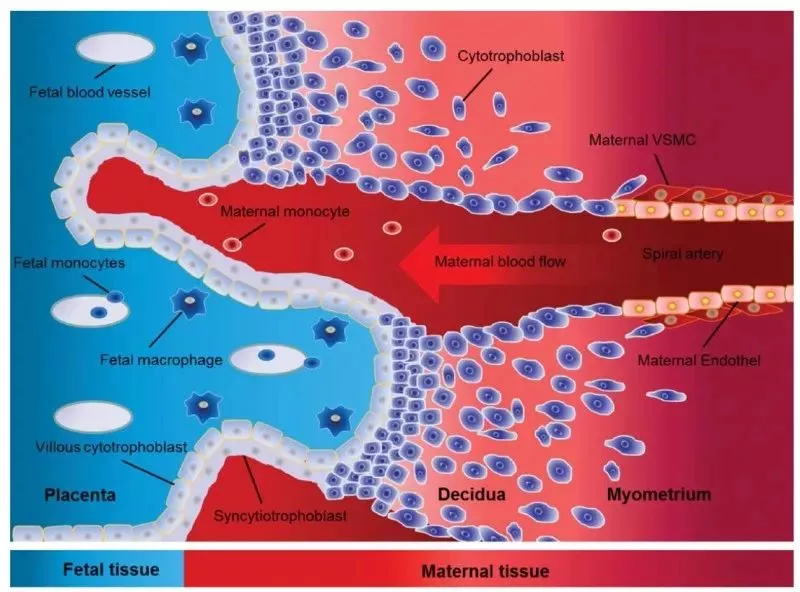
The placenta is an important connecting organ between the fetus and the mother. It not only provides nutrition and oxygen to the fetus, but also bears the heavy responsibility of protecting the fetus from attacks by the maternal immune system. Placental macrophages (Hofbauer cells) are a special cell population in the placenta. They are mainly differentiated from fetal-derived mesenchymal progenitor cells or monocytes and are widely distributed in the villous matrix of the placenta. These macrophages perform a variety of functions in the placenta, including clearing cell debris, regulating immune responses, and promoting the formation and development of placental blood vessels. They are key "guardians" to maintain normal pregnancy.
CD74: The "baton" of placental macrophages
CD74 is a molecule widely expressed in immune cells, which plays an important role in regulating cell function and immune response. In placental macrophages, the expression level of CD74 is particularly critical. Normally, placental macrophages highly express CD74, which helps them maintain normal immune regulation function. However, scientists have found that the expression level of CD74 is significantly reduced in the placenta of patients with preeclampsia. This low expression may weaken the function of placental macrophages, thereby affecting the normal development and function of the placenta.
Chain reactions caused by insufficient CD74 function
When CD74 function is insufficient, a series of changes will occur in placental macrophages. First, their adhesion ability will be significantly weakened, which means that the interaction between placental macrophages and trophoblast cells will be disturbed. Trophoblast cells are key cells in the placenta responsible for the exchange of substances between the mother and the fetus, and their normal function is essential for the development of the placenta. Insufficient interaction between placental macrophages and trophoblast cells may lead to obstruction of the formation and reconstruction of placental blood vessels, thereby affecting maternal blood perfusion to the placenta.
In addition, CD74 deficiency can also cause placental macrophages to transform from the anti-inflammatory M2 type to the pro-inflammatory M1 type. M1 macrophages secrete a large number of pro-inflammatory factors, such as TNF-α, IL-6, etc. These factors not only aggravate the inflammatory response of the placenta, but also may interfere with the normal function of trophoblast cells, further exacerbating the hypoxia of the placenta. This hypoxic state will further affect the differentiation and function of trophoblast cells, forming a vicious circle, and ultimately leading to the occurrence of preeclampsia.
From laboratory to clinic: the potential application value of CD74
Although current studies have revealed the important role of CD74 in preeclampsia, there are still many issues to be further explored. For example, how is CD74 deficiency triggered in placental macrophages? Are there other factors that work together with CD74 to affect the function of placental macrophages? In addition, whether CD74 can be used as an early diagnostic marker for preeclampsia or a potential target for the treatment of preeclampsia is also an important direction for future research.
In clinical practice, if the high-risk population for preeclampsia can be identified early by detecting the expression level of CD74 in placental macrophages, it will help to take timely intervention measures to reduce the harm of preeclampsia to maternal and child health. At the same time, by regulating the function of CD74 and restoring the normal immunoregulatory ability of placental macrophages, it may also provide new ideas for the treatment of preeclampsia.
Conclusion
Preeclampsia is a complex pregnancy-related disease, and its pathogenesis involves multiple factors. Insufficient function of CD74 in placental macrophages may be one of the important causes of preeclampsia. By in-depth study of the mechanism of action of CD74 in placental macrophages, we hope to better understand the pathogenesis of preeclampsia and provide new strategies for the prevention and treatment of this disease. In the future, as more related research is carried out, we believe that CD74 will play an important role in the diagnosis and treatment of preeclampsia and safeguard the health of mothers and babies.
This article is reviewed and published by the technical expert team of UA
Disclaimer: This article partially utilizes artificial intelligence assistance in its creation. If any content involves copyright or intellectual property issues, please let us know and we promise to verify and remove it as soon as possible.
Purchase recombinant protein, choose 
UA protein focuses on providing various protein reagents, raw materials, and services required for drug research and development, cell therapy, gene therapy, and basic scientific research, including drug target proteins, immune checkpoint proteins, cytokines, tool enzymes, customized protein expression, and full-length transmembrane protein development. Nanjing Univ is committed to providing customers with high-quality products and professional services, and building a High-tech Biological Enterprise with International Competitiveness.







 Business license (three certificates in one)