




CXCL family: revealing the "signal messenger" in odontogenic keratocyst


In the complex physiological and pathological processes of the human body, communication between cells is crucial, and CXCL family proteins are important "signal messengers" for intercellular communication. Recently, scientists discovered the unique role of the CXCL family in studying odontogenic keratocyst (OKC). Let us walk into the mystery of this microscopic world together.
- Recent Advances
- Product Information
CXCL family: revealing the "signal messenger" in odontogenic keratocyst
In the complex physiological and pathological processes of the human body, communication between cells is crucial, and CXCL family proteins are important "signal messengers" for intercellular communication. Recently, scientists discovered the unique role of the CXCL family in studying odontogenic keratocyst (OKC). Let us walk into the mystery of this microscopic world together.
Odontogenic keratocyst: a tricky oral disease
Odontogenic keratocyst (OKC) is a cystic lesion occurring in the jawbone, which has a high growth potential and tendency to relapse. This lesion not only affects the patient's oral function, but may also cause complications such as pain and infection. The treatment of OKC usually requires surgical resection, but due to its high recurrence rate, it brings considerable trouble to patients. Therefore, in-depth understanding of the pathogenesis of OKC and finding more effective treatments have always been a hot topic in medical research.
CXCL family: "messenger" between cells
The CXCL family is a class of chemokines that play an important role in signal transduction between cells. The main function of chemokines is to guide cell migration and positioning, and they play a key role in immune response, inflammation, tissue repair, and tumorigenesis. There are many members of the CXCL family, some of which show significant activity in OKC.
CXCL12: The "star" member in OKC
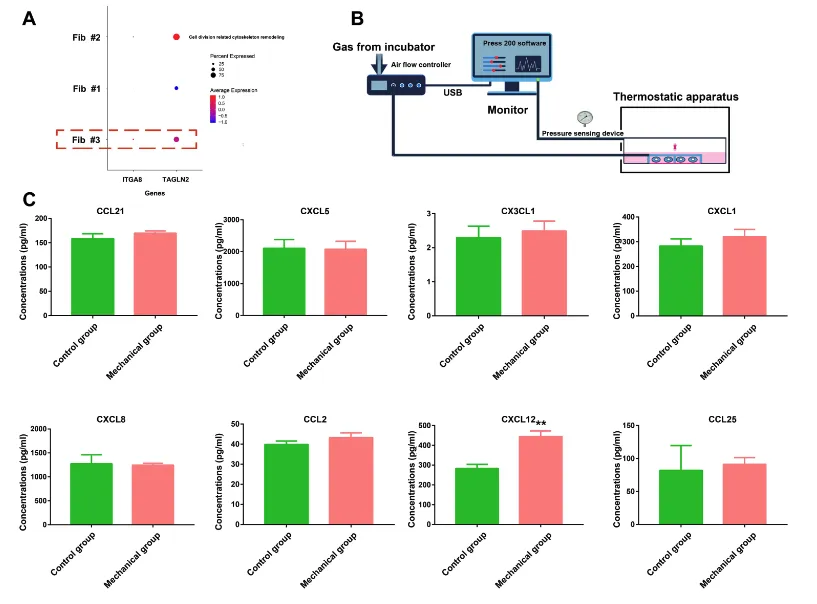
In the study of OKC, scientists discovered a chemokine called CXCL12, which is highly expressed in fibroblasts in OKC. Fibroblasts are an important cell type in connective tissue, and they play a key role in the repair and maintenance of tissues. In OKC, the abnormal behavior of fibroblasts is closely related to the development of lesions. The high expression of CXCL12 may be related to angiogenesis and immune cell infiltration in OKC, both of which are important factors in the development of OKC lesions.
Angiogenesis: The potential role of CXCL12
Angiogenesis refers to the formation of new blood vessels, which plays a vital role in the growth and repair of tissues. In OKC, angiogenesis provides the necessary nutrients and oxygen for the growth of lesions. Studies have shown that CXCL12 may promote angiogenesis by binding to receptors on endothelial cells. Endothelial cells are the main component of the blood vessel wall, and they are very sensitive to angiogenic signals. The interaction between CXCL12 and endothelial cells may provide important signal support for angiogenesis in OKC.
Immune infiltration: the other side of CXCL12
In addition to promoting angiogenesis, CXCL12 may also play a role in immune infiltration in OKC. Immune infiltration refers to the process by which immune cells enter diseased tissues, and it plays a key role in inflammation and immune response. CXCL12 is able to attract immune cells, such as T cells and macrophages, into the lesion area. These immune cells may have both positive and negative aspects in the development of OKC. On the one hand, they can clear pathogens and damaged cells in diseased tissues; on the other hand, they may also release inflammatory factors and promote the development of lesions.
Future Outlook: CXCL12 as a Therapeutic Target
The important role of CXCL12 in OKC provides new ideas for future treatment. If a way can be found to regulate the expression of CXCL12 or block its signaling pathway, it may have a positive impact on the treatment of OKC. For example, inhibiting the activity of CXCL12 through drugs may be able to reduce the angiogenesis and immune infiltration of OKC, thereby inhibiting the development of lesions. In addition, a deeper understanding of the mechanism of action of CXCL12 in OKC may also help us develop new diagnostic markers to detect OKC lesions earlier and improve the success rate of treatment.
In short, as an important member of the CXCL family, CXCL12 plays a versatile role in odontogenic keratocysts. It is not only involved in the angiogenesis of OKC, but also closely related to immune infiltration. In the future, with further research on the mechanism of action of CXCL12, we are expected to develop more effective treatments and bring more hope to OKC patients.
This article is reviewed and published by the technical expert team of UA
Disclaimer: This article partially utilizes artificial intelligence assistance in its creation. If any content involves copyright or intellectual property issues, please let us know and we promise to verify and remove it as soon as possible.
Purchase recombinant protein, choose Nanjing UA-Bio
UA protein focuses on providing various protein reagents, raw materials, and services required for drug research and development, cell therapy, gene therapy, and basic scientific research, including drug target proteins, immune checkpoint proteins, cytokines, tool enzymes, customized protein expression, and full-length transmembrane protein development. Youai is committed to providing customers with high-quality products and professional services, and building a High-tech Biological Enterprise with International Competitiveness.







 Business license (three certificates in one)