




DLL3: New hope for cancer treatment


In the long journey of cancer treatment, scientists have been looking for targets that can accurately attack tumor cells. In recent years, a protein called DLL3 has gradually attracted the attention of researchers. DLL3 is an important ligand in the Notch signaling pathway. It shows a unique expression pattern in a variety of tumors and is expected to become a new target for cancer treatment.
- Recent Advances
- Product Information
DLL3: New hope for cancer treatment
In the long journey of cancer treatment, scientists have been looking for targets that can accurately attack tumor cells. In recent years, a protein called DLL3 has gradually attracted the attention of researchers. DLL3 is an important ligand in the Notch signaling pathway. It shows a unique expression pattern in a variety of tumors and is expected to become a new target for cancer treatment.
DLL3: A key role in the Notch signaling pathway
DLL3 is a member of the Delta-like ligand family (DLLs). Together with DLL1 and DLL4, they are key ligands in the Notch signaling pathway. The Notch signaling pathway is a highly conserved signaling system in evolution that regulates cell proliferation, differentiation and apoptosis through cell-to-cell interactions. In mammals, the Notch signaling pathway includes four receptors (Notch1-4) and five ligands (DLL1, DLL3, DLL4, Jagged1 and Jagged2).
The activation process of the Notch signal is very complex. When DLL3 binds to the Notch receptor on the adjacent cell, the intracellular part of the Notch receptor is cleaved by enzymes, releasing the Notch intracellular domain (NICD). NICD then enters the nucleus and binds to the DNA-binding protein CSL (CBF-1), which in turn recruits MAML proteins to activate the transcription of Notch-targeted genes, such as Hes and Hey family genes.
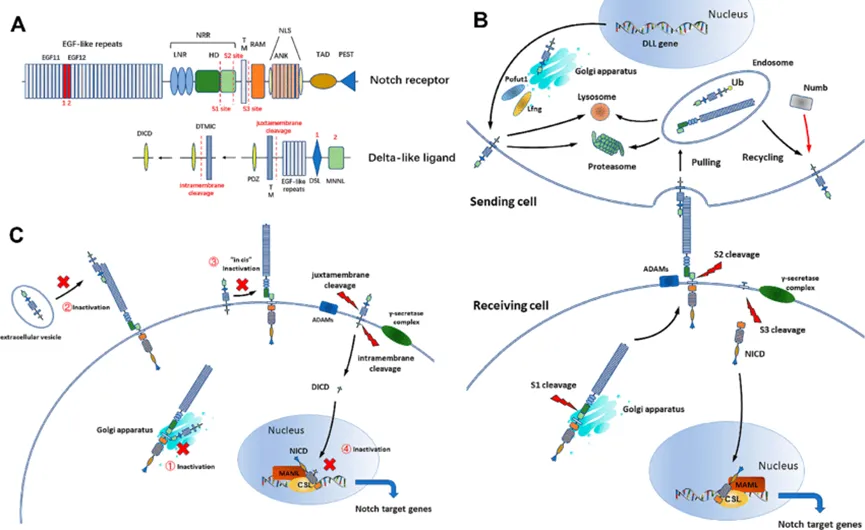
DLL3 expression profile: an ideal tumor target
DLL3 expression is very limited in normal tissues, making it an ideal tumor target. DLL3 expression is extremely low or even absent in most normal tissues and cells. However, DLL3 expression is significantly elevated in a variety of tumor cells, especially in small cell lung cancer (SCLC) and neuroendocrine tumors (NEN).
Small cell lung cancer (SCLC) is a type of lung cancer with strong invasiveness and poor prognosis. Studies have shown that DLL3 is highly expressed in tumor cells of more than 80% of SCLC patients, and this high expression is negatively correlated with the patient's survival. This means that DLL3 is not only a potential therapeutic target, but also a prognostic marker to help doctors assess a patient's condition and treatment response.
DLL3's potential in cancer treatment
Due to its high expression in tumor cells and low expression in normal tissues, DLL3 provides an ideal target for cancer treatment. In recent years, scientists have developed a variety of treatments targeting DLL3, including monoclonal antibodies and antibody-drug conjugates (ADCs). These drugs can accurately identify and attack tumor cells by specifically binding to DLL3, while reducing damage to normal cells.
For example, an antibody-drug conjugate called Rova-T has entered the clinical trial stage. Rova-T kills tumor cells by binding to DLL3 and delivering the drug directly to tumor cells. In early clinical trials, Rova-T showed significant efficacy in SCLC patients with high DLL3 expression, bringing new hope to these patients.
Future Outlook
DLL3, as an emerging tumor target, is becoming a hot topic in cancer treatment research. With a deeper understanding of the mechanism of action of DLL3 in tumors, scientists are expected to develop more innovative therapies targeting DLL3. These therapies can not only improve the treatment effect, but also reduce side effects and improve the quality of life of patients.
In short, the high expression of DLL3 in tumors and the low expression in normal tissues make it a highly promising therapeutic target. With the continuous deepening of research, DLL3 is expected to bring new treatment options to cancer patients and provide new ideas for conquering the difficult problem of cancer.
This article is reviewed and published by the technical expert team of UA
Disclaimer: This article partially utilizes artificial intelligence assistance in its creation. If any content involves copyright or intellectual property issues, please let us know and we promise to verify and remove it as soon as possible.
Purchase recombinant protein, choose Nanjing UA-Bio
UA protein focuses on providing various protein reagents, raw materials, and services required for drug research and development, cell therapy, gene therapy, and basic scientific research, including drug target proteins, immune checkpoint proteins, cytokines, tool enzymes, customized protein expression, and full-length transmembrane protein development. Youai is committed to providing customers with high-quality products and professional services, and building a High-tech Biological Enterprise with International Competitiveness.







 Business license (three certificates in one)