




Fc protein: the "behind-the-scenes hero" of antibody drugs


In modern medicine, antibody drugs have become an important means of treating a variety of diseases, especially in cancer and autoimmune diseases. However, the efficacy of antibody drugs depends not only on their specific binding ability to the target, but also on the Fc region of the antibody. The Fc region, the crystalline fragment of the antibody, is a key functional region in the antibody molecule. It interacts with the Fc receptors in the immune system to exert a variety of biological effects, thereby enhancing the efficacy of antibody drugs.
- Recent Advances
- Product Information
Fc protein: the "behind-the-scenes hero" of antibody drugs
In modern medicine, antibody drugs have become an important means of treating a variety of diseases, especially in cancer and autoimmune diseases. However, the efficacy of antibody drugs depends not only on their specific binding ability to the target, but also on the Fc region of the antibody. The Fc region, the crystalline fragment of the antibody, is a key functional region in the antibody molecule. It interacts with the Fc receptors in the immune system to exert a variety of biological effects, thereby enhancing the efficacy of antibody drugs.
Interaction between Fc receptors and antibody drugs
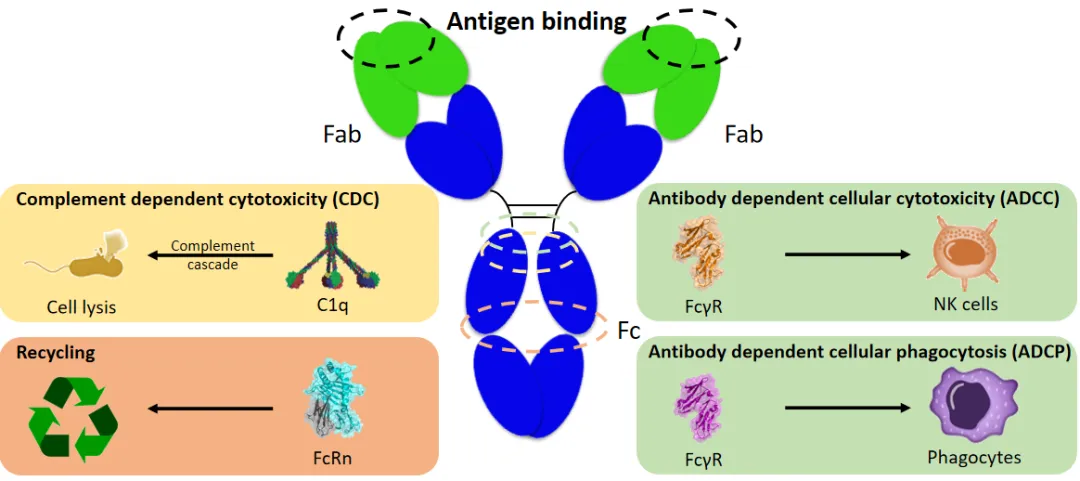
Fc receptors are a class of proteins that can specifically bind to the Fc region of antibodies and are widely present on the surface of immune cells. They play an important role in the mechanism of action of antibody drugs, mainly in the following ways to enhance the efficacy of antibody drugs:
Enhance antibody-dependent cell-mediated cytotoxicity (ADCC)
ADCC is one of the important mechanisms for antibody drugs to exert anti-tumor effects. When antibody drugs bind to target antigens on the surface of tumor cells, their Fc regions bind to Fc receptors on the surface of immune cells (such as natural killer cells), activating these immune cells and enhancing the killing power of tumor cells. By optimizing the binding ability of the Fc region of antibody drugs to Fc receptors, the ADCC effect can be significantly improved, thereby improving the efficacy of antibody drugs.
Promote antibody-dependent cell-mediated phagocytosis (ADCP)
ADCP is another important immune mechanism. Through the binding of Fc receptors to the Fc region of antibody drugs, macrophages and other phagocytic cells are activated to enhance the phagocytosis and clearance of tumor cells. Optimizing the design of the Fc region can further enhance the phagocytosis of antibody drugs, thereby more effectively clearing tumor cells.
Regulate the clearance of immune complexes
Fc receptors are also involved in the clearance of immune complexes, which has an important impact on the pharmacokinetics and distribution characteristics of antibody drugs. By regulating the binding of the Fc region to the Fc receptor, the clearance rate and distribution of antibody drugs in the body can be optimized, thereby improving the effectiveness and safety of the drug.
Affect the stability and half-life of antibody drugs
The binding of the Fc region to the Fc receptor not only affects the immune effect of antibody drugs, but also has an important impact on their stability and half-life. By modifying the Fc region, the half-life of antibody drugs can be extended, the frequency of administration can be reduced, and patient compliance can be improved.
Regulating immune response
The binding of Fc receptors to the Fc region can regulate immune response and affect the efficacy and safety of antibody drugs. By optimizing this binding, the efficacy of antibody drugs can be enhanced while reducing potential side effects.
Supporting personalized treatment
The expression and function of Fc receptors vary among different individuals, which may affect the efficacy of antibody drugs. By detecting the expression of Fc receptors in patients, more personalized treatment plans can be formulated for patients to improve the treatment effect.
Strategies for optimizing the binding of Fc region to Fc receptors
In order to better exert the efficacy of antibody drugs, scientists have been exploring ways to optimize the binding of Fc region to Fc receptors. This includes genetically engineering the Fc region of antibodies to make them bind more tightly to Fc receptors; or through drug design, developing small molecule compounds that can enhance the activity of Fc receptors. The implementation of these strategies is expected to further enhance the efficacy of antibody drugs and bring more treatment options to patients.
Conclusion
Fc proteins and their receptors play an indispensable role in the mechanism of action of antibody drugs. By deeply studying the interaction between Fc receptors and antibody drugs, scientists can not only better understand the efficacy mechanism of antibody drugs, but also develop more efficient and safer treatment plans. With the continuous deepening of research, Fc protein is expected to become an important target in the development of antibody drugs and make greater contributions to human health.
This article is reviewed and published by the technical expert team of UA
Disclaimer: This article partially utilizes artificial intelligence assistance in its creation. If any content involves copyright or intellectual property issues, please let us know and we promise to verify and remove it as soon as possible.
Purchase recombinant protein, choose Nanjing UA-Bio
UA protein focuses on providing various protein reagents, raw materials, and services required for drug research and development, cell therapy, gene therapy, and basic scientific research, including drug target proteins, immune checkpoint proteins, cytokines, tool enzymes, customized protein expression, and full-length transmembrane protein development. Youai is committed to providing customers with high-quality products and professional services, and building a High-tech Biological Enterprise with International Competitiveness.







 Business license (three certificates in one)