

The key dialogue mechanism between PNAS | HB-EGF and VANGL2 in embryo implantation


The molecular regulatory mechanism of embryo implantation, as the initial stage of pregnancy establishment, has always been a key area of research in reproductive biology. Heparin binding epidermal growth factor (HB-EGF), as a key regulatory factor during the implantation window, participates in embryo maternal dialogue through its interaction with its receptor ERBB family.
- Recent Advances
- Product Information
- Reference
introduction
The molecular regulatory mechanism of embryo implantation, as the initial stage of pregnancy establishment, has always been a key area of research in reproductive biology. Heparin binding epidermal growth factor (HB-EGF), as a key regulatory factor during the implantation window, participates in embryo maternal dialogue through its interaction with its receptor ERBB family. However, the specific effector molecules downstream of HB-EGF and their interaction mechanism with VANGL2, a core component of the planar cell polarity (PCP) pathway, have not been elucidated. The latest study by Sudhansu K. Dey's team at Cincinnati Children's Hospital Medical Center, published in PNAS, reveals for the first time the molecular mechanism by which HB-EGF induces VANGL2 tyrosine phosphorylation through ERBB2/ERBB3 heterodimers, providing a new perspective for understanding the signaling network during implantation.
1. VANGL2 deficiency leads to loss of HB-EGF function
The research team constructed uterine epithelial specific VANGL2 knockout mice (Vangl2f/f; Ltfcre/+) and found through embryo simulation experiments that in wild-type mice, HB-EGF treatment could induce significant implantation cavity formation (n=8/group, p<0.01), while VANGL2 deficiency completely lost this effect. This result not only confirms the necessity of VANGL2 in the formation of implantation cavities, but also suggests that the function of HB-EGF requires complete support from the PCP signaling pathway.
2. Analysis of the HB-EGF-ERBB-VANGL2 protein interaction network
Through systematic immunoprecipitation experiments, researchers found that: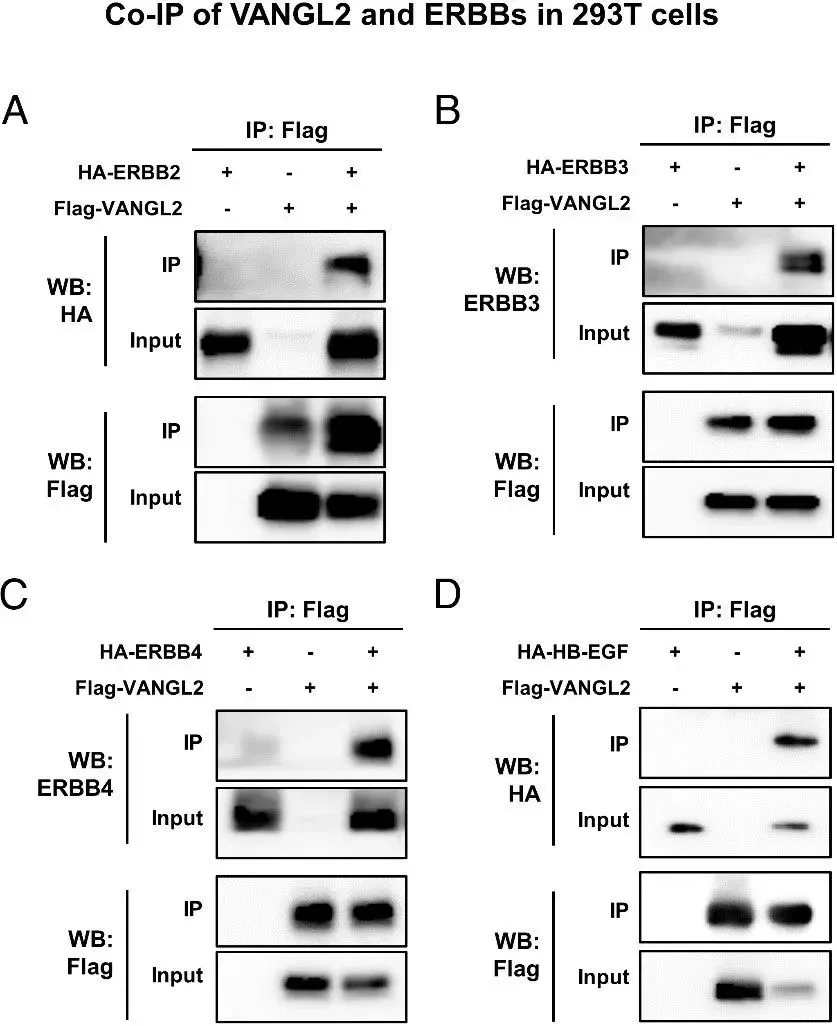 Figure 1 In vitro Co IP validation protein interaction network
3. Structural domain mapping reveals key interaction regions
The researchers constructed a series of VANGL2 truncated mutants (Figure 4A) and found that:
The transmembrane domain (TM) is a necessary region for ERBB2/3 binding (the interaction strength decreases by 82 ± 5% after deletion)
The C-terminal domain plays an auxiliary stabilizing role (loss leads to a 45 ± 7% decrease in interaction strength)
The N-terminal domain does not participate in direct interactions, but affects phosphorylation efficiency (see below)
4. HB-EGF induced tyrosine phosphorylation mechanism
Through time gradient experiments, it was found that:
Dynamic characteristics: VANGL2 tyrosine phosphorylation can be detected within 10 minutes of HB-EGF stimulation, reaching its peak at 50 minutes (phosphorylation level increased by 7.5 ± 1.2 times)
Receptor dependence: After siRNA silencing of ERBB2/3, phosphorylation signals completely disappeared (p<0.001)
Site identification: Tyr10 was confirmed to be the main phosphorylation site through point mutation screening (Y10A mutation reduced phosphorylation by 89 ± 4%)
5. Phenotypic validation of the double knockout model
ERBB2/3 conditional double knockout mice (Erbb2/3d/d) exhibited:
Implantation disorders: abnormal vascular permeability response (reduction of blue dye leakage area by 62 ± 8%)
Deciddualization defect: BMP2 expression level decreased by 3.1 ± 0.4 times (in situ hybridization)
Polarity abnormality: Continuous expression of SCRIB in epithelial cells (increased immunofluorescence intensity by 2.8 ± 0.3 times)
These phenotypes are highly consistent with VANGL2 knockout mice, confirming the central position of the HB-EGF-ERBB-VANGL2 axis during implantation.
Summary and Outlook
This study elucidates for the first time:
Cross signal pathway: discovery of a new mechanism by which HB-EGF activates the key component VANGL2 of the PCP pathway through ERBB2/3
Post translation modification: Revealing the unprecedented regulatory mechanism of VANGL2 tyrosine phosphorylation
Treatment target: Identification of Y10 phosphorylation site provides new ideas for infertility intervention
Future research can focus on:
Constructing VANGL2-Y10A point mutation mouse model
Developing small molecule modulators targeting the HB-EGF-ERBB-VANGL2 axis
Exploring the potential role of this pathway in recurrent miscarriage
This work not only deepens the understanding of the molecular mechanism of embryo implantation, but also lays a theoretical foundation for the precise diagnosis and treatment of reproductive disorders
This article is reviewed and published by the technical expert team of UA
Disclaimer: This article partially utilizes artificial intelligence assistance in its creation. If any content involves copyright or intellectual property issues, please let us know and we promise to verify and remove it as soon as possible.
Purchase recombinant protein, choose 
UA protein focuses on providing various protein reagents, raw materials, and services required for drug research and development, cell therapy, gene therapy, and basic scientific research, including drug target proteins, immune checkpoint proteins, cytokines, tool enzymes, customized protein expression, and full-length transmembrane protein development. Nanjing Univ is committed to providing customers with high-quality products and professional services, and building a High-tech Biological Enterprise with International Competitiveness.

Kim YS, Yuan J, Dewar A, Borg JP, Threadgill DW, Sun X, Dey SK. An unanticipated discourse of HB-EGF with VANGL2 signaling during embryo implantation. Proc Natl Acad Sci U S A. 2023 May 16;120(20):e2302937120.






 Business license (three certificates in one)