




IL-22: A unique cytokine in mucosal immunity and tissue protection


Interleukin-22 (IL-22) was discovered in 2000 and is a unique member of the IL-10 cytokine family. The human IL-22 gene encodes a precursor protein containing 179 amino acids. After translation and processing, the signal peptide containing 33 amino acids is cleaved to produce a mature secreted form containing 146 amino acids. Structurally, IL-22 adopts a characteristic four helix bundle topology shared by class II cytokines, and its unique spatial conformation determines its receptor binding specificity.
- Recent Advances
- Product Information
IL-22: A Unique Cytokine in Mucosal Immunity and Tissue Protection
Discovery and Molecular Characteristics of IL-22
Identification and Structural Features
Discovered in 2000, interleukin-22 (IL-22) represents a distinctive member of the IL-10 cytokine family. The human IL-22 gene encodes a 179-amino acid precursor protein that undergoes post-translational processing to yield a 146-amino acid mature secreted form after cleavage of the 33-amino acid signal peptide. Structurally, IL-22 adopts the characteristic four-helix bundle topology common to class II cytokines, with unique spatial configurations that determine its receptor binding specificity.
Receptor Complex and Signaling Pathways
The functional IL-22 receptor consists of a heterodimeric complex formed by IL-22R1 and IL-10R2 subunits. Notably, IL-22R1 serves dual roles as a receptor component for other IL-10 family cytokines including IL-20 and IL-24. Additionally, a soluble decoy receptor termed IL-22 binding protein (IL-22BP) exists that competes with membrane-bound receptors for IL-22 binding, thereby modulating its biological activity. Upon ligand engagement, the receptor complex initiates intracellular signaling primarily through JAK1-mediated phosphorylation and subsequent STAT3 activation, although alternative pathways involving STAT1 and STAT5 have been reported under specific conditions.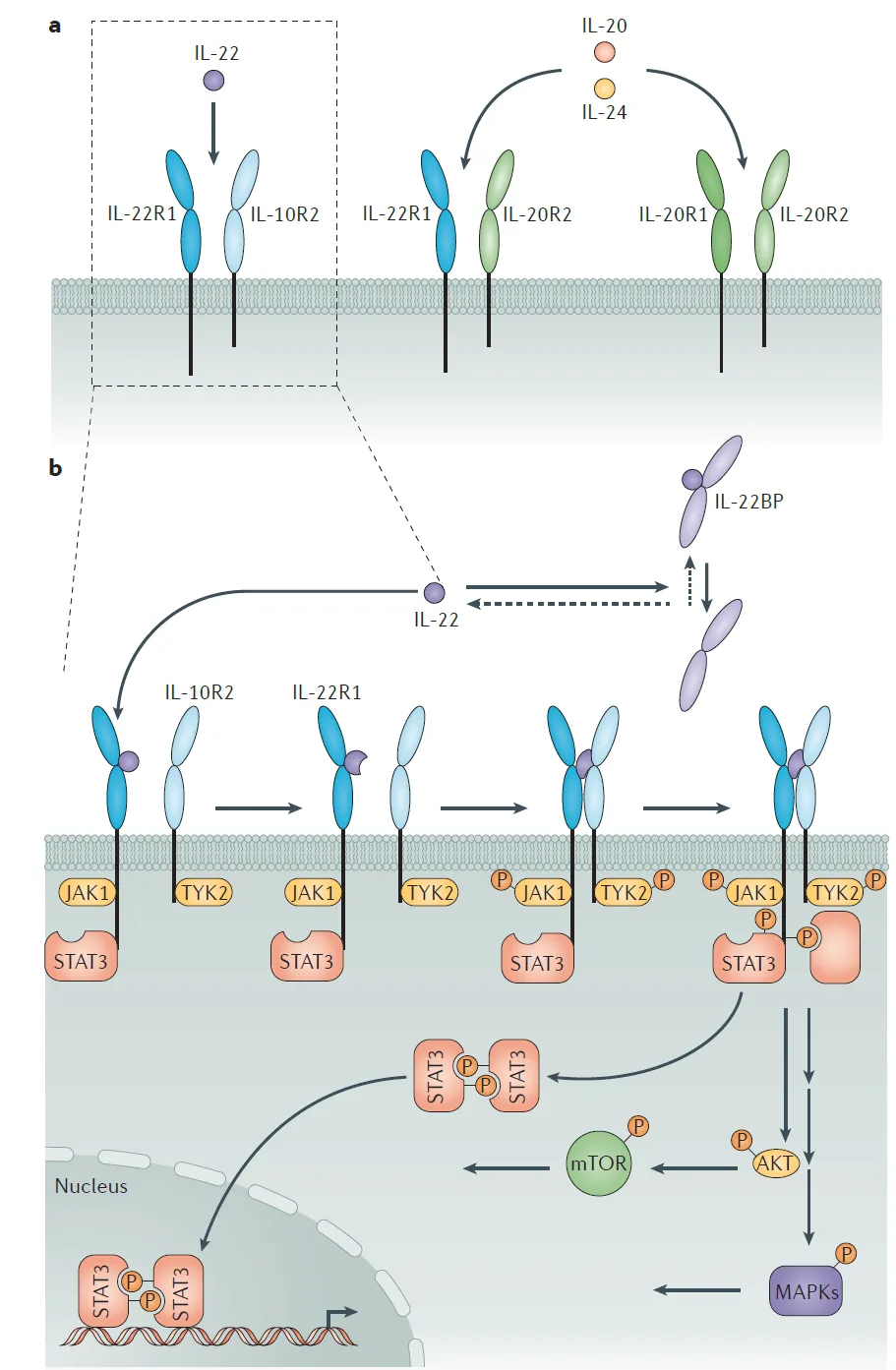
Cellular Sources and Regulation of IL-22 Production
Adaptive Immune Cell Producers
CD4+ T helper cell subsets constitute major sources of IL-22 in adaptive immunity. Th1 cells produce IL-22 under IL-12 stimulation, while Th17 cells co-secrete IL-22 with IL-17 when activated by IL-6 and IL-23. The discovery of Th22 cells—a specialized subset producing IL-22 without concomitant IFN-γ, IL-4, or IL-17 secretion—highlighted the diversity of IL-22-producing lymphocytes. Other T cell populations including CD8+ cytotoxic T cells, γδ T cells, and natural killer T (NKT) cells also contribute to IL-22 production, particularly in response to IL-23 stimulation.
Innate Lymphoid Cell Contributors
Group 3 innate lymphoid cells (ILC3s) represent crucial innate sources of IL-22, especially at mucosal surfaces. These tissue-resident lymphocytes rapidly respond to environmental cues through pattern recognition receptors and cytokine signals (notably IL-23), providing early IL-22 production that bridges innate and adaptive immunity. The aryl hydrocarbon receptor (AhR) serves as a master transcriptional regulator of IL-22 expression in both ILC3s and Th22 cells, linking environmental sensing to cytokine production.
Biological Functions and Tissue-Specific Actions
Epithelial Barrier Regulation
Unlike most interleukins that primarily target immune cells, IL-22 exerts its predominant effects on epithelial tissues throughout the body. In skin, gut, and respiratory epithelia, IL-22 induces:
• Antimicrobial peptides (β-defensins 2/3, S100 proteins, lipocalin 2)
• Matrix metalloproteinases (MMP1, MMP3)
• Neutrophil-attracting chemokines (CXCL1, CXCL5, CXCL8)
• Mucin production (MUC1 in intestinal and respiratory epithelia)
• Proliferation-promoting factors (cyclin D1, CDK4)
Simultaneously, IL-22 inhibits terminal differentiation markers in keratinocytes (keratin 1/10, profilaggrin, involucrin), demonstrating its unique capacity to modulate epithelial biology.
Hepatoprotective and Regenerative Effects
In hepatic tissues, IL-22 mediates multiple protective mechanisms:
• Upregulation of anti-apoptotic proteins (BCL-2, BCL-XL, MCL1)
• Induction of acute phase reactants (haptoglobin, serum amyloid A)
• Stimulation of hepatocyte proliferation through cell cycle regulators
• Enhancement of antioxidant defenses against oxidative stress
• Promotion of liver stem cell maintenance and differentiation
These concerted actions position IL-22 as a critical mediator of liver homeostasis and repair following various forms of injury.
Pathophysiological Roles in Human Diseases
Psoriasis Pathogenesis
In psoriatic lesions, IL-22 from infiltrating Th17/Th22 cells and ILCs drives disease pathology through multiple keratinocyte-directed effects:
• Epidermal hyperplasia (acanthosis) via inhibited differentiation
• Disrupted cornification leading to parakeratosis
• Recruitment of neutrophils through chemokine induction
• Tissue remodeling via MMP production
• Amplification of inflammation through IL-20 induction
The centrality of IL-22 in psoriasis pathogenesis has made it an attractive therapeutic target, with several IL-22-neutralizing approaches in preclinical development.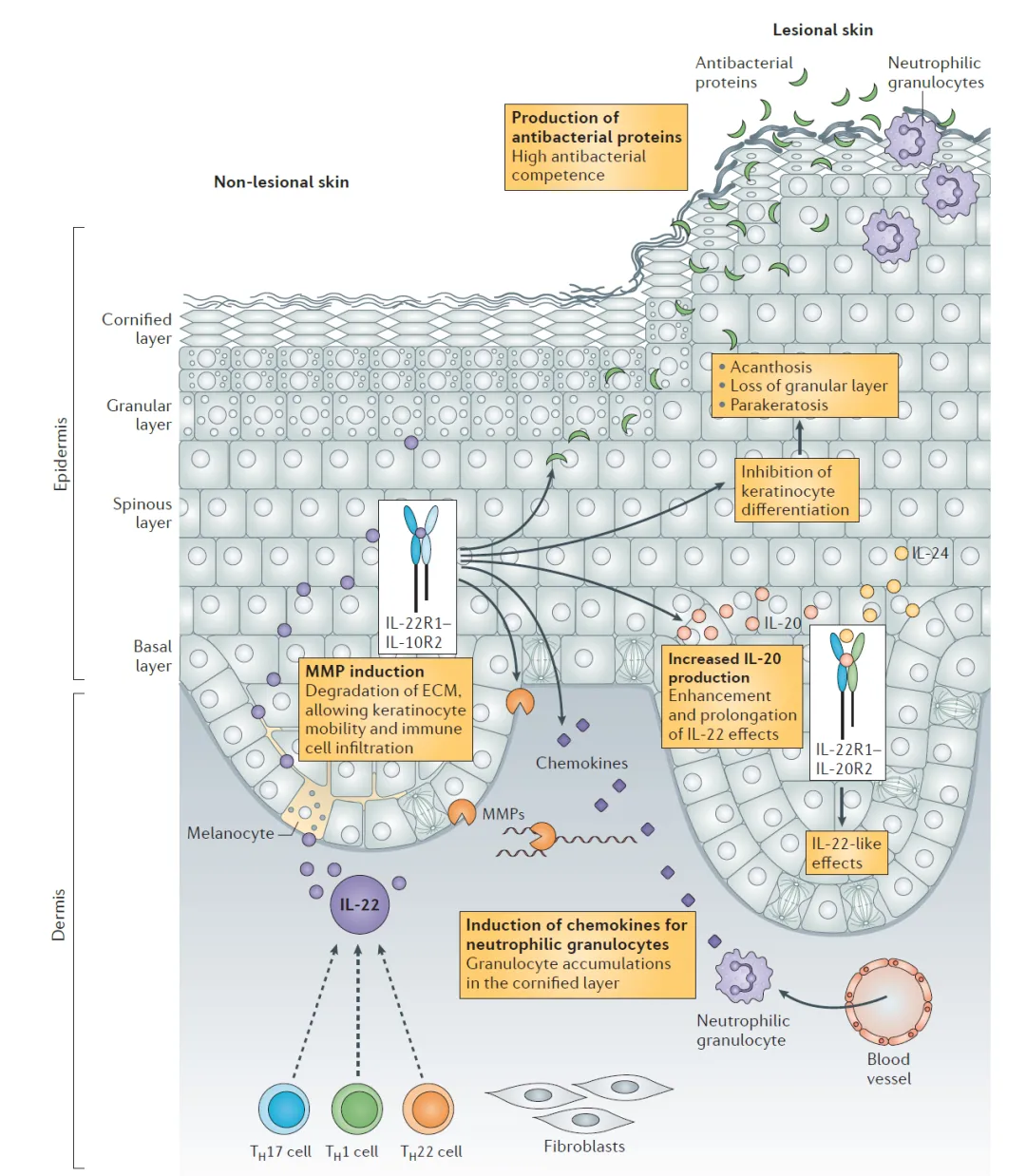
Inflammatory Bowel Disease Paradox
Despite elevated IL-22 levels in inflammatory bowel disease (IBD) patients, impaired mucosal healing persists. This apparent paradox may reflect:
• Counterregulation by IL-22BP limiting bioactive IL-22
• Epithelial resistance mechanisms in chronic inflammation
• Opposing effects of different IL-22-producing cell subsets
• Tissue-specific variations in receptor expression patterns
Understanding these complexities remains crucial for developing effective IL-22-based IBD therapies.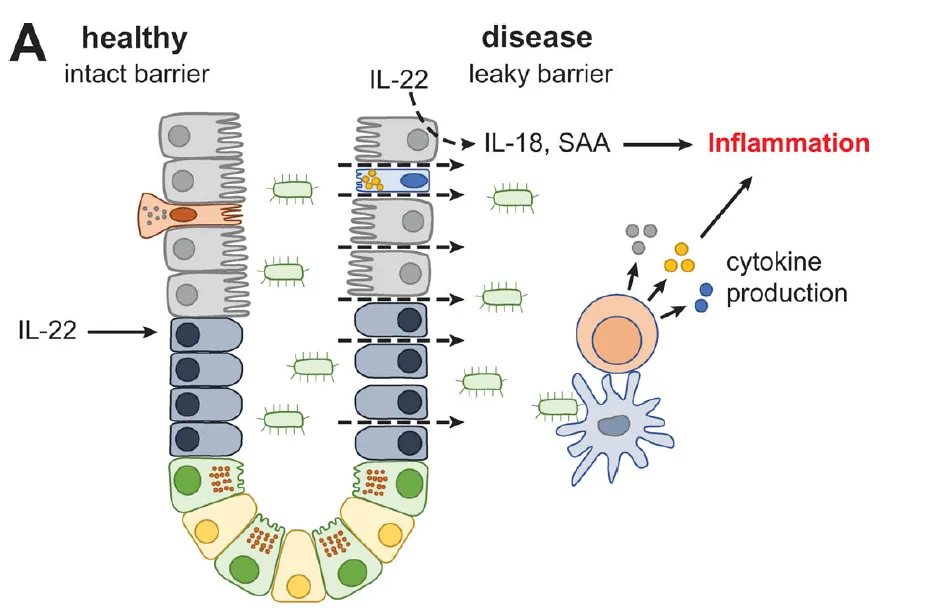
Therapeutic Targeting Opportunities
IL-22 Neutralization Strategies
For conditions with pathogenic IL-22 overactivity (e.g., psoriasis), multiple intervention points exist:
• Direct IL-22 neutralization with monoclonal antibodies
• IL-22BP administration as a natural antagonist
• Blockade of IL-22R1 signaling
• Inhibition of upstream regulators (AhR antagonists)
• Modulation of IL-22-producing cell recruitment
The restricted expression pattern of IL-22R1 offers potential for tissue-specific effects with limited systemic immune modulation.
IL-22 Augmentation Approaches
In settings requiring epithelial protection/regeneration (e.g., mucosal injury, liver diseases), therapeutic strategies include:
• Recombinant IL-22 administration
• IL-22BP inhibition to enhance endogenous IL-22 activity
• Pharmacologic induction of protective IL-22-producing cells
• Combination with tissue-specific growth factors
Ongoing clinical trials are evaluating the safety and efficacy of these approaches in various disease contexts.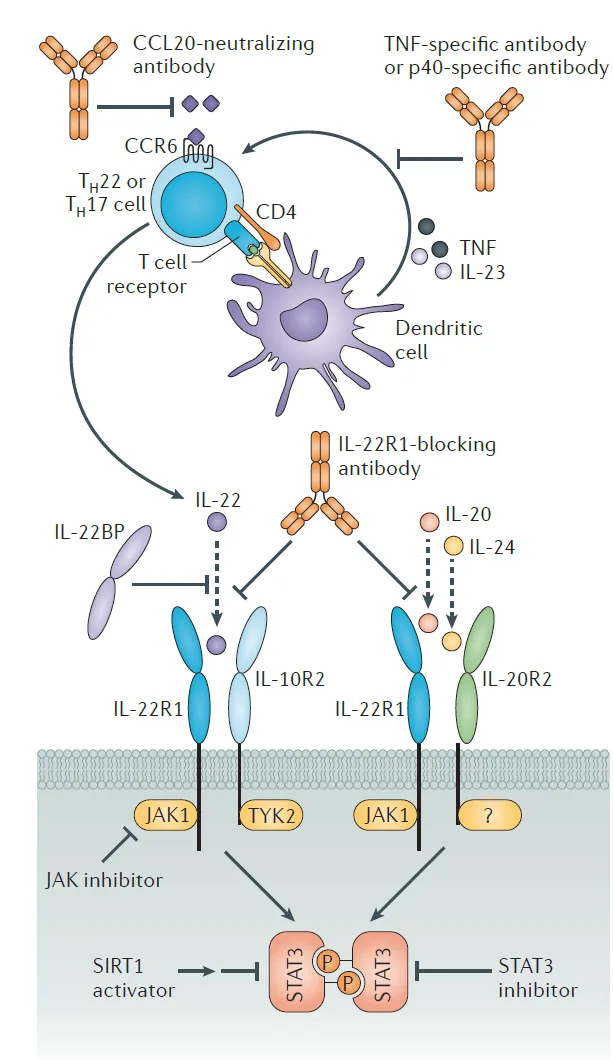
Future Perspectives and Challenges
Despite significant progress, key questions remain regarding IL-22 biology:
• Determinants of its tissue-specific pleiotropic effects
• Mechanisms underlying the IL-22/IL-22BP regulatory axis
• Role of IL-22 in tumor microenvironment modulation
• Potential cross-talk with other cytokine systems
• Long-term consequences of therapeutic modulation
Addressing these questions will require advanced model systems integrating epithelial-immune interactions and human translational studies. The development of more specific pharmacological tools and biomarkers will be essential for realizing the full therapeutic potential of IL-22 pathway modulation in diverse clinical contexts.
This article is reviewed and published by the technical expert team of UA
Disclaimer: This article partially utilizes artificial intelligence assistance in its creation. If any content involves copyright or intellectual property issues, please let us know and we promise to verify and remove it as soon as possible.
Purchase recombinant protein, choose Nanjing UA-Bio
UA protein focuses on providing various protein reagents, raw materials, and services required for drug research and development, cell therapy, gene therapy, and basic scientific research, including drug target proteins, immune checkpoint proteins, cytokines, tool enzymes, customized protein expression, and full-length transmembrane protein development. Youai is committed to providing customers with high-quality products and professional services, and building a High-tech Biological Enterprise with International Competitiveness.







 Business license (three certificates in one)