The interior of a cell is a highly ordered and complex microscopic world where numerous biological processes occur in an orderly manner. Among these processes, intracellular transport plays a crucial role, ensuring that various substances within the cell, such as organelles, proteins, and RNA, are accurately transported to specific locations to maintain normal cellular physiological functions. The Kinesin Superfamily (KIF), as a class of microtubule-dependent molecular motors, plays an indispensable role in this critical intracellular transport process and other important physiological activities such as cell division. With the deepening of research, the members and functions of the KIF family have gradually been revealed, showing great research value and potential application prospects in cell biology and the pathogenesis of diseases.
Members of the KIF family share some common structural characteristics. They all contain a highly conserved motor domain, which is the core region for their functional performance. This domain can specifically bind to microtubules and generate energy through ATP hydrolysis, providing power for the movement of molecules along microtubules. In terms of amino acid sequences, the motor domain contains multiple conserved motifs, such as IFAYGQT, DLAGSE, and HIPYR, which are highly consistent among KIF proteins of different species, ensuring the stability of their basic functions.
In addition to the motor domain, KIF proteins also have a relatively variable non-motor domain. This domain accounts for a large proportion of the entire molecule, and its amino acid sequence varies among different KIF members, determining the unique functional characteristics of each member. The non-motor domain is mainly responsible for binding to specific cargos (such as organelles, protein complexes, etc.), enabling different KIF proteins to transport different substances and achieve the accuracy and specificity of intracellular transport.
Based on criteria such as molecular evolutionary analysis and sequence homology, the KIF family is divided into multiple distinct subfamilies, with 15 major kinesin families known so far, namely kinesin 1 to kinesin 14b. This classification system is helpful for the systematic study and understanding of numerous KIF family members. KIF proteins from different subfamilies share certain commonalities in structure and function while also having significant differences. For example, members of some subfamilies are mainly involved in spindle assembly and chromosome segregation during cell division, while others play key roles in intracellular material transport and organelle positioning. Through in-depth research on the characteristics of each subfamily, we can more clearly understand the diverse functions of the KIF family in cellular physiological activities.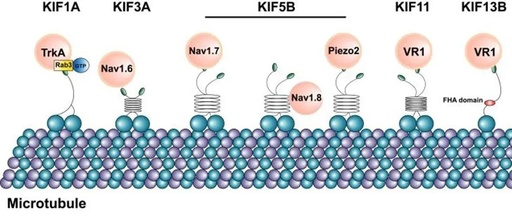
The division of labor and cooperation among members of the KIF family are particularly evident in neurons. For example, KIF1A is mainly responsible for transporting organelles containing synaptic vesicle proteins (such as synaptotagmin, synapsin, and Rab3a), but not vesicles containing SV2, Syntaxin 1A, or SNAP-25. Traditional kinesins or KIF3 are unrelated to the organelles transported by KIF1A. This indicates that different KIF members are responsible for transporting different cargos within neuronal axons, each performing specific transport tasks, jointly maintaining the complex material transport network in neurons, ensuring the normal transmission of neurotransmitters and the stability of neuronal functions.
In addition to neurons, the KIF family also plays a key role in organelle transport in other cell types. For example, the distribution and transport of mitochondria within cells are crucial for maintaining the cell's energy supply. Some KIF proteins can bind to mitochondria and drive them to move along microtubules to areas with high energy demand within the cell, ensuring the normal metabolic activities of the cell.
Members of the KIF family are involved in multiple key steps during cell mitosis. The correct assembly and functional performance of the spindle are prerequisites for accurate chromosome segregation, and members such as KIF11 play an important role in this process. KIF11 can generate driving force, promote the sliding and reorganization of spindle microtubules, and promote the formation of a stable bipolar structure of the spindle, ensuring that chromosomes can move accurately to both poles during division, achieving equal distribution of genetic material.
In addition, proteins such as KIF2A have microtubule depolymerase activity. In the late stage of cell division, they can regulate the length and dynamics of spindle microtubules by depolymerizing microtubules, further assisting the chromosome segregation process and ensuring the smooth progress of cell division. If the function of these KIF proteins is abnormal, it is very likely to lead to errors in chromosome segregation, causing instability of cellular genetic material, and may even be related to the occurrence and development of diseases such as tumors.
The occurrence and development of many neurological diseases are closely related to abnormal functions of the KIF family. In Alzheimer's disease (AD), studies have found that the expression and function of some KIF proteins are altered. For example, proteins such as KIF5A are involved in the transport of neurotransmitter vesicles and other important proteins. Their dysfunction may lead to abnormal neurotransmitter transmission, affect signal communication between neurons, and then cause cognitive dysfunction and other AD-related symptoms.
In amyotrophic lateral sclerosis (ALS), mutations or abnormal expression of some KIF proteins have also been observed. These abnormalities may affect axonal transport, leading to damage and death of motor neurons, ultimately causing muscle atrophy and weakness, which are typical symptoms of ALS. In addition, in hereditary spastic paraplegia (such as SPG10 type) and some neurodevelopmental disorders such as intellectual disability, abnormal functions of KIF family members are also considered potential pathogenic factors, further highlighting the importance of the KIF family in maintaining normal nervous system functions.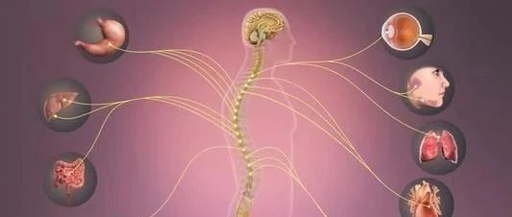
In the field of tumor research, members of the KIF family have gradually become the focus of attention. Taking liver cancer as an example, bioinformatics analysis has found that the expression levels of some KIF family members (such as KIF1C, KIF3B, KIF7, KIF9, KIF11, KIF14, and KIF18A) in liver cancer tissues are generally higher than those in normal tissues. Among them, the expression levels of KIF11 and KIF14 are significantly related to the prognosis of liver cancer, suggesting that they may serve as potential biomarkers for the diagnosis and prognosis evaluation of liver cancer.
During cell proliferation, the cell division-related functions of KIF family members are crucial for the rapid proliferation of tumor cells. For example, the overexpression or abnormal function of proteins such as KIF11 during mitosis of tumor cells may promote the abnormal division and proliferation of tumor cells, providing conditions for tumor growth and metastasis. Therefore, the development of targeted therapeutic drugs against KIF family members is expected to become a new strategy for tumor treatment.
PCR technology has played an important role in the research of KIF family members. By designing degenerate oligonucleotide primers targeting the conserved sequences of KIF proteins, PCR can be used to amplify KIF gene fragments from cDNA templates of different species. For example, in cDNA from mouse nervous system tissues, kidneys, and small intestines, multiple new KIF family members have been successfully identified through PCR, greatly enriching our understanding of the composition of the KIF family.
RNA interference (RNAi) technology provides a powerful means for studying the functions of KIF proteins. By introducing specific double-stranded RNA into cells, the expression of target KIF genes can be specifically silenced, thereby observing changes in cellular physiological functions and phenotypes. In studying the impact of the KIF family on synaptic transmission, RNAi technology is used to knock down different KIF genes, and electrophysiological methods are used to detect changes in excitatory postsynaptic currents (EPSCs) to determine the role and mechanism of each KIF member in synaptic transmission.
Live cell imaging technology can observe the dynamic behavior of KIF proteins in cells in real-time. By fusing fluorescent markers with KIF proteins for expression, confocal microscopes and other equipment can be used to track the transport paths, speeds of KIF proteins carrying cargos in cells, and the process of interaction with microtubules. In studying the relationship between chromosome movement trajectories and the KIF family, long-term three-dimensional live cell imaging and quantitative analysis frameworks, combined with machine learning models, can accurately track and classify chromosome trajectories, revealing the regulatory role of different KIF proteins in chromosome segregation.
In addition, immunohistochemical technology can be used to detect the localization and expression levels of KIF proteins in tissues and cells. By using specific antibodies to recognize KIF proteins, combined with chromogenic or fluorescent labeling, the distribution of KIF proteins in different tissues and cell types can be directly observed, providing important clues for studying their functions under physiological and pathological conditions.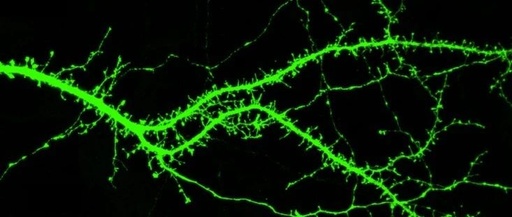
The Kinesin Superfamily (KIF) is a key participant in critical physiological processes such as intracellular transport and cell division, playing an irreplaceable role in maintaining normal cellular functions and organism health. With the continuous innovation of research technologies and the deepening of research, our understanding of the structure, functions, and association with diseases of KIF family members has become increasingly clear. However, there are still many issues to be resolved. For example, the redundancy and synergistic mechanisms among different KIF members in terms of function have not been fully clarified, and the precise regulatory mechanisms of KIF proteins in complex physiological and pathological environments need further exploration.
In the future, with the application of advanced technologies such as single-cell sequencing and super-resolution microscopy, it is expected to conduct in-depth research on the functions and regulatory networks of the KIF family at the single-cell level and with higher resolution. At the same time, based on the association between the KIF family and diseases, the development of precise diagnostic methods and targeted therapeutic strategies based on KIF proteins will bring new hope for the treatment of major diseases such as neurological diseases and tumors. Research on the KIF family will continue to have a profound impact on multiple fields such as cell biology and medicine, promoting the continuous development of related disciplines.












 Business license (three certificates in one)