I. Molecular Characteristics and Research Value of MSLN
Mesothelin, also known as MSLN, is a glycosylphosphatidylinositol (GPI)-anchored cell surface glycoprotein. Due to its limited expression in normal tissues and overexpression in several solid tumors such as ovarian cancer, breast cancer, colorectal cancer, and pancreatic cancer—with a correlation to lower survival rates—MSLN has become an ideal target for tumor-specific therapy. Recent studies have further revealed abnormal overexpression of MSLN in acute myeloid leukemia (AML), expanding its application prospects beyond traditional solid tumor targets.
II. Structural Analysis and Processing Mechanism of MSLN
(I) Basic Structure of Gene and Protein
The MSLN gene is located at chromosome 16p13.3 and encodes MSLN mRNA. The translated precursor protein (Pre-pro-MSLN) consists of multiple functional domains: an N-terminal signal peptide, mature megakaryocyte-potentiating factor (MPF), a furin cleavage site, mature MSLN, and a GPI anchor sequence. There are four glycosylation sites along Pre-pro-MSLN, three of which are present in the mature MSLN domain. These glycosylation modifications are crucial for maintaining structural stability and functional integrity of MSLN.
(II) Protein Processing and Generation of Soluble Forms
The maturation of MSLN undergoes complex proteolytic processing. When Pre-pro-MSLN is transported to the vicinity of the cell membrane, furin or other specific enzymes cleave the furin cleavage site, generating soluble MPF and mature MSLN with a GPI anchor sequence. Mature MSLN is anchored to the cell membrane via GPI to exert its functions. Additionally, mature MSLN on the cell membrane can be further cleaved by ADAM17 convertase, shedding from the membrane to form soluble mesothelin-related peptide (SMRP). This soluble form can be detected in body fluids, serving as a potential biomarker for tumor diagnosis and disease monitoring.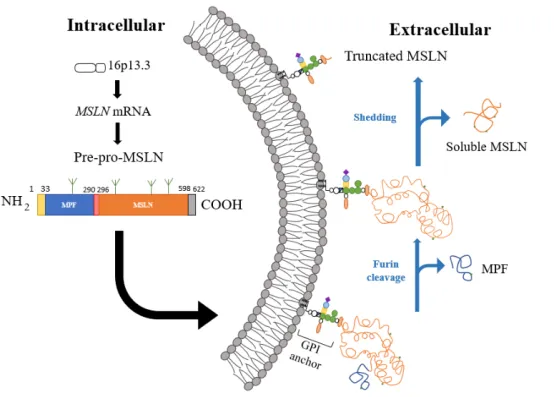
III. Biological Functions and Signal Regulatory Network of MSLN
(I) Cell Adhesion and Tumor Metastasis
One of the important biological functions of MSLN is mediating cell adhesion through interactions with other molecules. Studies have confirmed that MSLN specifically binds to CA125/MUC16, a member of the mucin family. This interaction mediates heterotypic cell adhesion in vitro and is considered a key mechanism for peritoneal metastasis of ovarian cancer and other tumors. Animal experiments provide strong evidence for MSLN's function: peritoneal cancer cell growth is significantly inhibited in MSLN knockout mice, while exogenous supplementation of MSLN protein or MPF promotes lung cancer growth and metastasis, indicating that MSLN enhances cell adhesion and migration in the tumor microenvironment to drive tumor progression and spread.
(II) Activation of Signaling Pathways and Regulation of Tumor Phenotypes
MSLN regulates biological behaviors of tumor cells by activating multiple intracellular signaling pathways. Cell surface or soluble MSLN can trigger the activation of Akt, ERK1/2, and JNK signaling pathways, which exert various biological effects through downstream cascades: on one hand, upregulating anti-apoptotic proteins such as Bclxl/Bcl2 while inhibiting pro-apoptotic genes like Bim, Bad, and Bax to reduce tumor cell apoptosis; on the other hand, increasing the expression of matrix metalloproteinase 7 (MMP7) to enhance tumor cell migration and invasion. Furthermore, MSLN can activate p38, NF-κB, and STAT3 pathways. Activated NF-κB promotes the secretion of cytokines such as IL-6 to maintain cell survival and proliferation; STAT3 accelerates cell cycle progression by promoting Cyclin E/CDK2 complex formation, driving abnormal proliferation of tumor cells.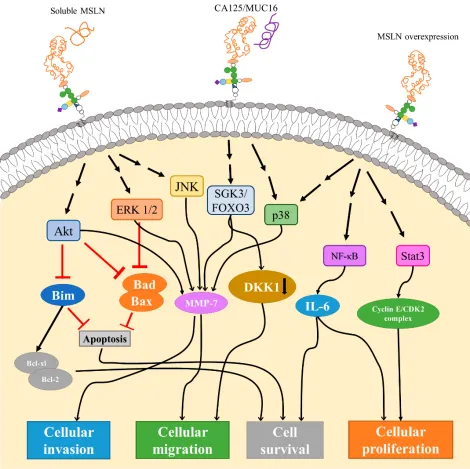
IV. Strategies and Research Progress in MSLN-Targeted Therapy
(I) Development of Antibody-Drug Conjugates (ADCs)
Anetumab ravtansine is a well-studied MSLN-targeted ADC, consisting of an anti-MSLN monoclonal antibody conjugated to the microtubule inhibitor dm4 via a cleavable linker. The drug is internalized into cells through specific binding between the antibody and MSLN on tumor cells. Released dm4 binds to tubulin, disrupting normal microtubule assembly, blocking cell cycle progression, and ultimately inducing tumor cell apoptosis. This "precision delivery" therapeutic model has shown good tumor-killing efficacy and safety in preclinical studies, providing a new direction for the treatment of solid and hematological tumors.
(II) Cellular Immunotherapy Strategies
Chimeric antigen receptor (CAR)-modified immune cell therapy is another important field in MSLN-targeted therapy. Researchers use genetic engineering to fuse MSLN-recognizing single-chain antibody fragments with immune cell activation signaling domains, constructing CAR-T and CAR-NK cells. These modified immune cells can specifically recognize and bind to MSLN-expressing tumor cells, directly killing them by releasing perforin, granzyme, and other cytotoxic molecules. Additionally, bispecific T cell engagers (BiTEs) are applied in MSLN-targeted therapy. These molecules bind to MSLN on tumor cells at one end and CD3 on T cells at the other, recruiting T cells to the tumor site and activating their killing function, showing significant anti-tumor activity in preclinical studies.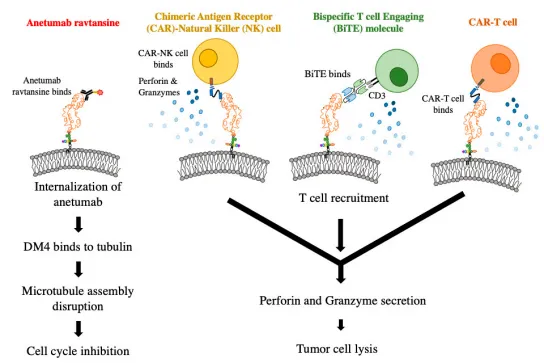
V. Summary and Outlook
With its tumor-specific expression pattern and key role in tumor progression, MSLN has become an important target in tumor immunotherapy. From structural analysis to functional research, and from signal mechanism elucidation to therapeutic strategy development, in-depth exploration of MSLN provides a crucial basis for understanding tumorigenesis mechanisms and developing new targeted therapies. Although no MSLN-targeted drugs have been approved for marketing yet, various therapeutic strategies have shown promising application prospects in preclinical studies and early clinical trials. In the future, with further revelation of MSLN's biological functions and continuous optimization of therapeutic technologies, MSLN-targeted therapies are expected to play an increasingly important role in precision treatment of solid tumors and hematological malignancies, bringing new hope for improving the prognosis of tumor patients.












 Business license (three certificates in one)