As a ubiquitous post-translational modification, protein glycosylation plays a core role in key biological processes such as cell adhesion, molecular transport, and signal transduction through covalent linkage of carbohydrate chains to proteins. Almost all membrane proteins and secretory proteins carry glycosylation modifications. Among them, N-linked glycosylation forms complex, high-mannose, and hybrid glycan structures, whose structural diversity directly affects biomolecular functions. Peptide N-glycosidase F (PNGase F), as a core tool enzyme for analyzing N-linked glycosylation, provides crucial support for glycoproteomics research and disease mechanism exploration.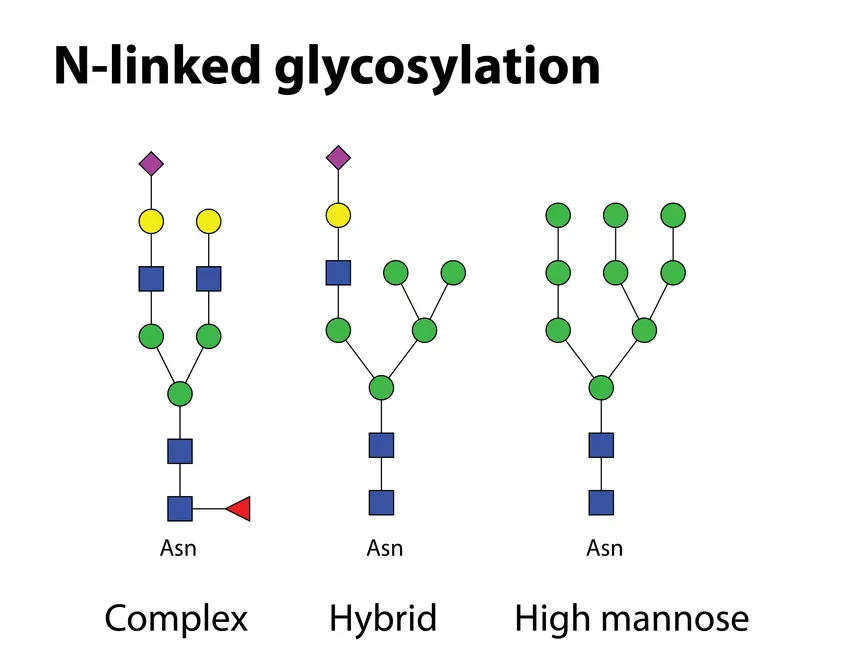
1. Biological Characteristics of Protein N-linked Glycosylation Modification
N-linked glycosylation initiates in the endoplasmic reticulum and matures in the Golgi apparatus, connecting to asparagine residues (located in the conserved Asn-X-Ser/Thr sequence) via N-acetylglucosamine (GlcNAc). Complex glycans contain fucose, sialic acid and other residues, participating in cell recognition; high-mannose glycans are rich in mannose, regulating protein folding; hybrid glycans have characteristics of both types. This structural diversity endows proteins with functional plasticity—for example, glycosylation of antibody Fc segments affects effector functions, and abnormal glycan structures on tumor cells correlate with invasion and metastasis. Abnormal glycosylation patterns are closely associated with tumors, autoimmune diseases, etc., making glycan structure analysis a key breakthrough for understanding disease mechanisms.
2. Enzymatic Properties and Mechanism of Action of PNGase F
PNGase F is a glycoside hydrolase derived from microorganisms that specifically cleaves the linkage between N-linked glycans and proteins. Its mechanism involves recognizing and hydrolyzing the amide bond between core GlcNAc of glycans and asparagine, while converting asparagine to aspartic acid, thereby releasing intact N-glycans while preserving structural information. The enzyme exhibits high activity towards complex, high-mannose, and hybrid glycans, though fucosylation of core GlcNAc reduces catalytic efficiency. Optimal reaction conditions are pH 7.0-8.0 and 37°C, with good stability in buffer systems containing reducing agents and detergents, making it suitable for deglycosylation of various glycoproteins.
3. Core Applications of PNGase F in Glycoproteomics Research
PNGase F is a key tool for separating glycans from proteins, laying the foundation for structural analysis and site identification. After enzymatic release of N-glycans, mass spectrometry can accurately analyze glycan molecular weight, composition, and linkage patterns, constructing glycan profiles under specific conditions. In tumor research, for instance, PNGase F digestion of tumor-secreted glycoproteins combined with mass spectrometry identification has specific glycans associated with tumor staging, showing potential as diagnostic markers. At the protein level, after trypsin digestion of enzyme-treated samples, LC-MS/MS enables identification of glycosylation sites—the 2 Da mass shift from asparagine-to-aspartic acid conversion provides direct evidence for site-specific analysis.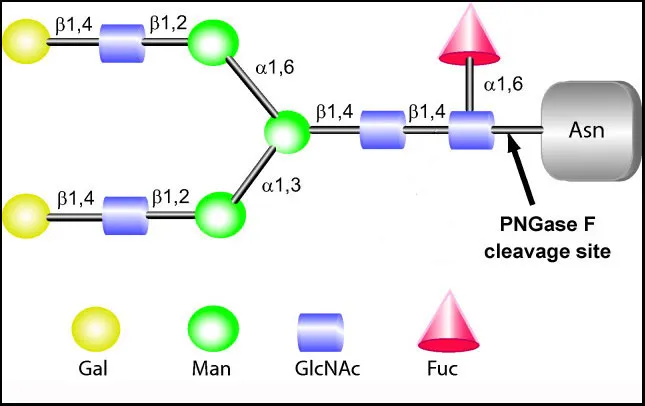
4. Application Value of PNGase F in Disease Research and Drug Development
In tumor research, PNGase F-assisted analysis has revealed elevated proportions of high-mannose glycans in tumor cells, which inhibit anti-tumor immunity by binding immune cell receptors, providing a basis for glycan-targeted therapy. In autoimmune disease studies, reduced sialylation levels of IgG Fc segments correlate with disease activity, offering new diagnostic indicators. In biopharmaceuticals, PNGase F is used for quality control of recombinant glycoprotein drugs, ensuring efficacy and safety through mass spectrometric analysis of glycan composition and homogeneity. Enzymatic treatment also facilitates protein crystallization and structural analysis, supporting glycoprotein drug optimization.
5. Technical Advantages and Research Prospects of PNGase F
PNGase F offers broad substrate range, high efficiency, and strong specificity, meeting high-throughput research needs. Combined with stable isotope labeling, it enables quantitative glycan analysis, while automated enzymatic systems improve processing efficiency, promoting large-scale development of glycoproteomics. Future efforts should optimize reaction conditions to expand enzymatic capability for resistant glycans like core-fucosylated structures. Combined with single-cell and spatial proteomics, PNGase F-assisted glycosylation analysis is expected to reveal glycan heterogeneity at single-cell level, providing new perspectives for understanding dynamic regulatory mechanisms of glycosylation and continuously expanding its application boundaries in life sciences and biomedicine.












 Business license (three certificates in one)