




TGF-β Superfamily: The core force in the life regulatory network


The TGF-β superfamily (Transforming Growth Factor-β superfamily) is a class of cytokines that are highly conserved in evolution and play a key role in regulating cell fate, tissue homeostasis and disease occurrence.
- Recent Advances
- Product Information
- Reference
The TGF-β superfamily (Transforming Growth Factor-β superfamily) is a class of cytokines that are highly conserved in evolution and play a key role in regulating cell fate, tissue homeostasis and disease occurrence. Since the discovery of TGF-β1 in 1981, the family has continued to grow, and more than 40 members have been discovered, including TGF-βs, BMPs (bone morphogenetic proteins), Activins, Nodal, GDFs (growth differentiation factors), etc. These proteins play an important role in physiological and pathological processes such as embryonic development, tissue repair, immune regulation, and tumorigenesis.
1. TGF-β superfamily signaling pathway
TGF-β superfamily members transmit signals by binding to specific receptors on the cell surface. These receptors are divided into type I and type II, and have serine/threonine kinase activity. After the ligand binds to the receptor, the type II receptor phosphorylates and activates the type I receptor, which then phosphorylates the downstream Smad protein (R-Smads). The phosphorylated R-Smads form a complex with the common Smad (Co-Smad, i.e. Smad4), are transported into the nucleus, and regulate the transcription of target genes.
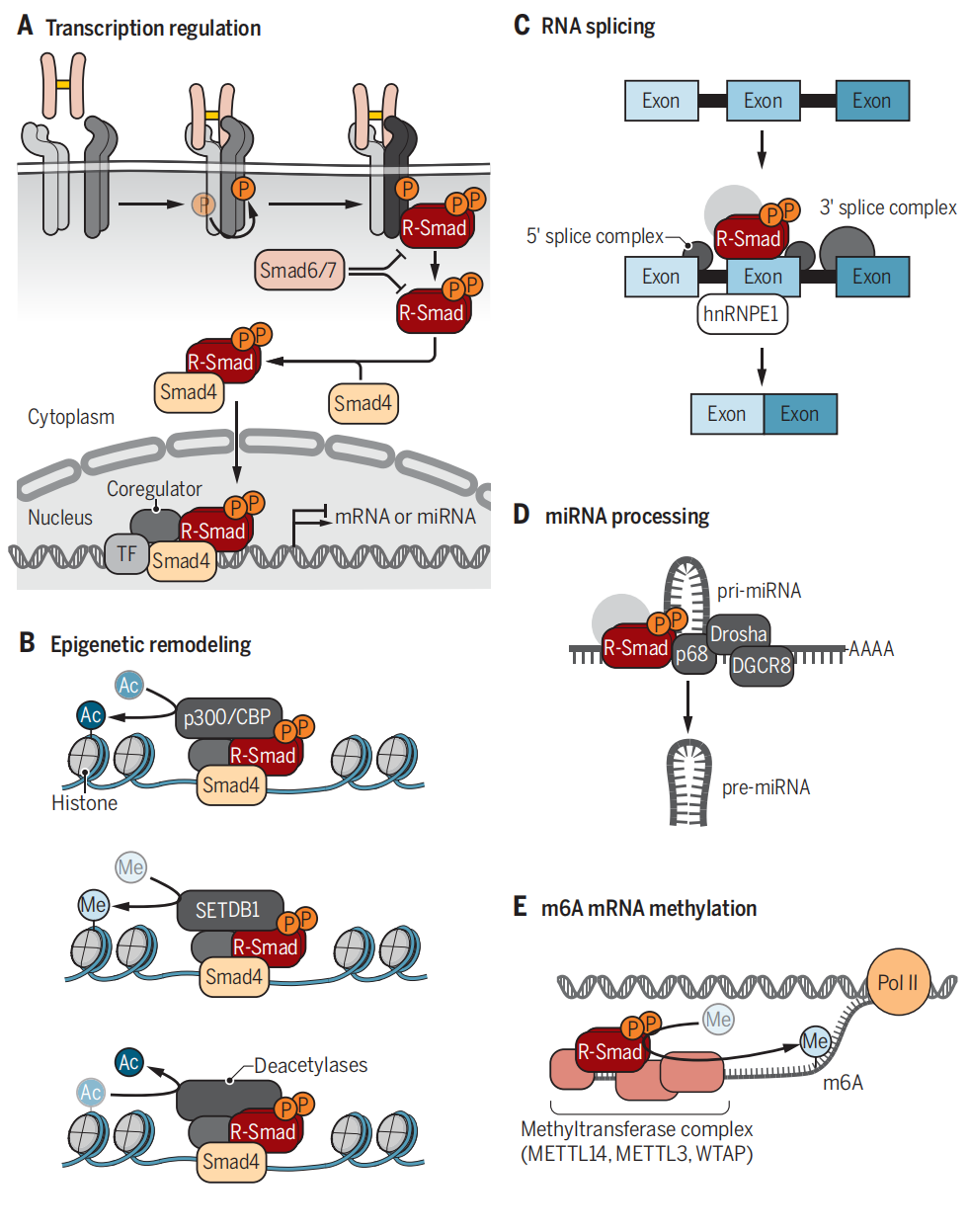
2. TGF-β superfamily and diseases
TGF-β superfamily members play a vital role in embryonic development, regulating cell proliferation, differentiation, migration and apoptosis. For example, the Nodal signaling pathway plays a key role in embryonic body axis formation and left-right asymmetric development; the BMP signaling pathway is involved in the development of the skeleton, muscle and nervous system.
In adult tissues, members of the TGF-β superfamily participate in maintaining tissue homeostasis and injury repair. For example, TGF-β1 promotes fibroblast proliferation and extracellular matrix deposition during wound healing; BMPs regulate the activity of osteoblasts and osteoclasts during bone remodeling.
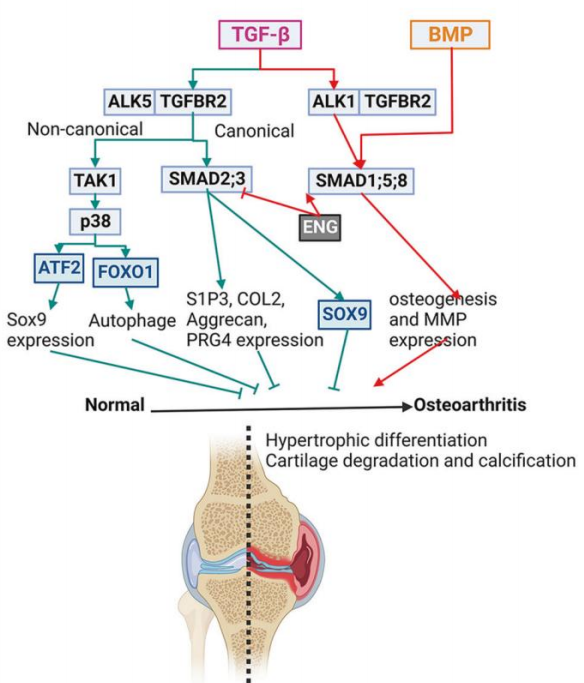
Abnormal activation or inhibition of the TGF-β signaling pathway is closely related to the occurrence and development of a variety of diseases:

Tumor: TGF-β has a dual role in tumorigenesis, which can not only inhibit tumor cell proliferation but also promote tumor invasion and metastasis.
Bone diseases: Abnormal BMP signaling pathways are associated with a variety of bone diseases, such as osteoporosis, osteosclerosis, and osteosarcoma.
Fibrotic diseases: TGF-β1 is a key mediator of fibrotic diseases, promoting fibroblast activation and excessive deposition of extracellular matrix, leading to organ failure.
3.Therapeutic strategies targeting the TGF-β superfamily: opportunities and challenges
Given the important role of the TGF-β superfamily in diseases, therapeutic strategies targeting this pathway have broad application prospects. Currently, therapeutic strategies targeting the TGF-β superfamily mainly include:
Small molecule inhibitors: Develop small molecule inhibitors targeting TGF-β receptor kinase to inhibit the activation of signaling pathways.
Monoclonal antibodies: Develop monoclonal antibodies that neutralize TGF-β ligands or receptors, blocking the conduction of signal pathways.
Gene therapy: Use gene editing technology to knock out or repair key genes in the TGF-β signaling pathway to restore the normal function of the signaling pathway.
However, therapies targeting the TGF-β superfamily also face some challenges:
Complexity of signaling pathways: The TGF-β superfamily has many members and complex signaling pathways. Different members may have different effects in different tissues and diseases, and more selective targeted drugs need to be developed.
Potential side effects: The TGF-β signaling pathway plays an important role in maintaining tissue homeostasis. Inhibition of this pathway may cause serious side effects, and the safety and efficacy of the drug need to be carefully evaluated.
4. Future Outlook: Precision Medicine and TGF-β Superfamily
With the in-depth study of the signaling pathway mechanism of the TGF-β superfamily and the rapid development of gene sequencing and bioinformatics technology, precision medicine has provided new ideas for the diagnosis and treatment of TGF-β related diseases. By analyzing the patient's gene mutation and expression profile, the patient's response to the drug can be more accurately predicted and a personalized treatment plan can be formulated.
In short, the TGF-β superfamily is a fascinating and challenging research field. With the in-depth understanding of the TGF-β signaling pathway mechanism and the development of new targeted drugs, I believe that more effective treatment options will be applied in clinical practice in the future to benefit patients.
This article is reviewed and published by the technical expert team of UA
Disclaimer: This article partially utilizes artificial intelligence assistance in its creation. If any content involves copyright or intellectual property issues, please let us know and we promise to verify and remove it as soon as possible.
Purchase recombinant protein, choose Nanjing UA-Bio
UA protein focuses on providing various protein reagents, raw materials, and services required for drug research and development, cell therapy, gene therapy, and basic scientific research, including drug target proteins, immune checkpoint proteins, cytokines, tool enzymes, customized protein expression, and full-length transmembrane protein development. Youai is committed to providing customers with high-quality products and professional services, and building a High-tech Biological Enterprise with International Competitiveness.

- Derynck, R., & Budi, E. H. (2019). Specificity, versatility, and control of TGF-β family signaling. Science Signaling, 12(570), eaav5183.
- Seoane, J., & Gomis, R. R. (2017). TGF-β Family Signaling in Tumor Suppression and Cancer Progression. Cold Spring Harbor Perspectives in Biology, 9(12), a022277.
- Mengrui Wu; Shali Wu; Wei Chen; Yi-Ping Li.(2024).The roles and regulatory mechanisms of TGF-β and BMP signaling in bone and cartilage development, homeostasis and disease.Cell Research,1748-7838.






 Business license (three certificates in one)