




New perspective on immunotherapy for ovarian cancer: How MHC tetramer technology can promote research on specific T cell responses?


Ovarian cancer, as the most lethal type of gynecological malignancy, is mostly diagnosed in the advanced stage and is prone to developing chemotherapy resistance. In recent years, immunotherapy has brought new hope to patients with advanced ovarian cancer, especially T cell-based adoptive immunotherapy and vaccine strategies. However, how to accurately identify and amplify T cells that can specifically recognize ovarian cancer-related antigens has become a key scientific issue in this field. MHC tetramer technology, as the "gold standard" for antigen-specific T cell detection, is gradually becoming an important tool for exploring the immune response mechanism of ovarian cancer and optimizing immunotherapy regimens.
- Recent Advances
- Product Information
Introduction: Why Does Ovarian Cancer Immunotherapy Require More Precise T-Cell Detection Tools?
Ovarian cancer is one of the deadliest gynecological malignancies, with most patients diagnosed at an advanced stage and prone to chemotherapy resistance. In recent years, immunotherapy has brought new hope to patients with advanced ovarian cancer, particularly T-cell-based adoptive immunotherapies and vaccine strategies. However, accurately identifying and expanding T cells that can specifically recognize ovarian cancer-associated antigens has become a key scientific challenge in this field. MHC tetramer technology, as the "gold standard" for detecting antigen-specific T cells, is increasingly becoming an important tool for exploring ovarian cancer immune response mechanisms and optimizing immunotherapy strategies.

What Is MHC Tetramer Technology? How Does Its Working Principle Support Specific T-Cell Recognition?
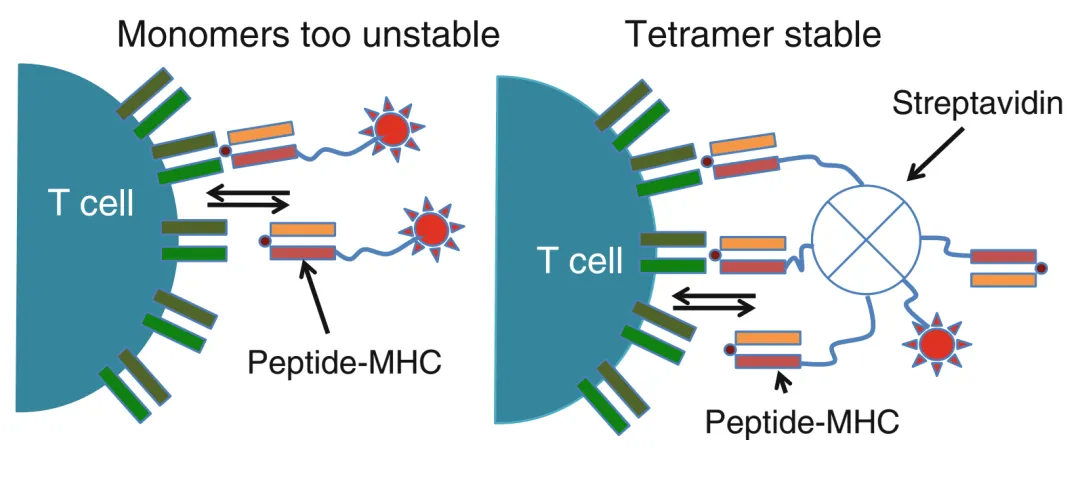
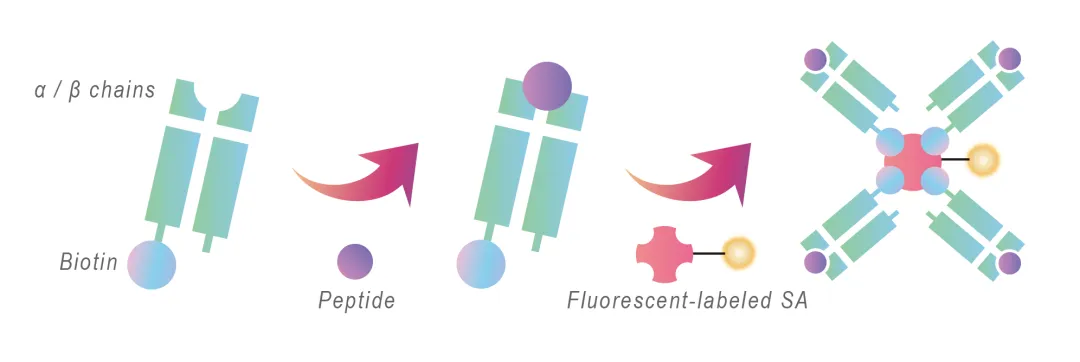
MHC tetramers are large molecular complexes formed by four major histocompatibility complex (MHC) molecules assembled via a core streptavidin system. Each MHC molecule presents a specific antigenic peptide. The complex carries a fluorescent label, enabling high-affinity binding and visual tracking of specific T-cell receptors (TCRs) through flow cytometry or microscopy techniques.
In ovarian cancer research, researchers typically select tumor-associated antigens (TAAs) (such as NY-ESO-1, survivin, TP53 mutants, etc.) or neoantigens as peptide sources to construct peptide-MHC complexes. These tetramers can accurately identify T-cell clones with anti-tumor potential in patients' peripheral blood or tumor-infiltrating lymphocytes (TILs), providing quantitative basis for subsequent immune monitoring and treatment evaluation.
What Key Issues Can MHC Tetramer Technology Address in Ovarian Cancer Research?
A major bottleneck in current ovarian cancer immunotherapy is the lack of highly specific biomarkers and therapeutic targets. MHC tetramer technology fills this gap: it can not only quantitatively assess the frequency and intensity of T-cell responses but also identify the specific antigen epitopes recognized by T cells. For example, in clinical trials of personalized neoantigen-based vaccines, researchers used custom tetramers to confirm that vaccine-induced T-cell clones can indeed recognize and kill the patient's own tumor cells.
Additionally, this technology helps the immunosuppressive mechanisms in the tumor microenvironment. By comparing the number and functional status of antigen-specific T cells in responders versus non-responders at different disease stages or during treatment, key mechanisms of immune escape, such as T-cell exhaustion or interference from regulatory T cells (Tregs), can be revealed.
How Are Ovarian Cancer-Specific MHC Tetramers Constructed? What Technical Challenges Exist?
Constructing ovarian cancer-specific MHC tetramers first requires identifying target antigens. Common strategies include using bioinformatics to predict high-affinity MHC-binding peptides or directly identifying naturally presented peptides on the surface of ovarian cancer cells via mass spectrometry. Subsequently, the peptides are combined with MHC molecules through in vitro refolding technology, and tetramer polymerization is completed using a biotin-streptavidin system.
However, several challenges remain. First, the polymorphism of MHC molecules requires the use of allele-specific molecules that fully match the patient's HLA type. The high HLA diversity among ovarian cancer patients makes broad application costly. Second, the binding stability between certain peptides and MHC molecules is poor, leading to weak tetramer signals or high false-negative rates. Third, low-frequency T cells (e.g., those targeting rare neoantigens) are difficult to detect in samples, requiring in vitro expansion or more sensitive detection methods.
How Can MHC Tetramer Technology Be Integrated with Other Immune Analysis Methods?
Tetramer staining alone cannot fully reveal the functional status of T cells. Therefore, it is often combined with technologies such as multiparameter flow cytometry, single-cell sequencing, and intracellular cytokine staining. For example, after isolating antigen-specific T cells, their phenotypes (e.g., CD8+/CD4+, memory subtypes, exhaustion markers like PD-1 and TIM-3), functions (secretion of IFN-γ, TNF-α, granzyme B), and TCR sequence diversity can be further analyzed.
Such multidimensional analysis not only assesses the anti-tumor potential of T cells but also provides a basis for personalized combination immunotherapy strategies, such as determining which patients are more suitable for PD-1/PD-L1 blockade therapy or which antigens are better suited as vaccine targets.
What Are the Clinical Applications of This Technology in Ovarian Cancer Treatment?
With the advent of personalized medicine, MHC tetramer technology is gradually moving toward clinical translation. It can be used to monitor the efficacy of therapeutic vaccines, T-cell infusion regimens (such as TIL or CAR-T therapies), and immune checkpoint inhibitors. For example, dynamically tracking the expansion of specific T-cell clones during treatment can provide early indicators for efficacy evaluation.
Moreover, T cells isolated based on tetramer sorting can be used for the development of next-generation T-cell therapies. These highly specific T-cell clones, after expansion and functional optimization, hold promise for achieving more precise and durable anti-tumor effects when reinfused into patients.
Conclusion: Is MHC Tetramer Technology a Key to Advancing Ovarian Cancer Immunotherapy?
In summary, MHC tetramer technology provides an irreplaceable tool for studying immune mechanisms, optimizing treatment strategies, and evaluating clinical efficacy in ovarian cancer by precisely identifying antigen-specific T cells. Although challenges remain in standardization, cost control, and sensitivity, the development of new methods such as multiplex tetramer panels and microfluidic single-cell technologies promises broader application in both research and clinical settings, ultimately driving ovarian cancer immunotherapy toward precision and personalization.
In the future, will we see T-cell therapies based on MHC tetramer sorting become part of routine ovarian cancer treatment? This question still requires more basic and clinical research, but there is no doubt that this technology has opened an important window for exploring tumor-immune interactions.
This article is reviewed and published by the technical expert team of UA
Disclaimer: This article partially utilizes artificial intelligence assistance in its creation. If any content involves copyright or intellectual property issues, please let us know and we promise to verify and remove it as soon as possible.
Purchase recombinant protein, choose Nanjing UA-Bio
UA protein focuses on providing various protein reagents, raw materials, and services required for drug research and development, cell therapy, gene therapy, and basic scientific research, including drug target proteins, immune checkpoint proteins, cytokines, tool enzymes, customized protein expression, and full-length transmembrane protein development. Youai is committed to providing customers with high-quality products and professional services, and building a High-tech Biological Enterprise with International Competitiveness.







 Business license (three certificates in one)