




MHC I tetramer technology: a revolutionary tool for antigen-specific T cell research


In immunological research, how to accurately identify and analyze antigen-specific T cells has always been a core issue. Cytotoxic T cells (CTLs) play a key role in antiviral and anti-tumor immunity by recognizing peptide segments (pMHC) that bind to MHC class I molecules through their T cell receptors (TCR).
- Recent Advances
- Product Information
MHC I Tetramers: How Did They Revolutionize Antigen-Specific T Cell Research?
In immunological research, accurately identifying and analyzing antigen-specific T cells has always been a core challenge. Cytotoxic T cells (CTLs) recognize peptide fragments bound to MHC class I molecules (pMHC) through their T cell receptors (TCRs), playing a critical role in antiviral and antitumor immunity. However, due to the extreme diversity of TCRs—theoretically up to 10²⁰ different structures—traditional detection methods often struggle to accurately capture specific T cell populations. It wasn’t until 1996, when Altman and colleagues introduced a groundbreaking technology—MHC I tetramers—that this field truly underwent a revolution. So, what exactly are MHC I tetramers, and how did they transform our understanding of T cell immune responses?
Why Do We Need MHC Multimer Technology?
During immune responses, particularly against viral infections or tumor development, T cells rely on the specific binding of TCRs to pMHC complexes to recognize and eliminate abnormal cells. However, the affinity between a single pMHC and a TCR is typically low, making direct detection or isolation of antigen-specific T cells extremely challenging. Traditional cellular functional assays, such as ELISpot or intracellular cytokine staining, can indirectly reflect T cell activity but cannot achieve direct labeling and quantification based on TCR specificity. Therefore, developing a tool capable of stably binding TCRs while being compatible with multicolor fluorescence detection became a major goal in immunological research. Thus, MHC multimer technology emerged, with MHC I tetramers being the earliest and most widely used representative.
How Are MHC I Tetramers Constructed?
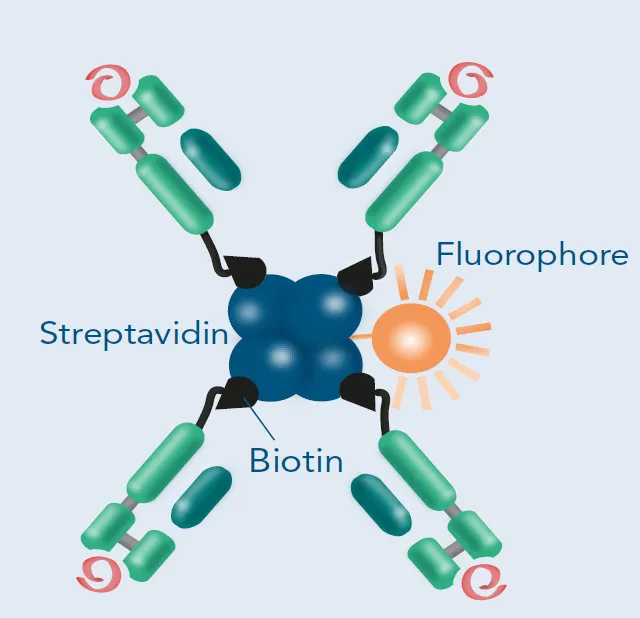
The core concept behind MHC I tetramers is to enhance binding affinity through multimerization. Specifically, each tetramer consists of four biotin-labeled pMHC I monomeric molecules bound to a fluorescently labeled avidin or streptavidin protein scaffold. Both avidin and streptavidin can efficiently bind biotin, forming extremely stable complexes. When these pMHC molecules are presented in a multivalent form, their binding strength to TCRs on the T cell surface is significantly increased, enabling efficient labeling of specific T cells. Researchers can directly observe, quantify, and even sort these cells using flow cytometry. This technology has played a significant role in viral-specific T cell research, tumor immune monitoring, and vaccine evaluation.
Are There Other Types of MHC Multimers Beyond Tetramer Technology?
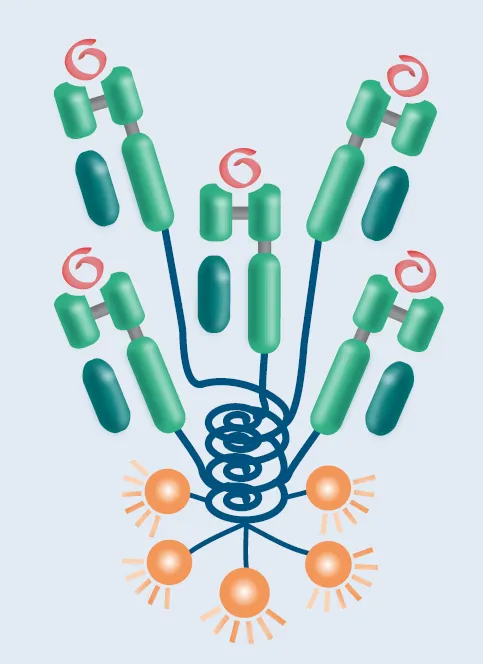
Although tetramer technology laid the foundation for MHC multimers, the scientific community has continued to explore further optimizations. As research progressed, different types of multimers were developed to achieve breakthroughs in sensitivity, stability, and functionality. For example, pentamers use coiled-coil domains to assemble five pMHC molecules, enhancing fluorescence signal intensity and binding avidity. Streptamers and Dextramers, based on the Strep-Tactin®-Tag system or dextran scaffolds, respectively, achieve multimerization while expanding application flexibility. Notably, Streptamer technology also enables reversible binding, allowing competitive dissociation of pMHC from the scaffold by adding biotin, thereby avoiding interference with T cell function and facilitating subsequent functional experiments.
Why Is Reversible Binding So Important?
In the evolution of multimer technology, "reversibility" has gradually become a key improvement. Traditional tetramers or pentamers typically cannot dissociate naturally after binding to T cells. This irreversible binding may lead to T cell activation, internalization of labeled complexes, or even impaired cell survival and function, making subsequent experiments difficult to conduct. In contrast, reversible multimers (e.g., Streptamers) can actively dissociate pMHC complexes by adding competitive small molecules (such as biotin or imidazole), restoring T cells to their native state. This feature is particularly useful for studies requiring the recovery of live cells for expansion, functional analysis, or adoptive transfer. For example, in TCR-T cell therapy development, reversible staining technology significantly enhances the reliability and effectiveness of cellular products.
What Challenges Does MHC I Tetramer Technology Currently Face?
Although tetramer technology has been widely used since its inception, it still has some limitations. In addition to the potential interference with cell function due to irreversibility, tetramers sometimes lack sufficient detection capability for low-affinity TCRs. Furthermore, in complex experimental designs requiring multiplex staining or extremely high resolution, tetramer signals may conflict with other fluorescent labels. In recent years, various new technologies, including barcode-labeled multimers and enrichment sequencing combined with multimer screening, have emerged, not only addressing the shortcomings of traditional methods but also further advancing personalized immunotherapy and precise immune monitoring.
Conclusion: Contributions and Future Prospects of Tetramer Technology
Since its introduction over two decades ago, MHC I tetramer technology has not only greatly advanced basic immunology but also provided a solid tool for clinical research and therapy. As the first-generation key reagent capable of directly labeling antigen-specific T cells in complex cell populations, it opened new avenues for immune monitoring and T cell-related therapeutic strategies. Although new types of multimers continue to evolve, tetramers remain widely used in many laboratories due to their stability and maturity. In the future, integrating protein engineering, single-cell technology, and high-throughput screening, multimer technology is expected to play an even more critical role in resolving multispecific immune responses and advancing personalized medicine.
This article is reviewed and published by the technical expert team of UA
Disclaimer: This article partially utilizes artificial intelligence assistance in its creation. If any content involves copyright or intellectual property issues, please let us know and we promise to verify and remove it as soon as possible.
Purchase recombinant protein, choose Nanjing UA-Bio
UA protein focuses on providing various protein reagents, raw materials, and services required for drug research and development, cell therapy, gene therapy, and basic scientific research, including drug target proteins, immune checkpoint proteins, cytokines, tool enzymes, customized protein expression, and full-length transmembrane protein development. Youai is committed to providing customers with high-quality products and professional services, and building a High-tech Biological Enterprise with International Competitiveness.







 Business license (three certificates in one)