




Ciliary neurotrophic factor (CNTF): from basic research to exploration of therapeutic potential


Ciliary Neurotrophic Factor (CNTF) was initially discovered in the ciliary ganglia of chickens and is a cytokine belonging to the interleukin-6 (IL-6) family. It is mainly produced by glial cells (such as astrocytes and Schwann cells) and expressed in the peripheral and central nervous systems.
- Recent Advances
- Product Information
1. What is CNTF, and where was it discovered and produced?
Ciliary Neurotrophic Factor (CNTF) was first isolated and discovered in the 1980s from the ciliary ganglion of chickens. It is a cytokine with a molecular weight of approximately 22-24 kDa and belongs to the interleukin-6 (IL-6) cytokine family. CNTF is primarily produced by glial cells, including astrocytes, Schwann cells, and oligodendrocytes. Unlike classical hormones, CNTF lacks a signal peptide sequence, preventing its release through conventional secretory pathways. It is mainly stored in the cytoplasm and is only released when cells are damaged, stressed, or dying. This characteristic allows CNTF to play a special role in the nervous system as a "damage stress signal molecule."
2. How does CNTF exert its biological functions?
CNTF initiates intracellular signaling by binding to its specific receptor complex. First, CNTF binds to the CNTF receptor alpha subunit (CNTFRα), subsequently recruiting two signal-transducing subunits, gp130 and LIFRβ, to form a highly efficient trimeric signaling complex. This process activates several critical intracellular signaling pathways, including the JAK-STAT pathway, the Ras-MAPK pathway, and the PI3K-Akt pathway. The activation of the JAK-STAT pathway promotes the expression of various neurotrophic factors and anti-apoptotic proteins, the MAPK pathway regulates cell proliferation and differentiation, and the PI3K-Akt pathway plays a key role in cell survival. The synergistic activation of these pathways enables CNTF to effectively promote neuronal survival, differentiation, and synaptic plasticity.
3. What important roles does CNTF play in the nervous system?
CNTF has extensive protective effects in the nervous system. It supports the survival of various types of neurons, including spinal motor neurons, basal forebrain cholinergic neurons, hippocampal neurons, and sensory neurons. In animal models of amyotrophic lateral sclerosis (ALS), exogenous CNTF treatment significantly delayed the degeneration of motor neurons and improved the animals' motor function. Additionally, CNTF promotes the differentiation of oligodendrocyte precursor cells into mature oligodendrocytes, enhancing myelination and repair. In models of multiple sclerosis, CNTF treatment demonstrated significant effects in promoting remyelination. Recent studies have also found that CNTF may regulate neuroinflammatory responses by modulating the activation of microglia and astrocytes.
4. What role does CNTF play in metabolic regulation?
The discovery of CNTF's role in metabolic regulation was surprising. Research has shown that CNTF can cross the blood-brain barrier and act on specific nuclei in the hypothalamus, particularly the arcuate nucleus, to regulate the expression of various appetite-related neuropeptides. It inhibits the expression of the appetite-stimulating factor neuropeptide Y (NPY) while promoting the production of the satiety signal α-MSH, thereby producing a potent anorexigenic effect. Clinical studies have shown that the recombinant CNTF variant Axokine® reduced body weight by an average of 4-5 kg in obese patients during Phase II trials and significantly improved insulin sensitivity and lipid metabolism indicators. Although it did not ultimately reach the market due to issues with neutralizing antibodies, its unique metabolic regulatory mechanisms provided important insights for developing new anti-obesity drugs, particularly its ability to maintain metabolic improvements for an extended period after discontinuation.
5. What potential does CNTF hold for treating eye diseases?
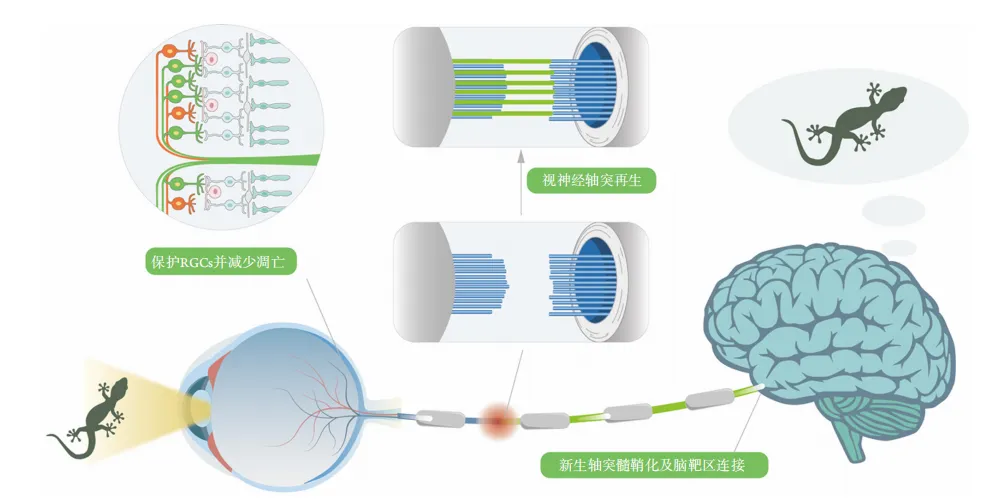
CNTF shows great potential in the treatment of eye diseases. Studies have shown that CNTF can activate the STAT3 signaling pathway, upregulate the expression of various anti-apoptotic proteins and neurotrophic factors, and effectively delay the apoptosis of photoreceptor cells. In animal models of retinitis pigmentosa, intravitreal injection of CNTF or delivery via gene therapy significantly slowed the loss of photoreceptor cells. Based on these findings, several CNTF delivery systems have entered clinical trials, including encapsulated cell technology (ECT) delivery systems and adeno-associated virus vector-mediated gene therapy methods. Phase II clinical studies showed that patients in the CNTF treatment group experienced a significantly slower decline in best-corrected visual acuity and better preservation of retinal thickness, offering new hope for patients with currently untreatable retinal degenerative diseases.
6. What challenges and future directions does CNTF research face?
Despite its multifaceted therapeutic potential, the clinical application of CNTF faces significant challenges. First, its large molecular weight (22 kDa) and hydrophilicity make it difficult to deliver to target tissues through conventional administration methods, especially across the blood-brain barrier. Second, repeated dosing may trigger immune responses, leading to the production of neutralizing antibodies that reduce efficacy. The long-term safety of CNTF, particularly its effects on multiple systems throughout the body, still requires comprehensive evaluation. Future research will focus on the following directions: developing novel delivery systems, such as nanoparticle carriers, cell-penetrating peptide fusion technologies, and exosome encapsulation techniques; using protein engineering to modify the CNTF molecule to reduce immunogenicity while improving half-life and targeting; exploring combination therapies involving CNTF and other neurotrophic factors or drugs; and conducting in-depth studies on the detailed mechanisms of CNTF in neuroimmune regulation and metabolic control to provide a theoretical foundation for precision medicine.
This article is reviewed and published by the technical expert team of UA
Disclaimer: This article partially utilizes artificial intelligence assistance in its creation. If any content involves copyright or intellectual property issues, please let us know and we promise to verify and remove it as soon as possible.
Purchase recombinant protein, choose Nanjing UA-Bio
UA protein focuses on providing various protein reagents, raw materials, and services required for drug research and development, cell therapy, gene therapy, and basic scientific research, including drug target proteins, immune checkpoint proteins, cytokines, tool enzymes, customized protein expression, and full-length transmembrane protein development. Youai is committed to providing customers with high-quality products and professional services, and building a High-tech Biological Enterprise with International Competitiveness.







 Business license (three certificates in one)