




Solution for gastrointestinal organs in mice


In the field of biomedical research, the emergence of organoid technology has completely changed our understanding of organ development, disease mechanisms, and drug responses. As an important branch of this technology, mouse gastrointestinal organoids have become powerful tools for studying gastrointestinal biology, disease modeling, and drug screening.
- Recent Advances
- Product Information
Solution for gastrointestinal organs in mice
The advent of organoid technology has revolutionized biomedical research, profoundly enhancing our understanding of organ development, disease mechanisms, and drug responses. As a critical branch of this technology, mouse gastrointestinal organoids have become powerful tools for studying gastrointestinal biology, disease modeling, and drug screening.
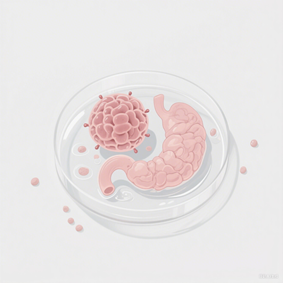
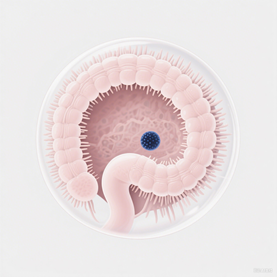
Tired of Organoids That "Don’t Grow Well or Look Right"?
We’ve Prepared the "Golden Formula" for Organoid Culture Cytokines!
I. Mouse Normal Gastric Organoid Culture Protocol
Preparation of Complete Medium for Mouse Gastric Organoids:
Mix basal medium, cytokines (1-6), and various additives in specified proportions to prepare the complete medium.
1. Primary Culture
(1) Quickly dissect the mouse abdominal cavity in a biosafety cabinet, remove the gastric tissue, and place it in pre-cooled PBS (with penicillin, streptomycin, and primary antibiotics). Open the stomach, rinse out contents, and remove outer fat and blood vessels.
(2) Collect the cleaned tissue fragments in a 1.5 mL EP tube and mince thoroughly into a paste-like consistency using sterile sharp ophthalmic scissors. The degree of mincing affects digestion time; finer pieces shorten digestion. Transfer the minced tissue to a 15 mL sterile centrifuge tube.
(3) Add 10 volumes of tissue digestion solution and digest at 37°C with shaking for 10-30 minutes. Monitor periodically; terminate digestion when cells are released and most cells form clusters (avoid single-cell).
(4) Add fetal bovine serum (FBS) to a final concentration of 2-5% or BSA to 0.1%, and mix by pipetting.
(5) Filter the cell suspension through a 70 µm cell strainer, centrifuge at 1000 rpm for 5 minutes, and discard the supernatant.
(6) If red pellet (red blood cells) is observed, add 2 mL red blood cell lysis buffer, mix, incubate for 3 minutes, centrifuge at 1000 rpm for 5 minutes, and discard supernatant.
(7) Resuspend the pellet in an appropriate amount of basal medium or PBS.
(8) Mix Matrigel and crypts at a suitable ratio. For a 24-well plate, add 25-30 µL Matrigel mixture per well ( at 4°C).
(9) Incubate the plate at 37°C for 20-30 minutes for gelation, then add pre-warmed complete medium for culture.
2. Organoid Passaging
(1) Aspirate medium, add 1-2 mL of 4°C PBS per well, incubate for 2 minutes.
(2) Gently dissociate Matrigel by pipetting, collect in a 15 mL centrifuge tube, adjust volume to 10-14 mL with PBS, and incubate at 4°C for 20-30 minutes (group 3-5 wells together). Centrifuge at 1000 rpm for 5 minutes, discard supernatant.
(3) Resuspend organoids in Matrigel, plate 25-30 µL per well in a 24-well plate, gel at 37°C for 20-30 minutes, and add complete medium.
3. Organoid Cryopreservation
(1) Aspirate medium, add 1-2 mL of 4°C PBS per well, incubate for 2 minutes.
(2) Gently dissociate Matrigel, collect in a 15 mL tube, adjust volume to 10-14 mL with PBS, incubate at 4°C for 20-30 minutes (group 3-5 wells). Centrifuge at 1000 rpm for 5 minutes, discard supernatant.
(3) Resuspend in cryopreservation medium gently. For a 24-well plate, cryopreserve 2-3 wells per tube (1 mL/tube).
(4) Label tubes, perform programmed freezing, and transfer to liquid nitrogen for long-term storage.
4. Organoid Recovery
(1) Prepare 10 mL DMEM/F12 basal medium in a 15 mL centrifuge tube.
(2) Retrieve frozen organoids from liquid nitrogen and thaw rapidly in a 37°C water bath.
(3) Gently shake the vial during thawing to ensure complete dissolution within 1-2 minutes.
(4) Transfer the thawed suspension to the centrifuge tube, pipette gently 6-8 times, centrifuge at 1000 rpm for 5 minutes, and discard supernatant.
(5) Resuspend in Matrigel, plate 25-30 µL per well, gel at 37°C for 20-30 minutes, and add complete medium.
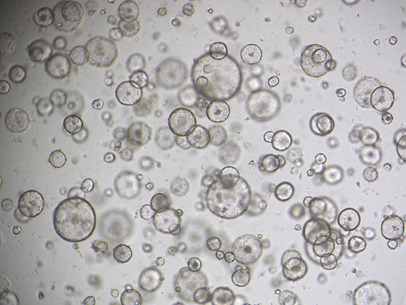
Results (P8 D3):
| Product Code | Product Name | Specification | List Price | First Order 70% Off |
|---|---|---|---|---|
| UA090042 | Gastric Organoids Cytokine Set, Mouse | 100 mL system (S) | 3480 | 2436 |
| 100 mL system (M) | 15900 | 11130 |
Promotion valid until December 31, 2025.
II. Mouse Normal Small Intestinal Organoid Culture Protocol
Preparation of Complete Medium for Mouse Small Intestinal Organoids:
Mix basal medium, cytokines (1-4), and additives in specified proportions.
1. Primary Culture
(1) Place intact mouse small intestine in pre-cooled PBS (with penicillin, streptomycin, primary antibiotics). Open longitudinally with sterile scissors, scrape off debris with a coverslip, and rinse with PBS.
(2) Cut into 3-5 mm segments, transfer to a 50 mL tube, and wash with PBS 2-3 times.
(3) Add 30 mL of 5 mM EDTA/PBS solution, digest on a 4°C shaker for 20-30 minutes, monitoring crypt release. Total digestion time should not exceed 40 minutes.
(4) Discard digestion solution, add pre-cooled PBS to remove EDTA.
(5) Add 30 mL PBS with 0.1% BSA, vortex to release crypts.
(6) Filter supernatant through a 70 µm strainer, distribute into two 15 mL tubes, centrifuge at 1000 rpm for 5 minutes, discard supernatant.
(7) Repeat steps 5-6 twice to increase crypt yield.
(8) Resuspend pellet in basal medium or PBS.
(9) Mix Matrigel and crypts, plate 25-30 µL per well (4°C).
(10) Gel at 37°C for 20-30 minutes, add complete medium.
2. Organoid Passaging
(Same steps as gastric organoid passaging)
3. Organoid Cryopreservation
(Same steps as gastric organoid cryopreservation)
4. Organoid Recovery
(Same steps as gastric organoid recovery)
Results (P4 D1):

| Product Code | Product Name | Specification | List Price | First Order 70% Off |
|---|---|---|---|---|
| UA090043 | Small Intestinal Organoids Cytokine Set, Mouse | 100 mL system (S) | 3800 | 2660 |
| 100 mL system (M) | 18800 | 13160 |
Promotion valid until December 31, 2025.
For technical inquiries, please contact us!
This article is reviewed and published by the technical expert team of UA
Disclaimer: This article partially utilizes artificial intelligence assistance in its creation. If any content involves copyright or intellectual property issues, please let us know and we promise to verify and remove it as soon as possible.
Purchase recombinant protein, choose Nanjing UA-Bio
UA protein focuses on providing various protein reagents, raw materials, and services required for drug research and development, cell therapy, gene therapy, and basic scientific research, including drug target proteins, immune checkpoint proteins, cytokines, tool enzymes, customized protein expression, and full-length transmembrane protein development. Youai is committed to providing customers with high-quality products and professional services, and building a High-tech Biological Enterprise with International Competitiveness.







 Business license (three certificates in one)