




Targeting IL-31RA: A New Mechanism and Prospect for Itching Treatment


The interleukin-31 receptor alpha subunit (IL-31RA) has become an important target in the treatment of chronic inflammatory skin diseases. As a receptor primarily expressed on the surface of peripheral sensory neurons and some immune cells, IL-31RA activates downstream signaling pathways upon binding to the ligand IL-31, directly participating in the generation and transmission of itch signals.
- Recent Advances
- Product Information
In recent years, the interleukin-31 receptor alpha subunit (IL-31RA) has emerged as a critical target in the treatment of chronic inflammatory skin diseases. As a receptor primarily expressed on peripheral sensory neurons and certain immune cells, IL-31RA, upon binding to its ligand IL-31, activates downstream signaling pathways directly involved in the generation and transmission of itch signals. In 2022, a biological agent targeting IL-31RA was approved internationally for the treatment of pruritus associated with atopic dermatitis, marking the entry of pruritus treatment into an era of precision targeting.
1. What is IL-31RA? Its Structure and Signaling Mechanism
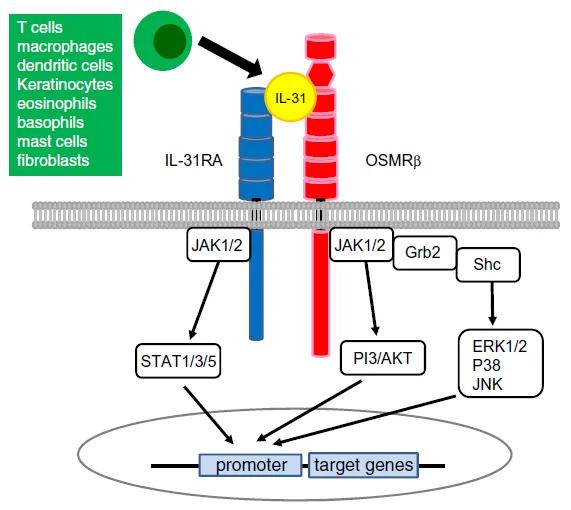
IL-31RA is a member of the type II cytokine receptor family and must form a heterodimer with the oncostatin M receptor beta subunit (OSMRβ) to efficiently bind IL-31 and initiate intracellular signal transduction. This receptor is widely distributed on cutaneous sensory nerve endings, keratinocytes, and some dendritic cells. Upon IL-31 binding, it primarily activates the JAK-STAT and MAPK pathways, inducing neural hypersensitivity and inflammatory responses, thereby triggering intense itching.
Structurally, IL-31RA consists of three parts: an extracellular domain, a transmembrane domain, and an intracellular domain. The extracellular domain is responsible for specific binding to IL-31, while the intracellular domain mediates the recruitment and activation of downstream signaling molecules. This receptor is highly expressed in various Th2-type inflammatory diseases and serves as a key molecular link between the immune and nervous systems in regulating pruritus.
2. How Does the IL-31/IL-31RA Pathway Cause Itching?
In diseases such as atopic dermatitis and prurigo nodularis, immune cells release large amounts of IL-31. This cytokine binds to IL-31RA on neuronal surfaces, leading to the activation of transient receptor potential channels (e.g., TRPV1 and TRPA1) and promoting the release of neuropeptides (such as Substance P), thereby enhancing the transmission of itch signals. Simultaneously, this pathway causes abnormal proliferation of nerve fibers extending toward the epidermis, further amplifying the sensation of itching.
This mechanism not only explains the recurrent scratching behavior in such patients but also provides a theoretical basis for developing drugs that block IL-31RA.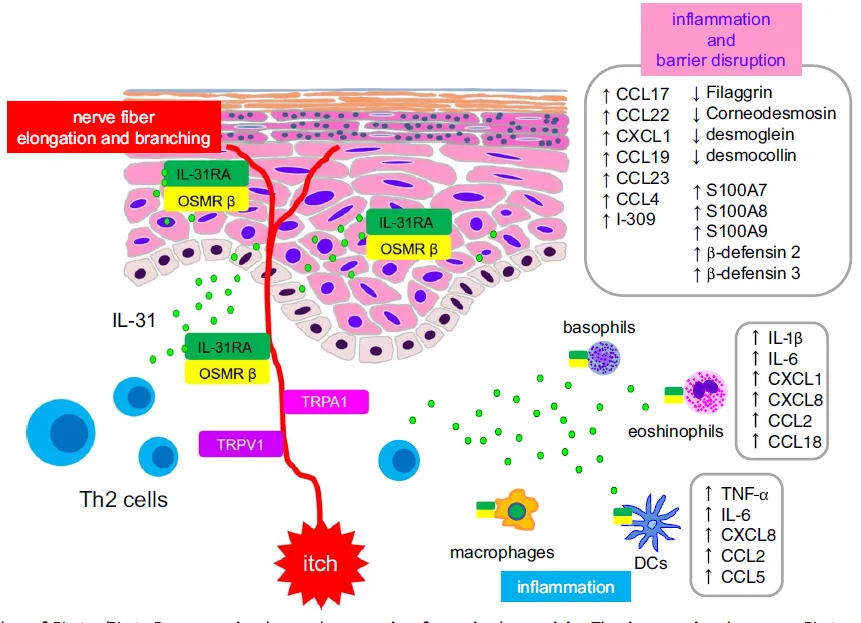
3. Which Clinical Studies Support Targeting IL-31RA for Pruritus Treatment?
Multiple clinical trials have demonstrated that anti-IL-31RA monoclonal antibodies significantly improve patients' itching intensity and quality of life. A phase III study published in a leading journal showed that patients treated with antibodies targeting this receptor experienced a significant reduction in the Visual Analog Scale (VAS) for itching within weeks, along with decreased nighttime awakenings and improved severity of skin lesions. The overall safety profile of the drug was favorable, with most adverse events being mild to moderate, and no serious signals were reported.
These results not only confirm the effectiveness of IL-31RA as a therapeutic target but also highlight its potential in managing chronic pruritic diseases.
4. How Does IL-31RA Compare to Other Pruritus Treatment Targets?
Traditional pruritus treatments have largely relied on antihistamines, corticosteroids, or immunosuppressants, which often broadly suppress immune responses and are associated with numerous side effects, while providing limited efficacy for most chronic itching patients. Although new biological agents and small-molecule drugs targeting specific signaling pathways (e.g., IL-4Rα, JAK-STAT) have made some progress, unmet needs remain.
The unique advantage of IL-31RA inhibitors lies in their mechanism of action, which directly targets the core of "immune-neural crosstalk," suppressing the initiation and transmission of itch signals at the source. This not only leads to a faster onset of action but also offers greater pathological specificity. This mechanism also opens new avenues for treating non-dermatitic itching conditions, such as uremic pruritus and cholestatic pruritus.
5. What Are the Future Research Directions for Targeting IL-31RA?
Current research primarily focuses on atopic dermatitis, but the IL-31 signaling pathway may also play a role in other types of pruritic diseases. Future research directions may include exploring the expression and function of this receptor in conditions such as chronic kidney disease-associated pruritus and lymphoma-related itching; developing bispecific antibodies or combination therapy strategies to enhance treatment efficacy; and using imaging and biomarker analyses to further elucidate the deeper mechanisms of its regulation of neuro-immune interactions.
Conclusion
The therapeutic strategy targeting IL-31RA offers new hope for patients suffering from chronic pruritus. The central role of this receptor in itch signal transduction has been confirmed by numerous basic and clinical studies. Its specific inhibitors not only demonstrate favorable efficacy and safety but also advance pruritus treatment from symptomatic management to precision-targeted modulation. With more research findings expected in the future, IL-31RA is poised to become a fundamental therapeutic target for various pruritic diseases.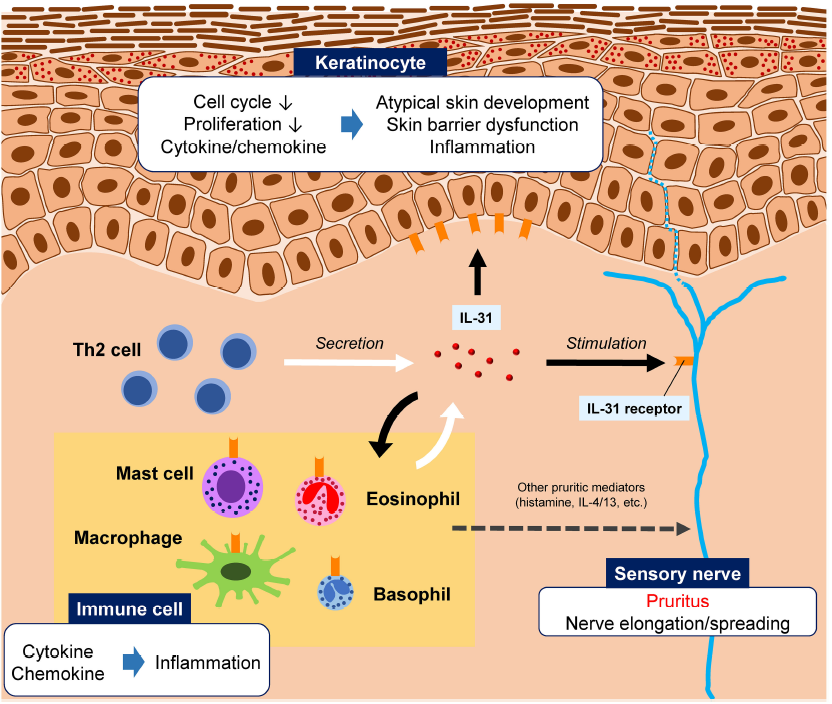
This article is reviewed and published by the technical expert team of UA
Disclaimer: This article partially utilizes artificial intelligence assistance in its creation. If any content involves copyright or intellectual property issues, please let us know and we promise to verify and remove it as soon as possible.
Purchase recombinant protein, choose Nanjing UA-Bio
UA protein focuses on providing various protein reagents, raw materials, and services required for drug research and development, cell therapy, gene therapy, and basic scientific research, including drug target proteins, immune checkpoint proteins, cytokines, tool enzymes, customized protein expression, and full-length transmembrane protein development. Youai is committed to providing customers with high-quality products and professional services, and building a High-tech Biological Enterprise with International Competitiveness.







 Business license (three certificates in one)