




MUC-1: In depth exploration from molecular structure to clinical potential


MUC-1,也称为粘蛋白-1,是一种广泛表达于上皮细胞和造血细胞表面的跨膜糖蛋白。该蛋白拥有众多别名,包括Breast carcinoma-associated antigen DF3、Cancer antigen 15-3 (CA15-3)、CD227、Episialin等,这些名称反映了其在多种研究和临床背景中的应用。
- Recent Advances
- Product Information
What is MUC-1? What are its aliases and basic functions in the human body?
MUC-1, also known as mucin-1, is a transmembrane glycoprotein widely expressed on the surface of epithelial cells and hematopoietic cells. This protein has numerous aliases, including Breast carcinoma-associated antigen DF3, Cancer antigen 15-3 (CA15-3), CD227, and Episialin, reflecting its applications across various research and clinical contexts. MUC-1 possesses a receptor-like structure that senses changes in the extracellular environment and activates downstream signaling pathways through its cytoplasmic domain. Its extracellular segment can be released under specific conditions, acting either as a molecular "decoy" for mucosal pathogens or as a diagnostic and prognostic serum marker for certain respiratory diseases, such as lung cancer and interstitial lung disease. Furthermore, in its activated state, the cytoplasmic tail of MUC-1 (MUC1-CT) can regulate inflammatory responses and exert anti-inflammatory effects in various chronic airway diseases.
What are the key features of the molecular structure of MUC-1?
The MUC-1 protein consists of an N-terminal subunit (also known as KL-6), composed of a signal peptide, variable number tandem repeats (VNTR), and a SEA domain. Its C-terminal subunit includes an extracellular region, a transmembrane domain, and a cytoplasmic tail (CT). The extracellular segment of the protein can enter the extracellular space via autoproteolytic cleavage or metalloproteinase-mediated processing. MUC1-C is glycosylated at the Asn-36 site, a modification that influences its binding capacity to molecules such as galectin-3. The cytoplasmic tail contains multiple potential phosphorylation sites that respond to growth factor and kinase signals. The CQC motif promotes MUC1-C oligomerization, while the RRK motif facilitates its nuclear entry via importin β. Additionally, this region contains a binding site for β-catenin. The MUC1 gene is located on chromosome 1 and undergoes alternative splicing to produce over 70 isoforms, further expanding its functional diversity.
How does the expression of MUC-1 differ between normal and tumor tissues?
In normal human tissues, MUC-1 is polarly distributed and highly expressed on the luminal surface of epithelial cells in the nasopharynx, bronchi, lungs, stomach, and skin, where it functions as a lubricant, moisturizer, and physical barrier. In contrast, in various malignant tumors—such as breast cancer, bladder cancer, pancreatic cancer, and ovarian cancer—MUC-1 is overexpressed and exhibits abnormal glycosylation. Its cellular distribution loses polarity, spreading across the entire cell surface, thereby contributing to tumor initiation, invasion, and metastasis. These changes in expression patterns and structure make it an important target for prognosis and treatment in multiple cancers.
Through which mechanisms does MUC-1 contribute to the progression of lung cancer?
In lung cancer, MUC-1 promotes malignant progression through multiple pathways:
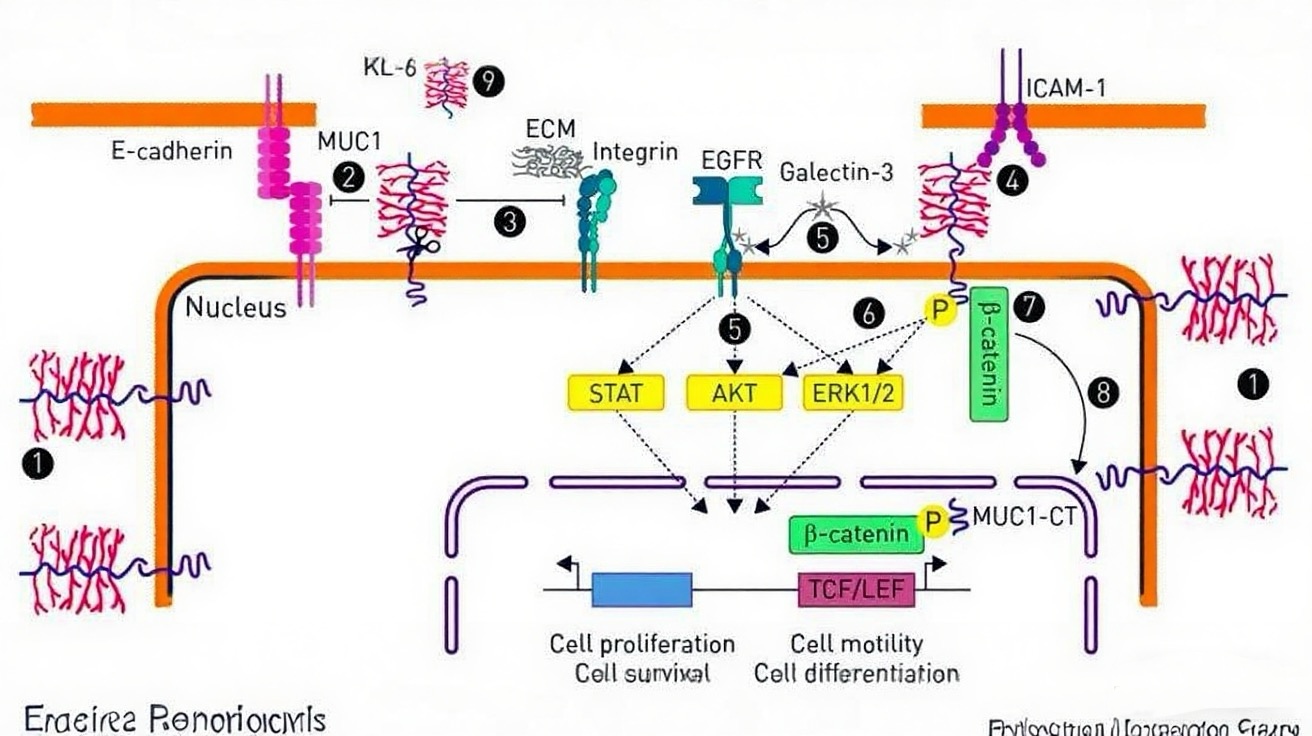
Its overexpression and depolarization enhance interactions with various signaling molecules, increasing the invasive and metastatic capabilities of tumor cells;
It disrupts intercellular connections by interfering with E-cadherin, reducing cell adhesion;
It inhibits integrin-mediated cell-matrix adhesion;
It binds to adhesion molecules such as ICAM-1, promoting interactions between tumor cells and the endothelium;
MUC1-C binding to galectin-3 can enhance EGFR signal activation, thereby promoting cell proliferation and survival;
It activates the MAPK and PI3K/AKT signaling pathways, synergistically enhancing cell motility and growth;
Phosphorylated MUC1-CT binds to β-catenin and enters the nucleus to regulate genes involved in proliferation and differentiation;
Its shed fragment, KL-6, serves as a serum marker for prognostic assessment and treatment response monitoring in lung cancer.
What role does MUC-1 play in airway inflammation and chronic lung diseases?
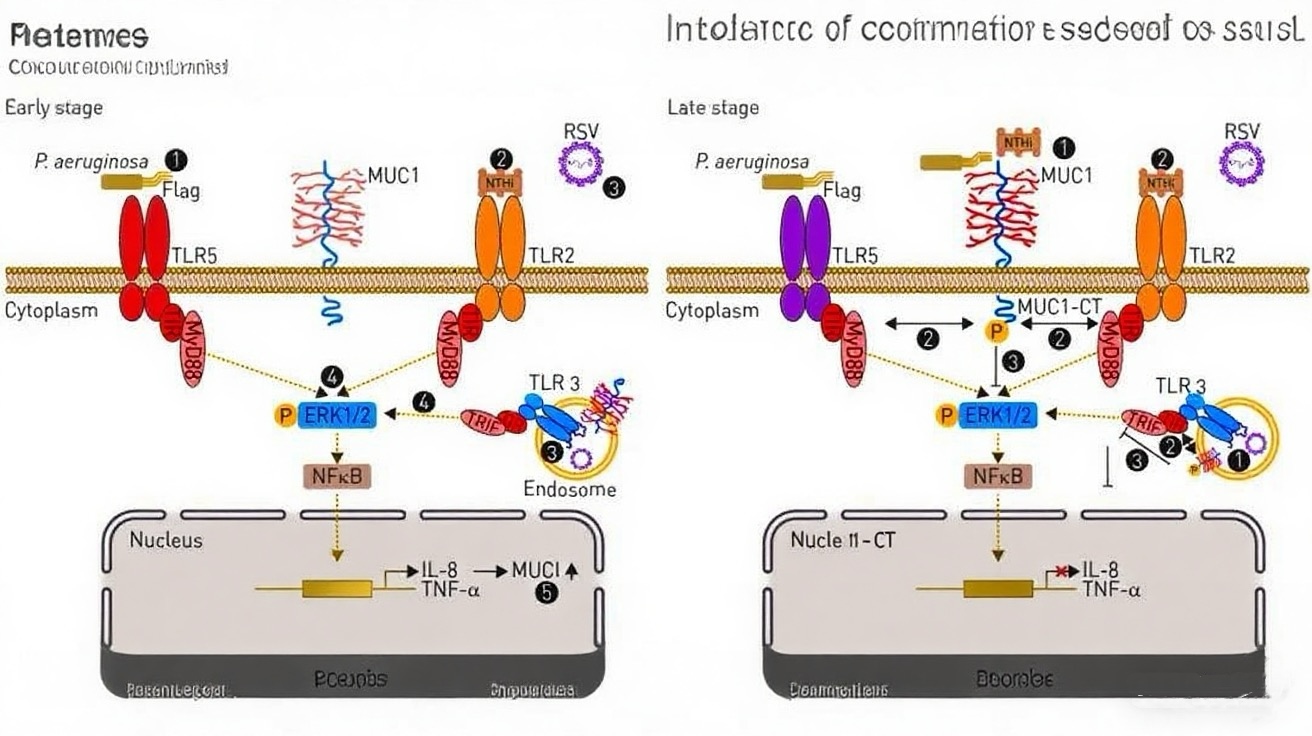
During airway infections and inflammation, MUC1-CT can form complexes with Toll-like receptors (e.g., TLR5), modulating innate immune responses. In chronic rhinosinusitis (CRS), severe asthma, and chronic obstructive pulmonary disease (COPD), MUC-1 participates in corticosteroid-mediated anti-inflammatory responses, alleviating inflammatory damage by promoting the expression of anti-inflammatory genes. These functions highlight its dual regulatory role in respiratory diseases, potentially fostering tumor development while exerting protective effects in inflammatory environments.
What progress has been made in the clinical development of MUC-1-targeted therapies?
As of 2023, at least 19 candidate drugs targeting MUC-1 have entered clinical trials worldwide, encompassing monoclonal antibodies, antibody-drug conjugates (ADCs), radioligand therapies, CAR-T cell therapies, and therapeutic vaccines. Currently, several CAR-T targeted therapy trials are actively recruiting patients for malignant solid tumors such as lung cancer, breast cancer, and intrahepatic cholangiocarcinoma. These strategies aim to leverage the high expression and unique glycosylation patterns of MUC-1 in tumor cells to achieve precise targeting, thereby improving treatment responses and patient survival rates.
Summary: What is the dual role of MUC-1 in physiological and pathological processes?
As a multifunctional molecule, MUC-1 not only plays a protective role in the normal physiological activities of epithelial cells but also acts as a key driver in various diseases, particularly cancer. Its structural and functional characteristics—including abnormal glycosylation, phosphorylation, and protein cleavage—profoundly influence intracellular signal transduction and gene expression. From respiratory inflammation to the development and progression of malignant tumors, MUC-1 is involved in regulation, making it an important diagnostic marker and therapeutic target. With the continued maturation of MUC1-targeted therapeutic strategies, especially immunotherapies and combination regimens based on its molecular features, new treatment options are expected to emerge for high-incidence tumors such as lung cancer and breast cancer.
This article is reviewed and published by the technical expert team of UA
Disclaimer: This article partially utilizes artificial intelligence assistance in its creation. If any content involves copyright or intellectual property issues, please let us know and we promise to verify and remove it as soon as possible.
Purchase recombinant protein, choose Nanjing UA-Bio
UA protein focuses on providing various protein reagents, raw materials, and services required for drug research and development, cell therapy, gene therapy, and basic scientific research, including drug target proteins, immune checkpoint proteins, cytokines, tool enzymes, customized protein expression, and full-length transmembrane protein development. Youai is committed to providing customers with high-quality products and professional services, and building a High-tech Biological Enterprise with International Competitiveness.







 Business license (three certificates in one)