




PLGF: Analyzing key biomarkers in risk assessment of preeclampsia


Placental growth factor (PLGF) is a glycosylated dimer protein secreted by trophoblasts and belongs to the vascular endothelial growth factor (VEGF) family. It binds to VEGF receptor 1 (VEGFR-1) and its expression level significantly increases during pregnancy.
- Recent Advances
- Product Information
What is PLGF and How Is It Related to Preeclampsia?
Placental growth factor (PLGF) is a glycosylated dimeric protein secreted by trophoblasts and belongs to the vascular endothelial growth factor (VEGF) family. It binds to VEGF receptor 1 (VEGFR-1), with its expression significantly increasing during pregnancy. PLGF plays a crucial role in maintaining normal pregnancy by promoting placental angiogenesis and uterine spiral artery remodeling. However, in patients with preeclampsia (PE), PLGF levels are significantly reduced, which is closely related to its pathogenesis. Studies have shown that PLGF is not only a sensitive indicator for predicting preeclampsia but also provides a basis for early intervention.
How Does PLGF Participate in the Pathogenesis of Preeclampsia?
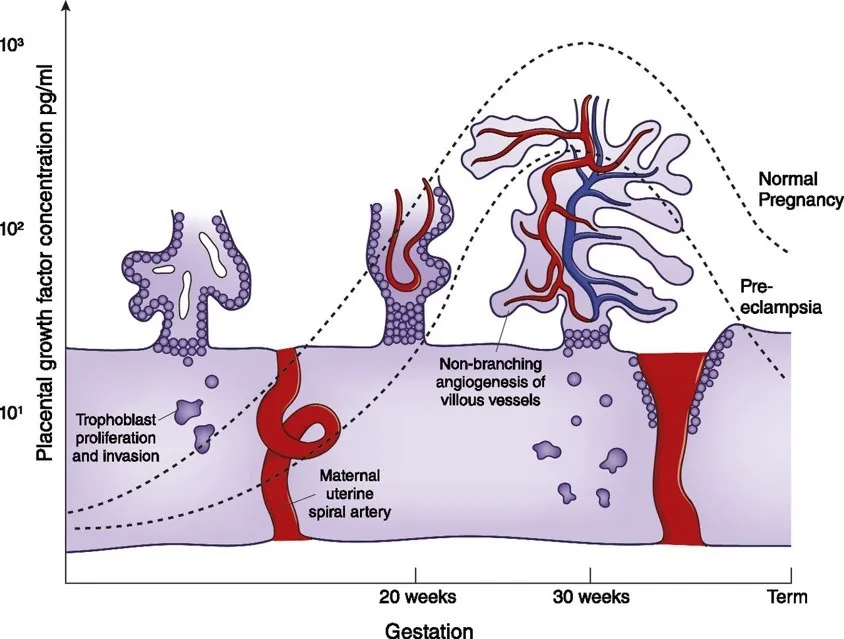
PLGF exhibits dynamic expression characteristics at different stages of pregnancy. It is expressed at low levels during weeks 5-15 of pregnancy, increases sharply between weeks 15-26, peaks at weeks 26-30, and gradually declines thereafter. This pattern is closely related to placental oxygen demand and functional maturation. In normal pregnancies, PLGF promotes trophoblast proliferation, invasion, and uterine spiral artery remodeling, establishing an effective fetal-placental circulation network. However, in preeclampsia patients, reduced PLGF levels lead to insufficient spiral artery remodeling, decreased placental perfusion, and subsequent clinical symptoms such as hypertension and proteinuria.
How Does PLGF Influence Pregnancy by Regulating Angiogenesis?
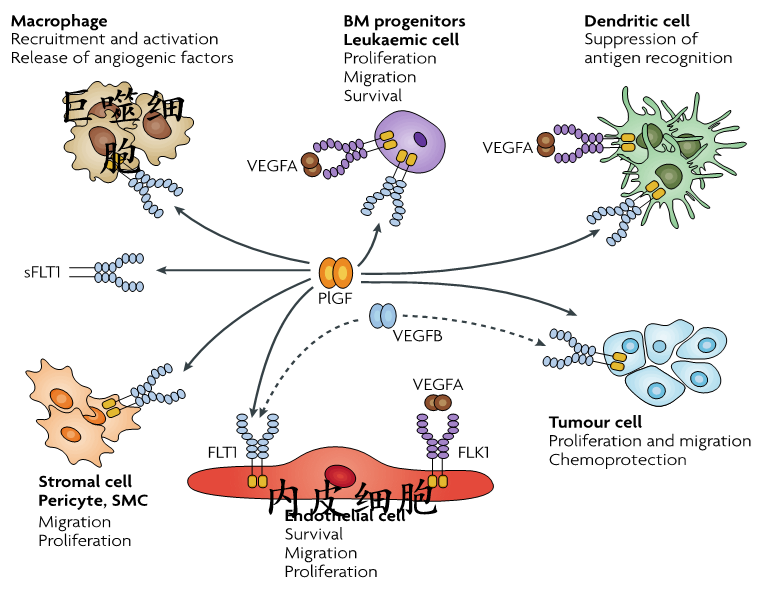
PLGF promotes angiogenesis through two main mechanisms: first, by binding to the macrophage membrane receptor Flt-1, it recruits and activates macrophages, releasing angiogenic factors; second, by acting on the endothelial cell membrane receptor Flt-1, it maintains cell survival and stimulates migration and proliferation. However, in preeclampsia patients, high levels of soluble fms-like tyrosine kinase-1 (sFlt-1) competitively bind to PLGF, inhibiting its pro-angiogenic function and ultimately leading to abnormal placental vascular network formation.
How Does PLGF Promote Vasodilation and Placental Blood Flow Perfusion?
In normal pregnancies, PLGF binds to the trophoblast receptor Flt-1, activating endothelial nitric oxide synthase (eNOS) to convert L-arginine into nitric oxide (NO), thereby inducing vasodilation and increasing placental blood flow perfusion. In preeclampsia patients, elevated sFlt-1 levels inhibit the binding of PLGF to its receptor, while excessive expression of arginase II reduces L-arginine concentration, causing eNOS to generate superoxide anions instead of NO. This further reduces vasodilation function, exacerbating placental ischemia and hypoxia.
What Is the Evidence-Based Support for PLGF as a Biomarker for Predicting Preeclampsia?
Since the initial isolation of PLGF cDNA from human placenta in 1991, multiple studies have established its importance as a predictive marker for preeclampsia. A 1998 study found that serum PLGF levels were significantly lower in preeclampsia patients than in normal pregnant women. A 2004 study published in the New England Journal of Medicine showed that PLGF levels decreased as early as weeks 13-16 of pregnancy, 9-11 weeks before clinical symptoms appeared. A 2010 multicenter study further confirmed that PLGF has high sensitivity (AUC = 0.92) for predicting preeclampsia. A large-scale randomized controlled trial published in The Lancet in 2019 demonstrated that PLGF testing reduced the average time to diagnose preeclampsia from 4.1 days to 1.9 days and significantly lowered the incidence of severe complications.
How Do International Guidelines Evaluate the Role of PLGF in Preeclampsia Screening?
The International Federation of Gynecology and Obstetrics (FIGO) explicitly stated in its 2019 guidelines that PLGF is the best biochemical marker for screening preeclampsia in early pregnancy. Specifically, for early-onset preeclampsia, maternal PLGF concentration alone achieved a detection rate of 56% with only a 9% false-positive rate. Additionally, PLGF testing has shown significant value in the differential diagnosis of suspected preeclampsia and predicting preterm birth risk.
What Is the Clinical Significance of PLGF Testing?
PLGF testing not only identifies high-risk groups for preeclampsia in advance but also provides a window for clinical intervention. By monitoring PLGF levels early, doctors can take timely preventive measures, such as low-dose aspirin treatment, to improve maternal and infant outcomes. Furthermore, combining PLGF with Doppler ultrasound, blood pressure monitoring, and other indicators can further enhance the accuracy and reliability of preeclampsia prediction.
Conclusion: Why Is PLGF Considered the Optimal Biomarker for Preeclampsia Risk Assessment?
Due to its key role in placental angiogenesis and spiral artery remodeling, as well as its close association with the pathological mechanisms of preeclampsia, PLGF has become the best biomarker for predicting this condition. Its dynamic changes and high sensitivity make it irreplaceable for early screening, risk stratification, and clinical intervention. With further research and advancements in detection technology, PLGF is expected to contribute globally to reducing maternal and infant mortality rates, achieving the strategic goals of "Healthy China 2030."
This article is reviewed and published by the technical expert team of UA
Disclaimer: This article partially utilizes artificial intelligence assistance in its creation. If any content involves copyright or intellectual property issues, please let us know and we promise to verify and remove it as soon as possible.
Purchase recombinant protein, choose Nanjing UA-Bio
UA protein focuses on providing various protein reagents, raw materials, and services required for drug research and development, cell therapy, gene therapy, and basic scientific research, including drug target proteins, immune checkpoint proteins, cytokines, tool enzymes, customized protein expression, and full-length transmembrane protein development. Youai is committed to providing customers with high-quality products and professional services, and building a High-tech Biological Enterprise with International Competitiveness.







 Business license (three certificates in one)