




The key role and application strategy of FLT-3L in NK cell culture


FLT-3L (FMS like tyrosine kinase 3 ligand) is an important hematopoietic cytokine that plays a central role in the development, differentiation, and survival of innate immune cells, especially NK cells, by binding to FLT-3 receptors.
- Recent Advances
- Product Information
1. What is FLT-3L, and what role does it play in NK cell development?
FLT-3L (FMS-like tyrosine kinase 3 ligand) is an important hematopoietic cytokine that plays a central role in the development, differentiation, and survival of innate immune cells, particularly NK cells, by binding to the FLT-3 receptor. In NK cell culture systems, FLT-3L promotes the directed differentiation of hematopoietic precursor cells into functional NK cells and enhances their proliferative capacity and cytotoxicity. As a result, it is widely used in the in vitro expansion protocols of NK cells from various sources.
2. How is FLT-3L applied in the cultivation of NK cells from different sources?
The strategy and concentration of FLT-3L usage vary depending on the source of NK cells. For example, in umbilical cord blood (CB-NK) culture, FLT-3L is often combined with cytokines such as IL-2, IL-15, and SCF to significantly increase the expansion rate and purity of NK cells. Studies have reported that during the differentiation of CD34+ umbilical cord blood hematopoietic stem cells into NK cells, the addition of FLT-3L resulted in an approximately 15,000-fold expansion of NK cells, with a purity of up to 95%. In induced pluripotent stem cell (iPSC)-derived NK cell culture systems, FLT-3L is also used to promote the formation of hematopoietic progenitor cells (HPCs), providing support for their subsequent differentiation into mature NK cells.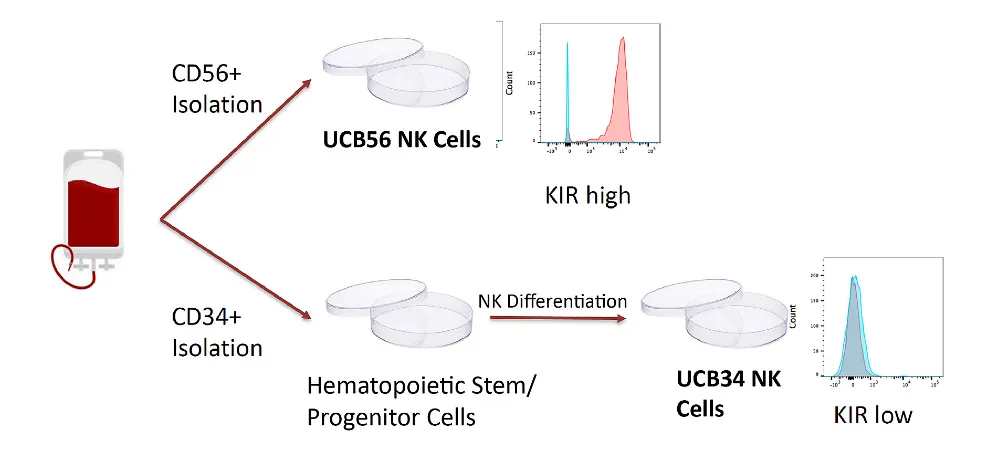
3. How does FLT-3L synergize with other cytokines to enhance the killer function of NK cells?
FLT-3L is typically not used alone but is combined with cytokines such as IL-2, IL-15, and SCF to synergistically promote the survival, proliferation, and functional maturation of NK cells. For instance, when expanding NK cells using peripheral blood mononuclear cells (PBMCs), FLT-3L can enhance the differentiation of CD34+ progenitor cells into the NK lineage, while cooperation with IL-2/IL-15 further improves the cytotoxicity and in vivo persistence of NK cells. This multi-cytokine strategy not only increases the yield of NK cells but also significantly enhances their anti-tumor activity.
4. What challenges does FLT-3L face in clinical-scale NK cell preparation?
Although FLT-3L has shown promising results in preclinical studies, its application in large-scale GMP-level NK cell production still faces several challenges. These include the standardization of cytokine combinations, batch-to-batch consistency, cost control, and the impact of individual differences on culture outcomes. Additionally, when using FLT-3L, attention must be paid to optimizing concentration and culture duration, as either excessively high or low doses may affect the phenotype and function of NK cells.
5. What are the future directions for FLT-3L-based NK cell culture systems?
With advances in the understanding of NK cell biology and genetic engineering technologies, the application of FLT-3L is moving toward more refined, personalized, and functionally enhanced directions. For example, combining it with agonistic antibodies, membrane particle technology, or feeder cell co-culture systems is expected to further improve the expansion efficiency and tumor-targeting ability of NK cells. Meanwhile, the development of serum-free, chemically defined culture systems will help enhance the controllability and clinical compliance of the cultivation process.
This article is reviewed and published by the technical expert team of UA
Disclaimer: This article partially utilizes artificial intelligence assistance in its creation. If any content involves copyright or intellectual property issues, please let us know and we promise to verify and remove it as soon as possible.
Purchase recombinant protein, choose Nanjing UA-Bio
UA protein focuses on providing various protein reagents, raw materials, and services required for drug research and development, cell therapy, gene therapy, and basic scientific research, including drug target proteins, immune checkpoint proteins, cytokines, tool enzymes, customized protein expression, and full-length transmembrane protein development. Youai is committed to providing customers with high-quality products and professional services, and building a High-tech Biological Enterprise with International Competitiveness.







 Business license (three certificates in one)