




GPC3: New Star and Frontier Progress in Targeted Therapy for Liver Cancer


GPC3 (Glypican-3) is a glycoprotein located on the surface of cell membranes, belonging to the heparan sulfate proteoglycan family. Its gene is located in the q26.1 region of the human X chromosome, encoding a protein consisting of 580 amino acids with a molecular weight of approximately 70 kDa.
- Recent Advances
- Product Information
1.What is GPC3? What are the characteristics of its gene and protein structure?
GPC3 (Glypican-3) is a glycoprotein located on the cell membrane surface and belongs to the heparan sulfate proteoglycan family. Its gene is located in the q26.1 region of the human X chromosome and encodes a protein consisting of 580 amino acids with a molecular weight of approximately 70 kDa. Structurally, GPC3 can be divided into a 40 kDa N-terminal subunit and a 30 kDa C-terminal subunit, connected by a disulfide bond. The protein is anchored to the outer surface of the cell membrane via a glycosylphosphatidylinositol (GPI) anchor and can be cleaved by furin-like convertases at the Arg358–Ser359 site, forming a biologically active heterodimeric structure. This unique structure enables GPC3 to play an important role in cell signal transduction and microenvironment regulation.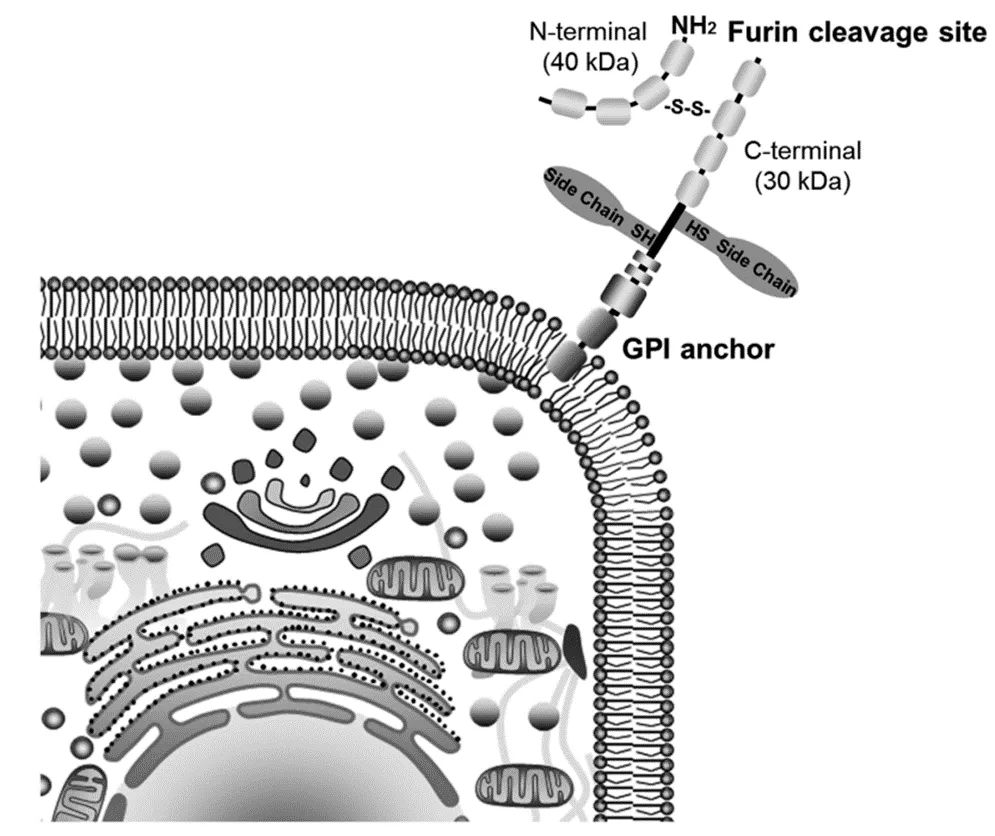
2.What is the signaling pathway mechanism of GPC3 in HCC?
In hepatocellular carcinoma (HCC), GPC3 promotes tumorigenesis and development by regulating multiple signaling pathways. It can interact with signaling molecules such as Wnt, Hedgehog, fibroblast growth factor (FGF), and insulin-like growth factor (IGF), enhancing the activity of these pathways. For example, GPC3 binds to Wnt proteins, stabilizes β-catenin, and promotes its nuclear translocation, thereby activating the transcription of proliferation-related genes. Additionally, GPC3 can inhibit tumor suppressor signaling pathways such as BMP and TGF-β, further creating conditions for the unlimited proliferation of liver cancer cells. These mechanisms make GPC3 a key molecular driver in HCC development.

3.Why is GPC3 considered an ideal target for targeted therapy in liver cancer?
GPC3 is almost undetectable in normal adult tissues but is significantly overexpressed in hepatocellular carcinoma, with approximately 70%–80% of HCC cases showing GPC3 positivity. This highly selective expression pattern makes it an ideal target for precision therapy in liver cancer, greatly reducing off-target toxicity to normal tissues. Moreover, GPC3 promotes liver cancer progression through various mechanisms, including enhancing cell proliferation, inhibiting apoptosis, and inducing angiogenesis. Targeting GPC3 is expected to inhibit tumor development from multiple dimensions.
4.Which GPC3-targeted therapies are currently in the research and clinical stages?
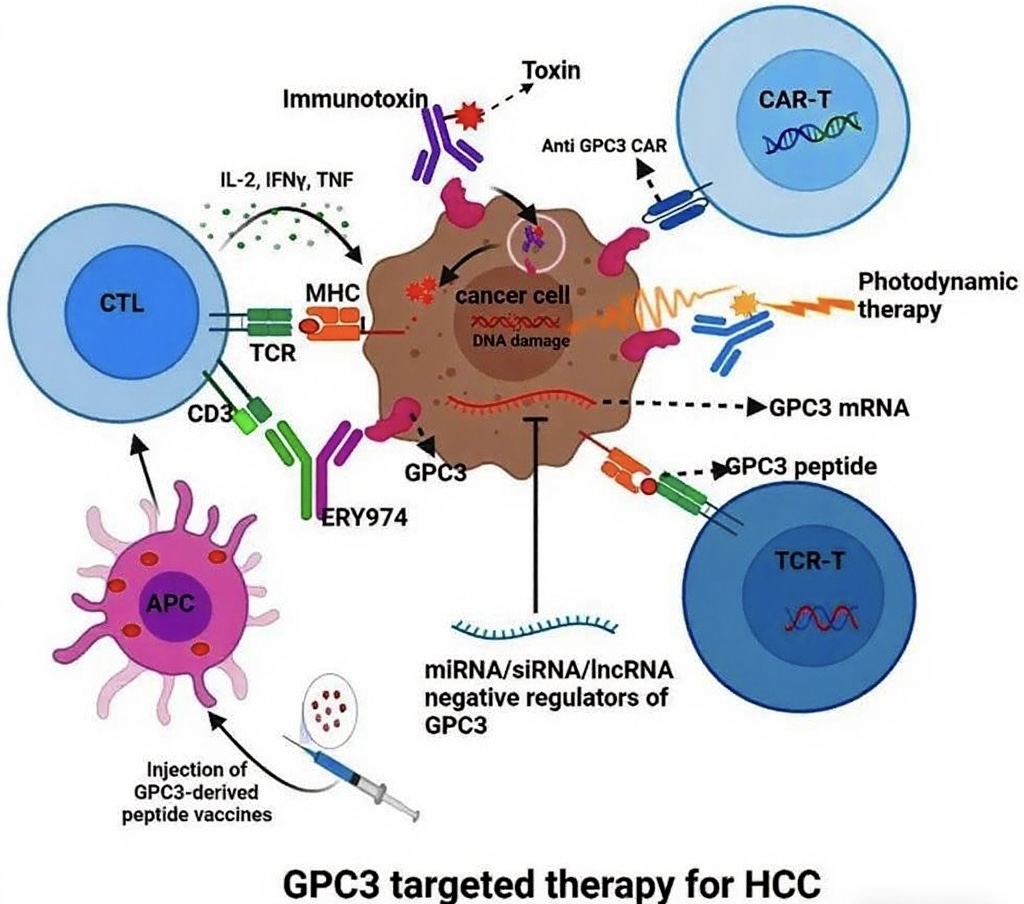
Current therapies targeting GPC3 are diversifying and mainly include the following categories:
Immunotoxins: Conjugating GPC3 antibodies with toxin molecules to precisely deliver cytotoxic drugs;
CAR-T cell therapy: Genetically engineering T cells to express chimeric antigen receptors targeting GPC3;
TCR-T therapy: Optimizing T cell receptors to recognize GPC3 antigen peptide-MHC complexes;
Monoclonal antibodies and bispecific antibodies: Such as Erlotinib derivatives and GPC3xCD3 bispecific antibodies;
Tumor vaccines: Preventive and therapeutic vaccines based on GPC3 antigen epitopes.
Multiple Phase I/II clinical trials have been initiated, particularly in the field of CAR-T therapy, where research teams in China have reported encouraging early clinical results.
5.What is the clinical progress of GPC3-CAR-T therapy for liver cancer?
GPC3-CAR-T therapy is currently a hotspot in HCC immunotherapy. Clinical trials have shown that GPC3-targeted CAR-T cells exhibit acceptable safety and preliminary efficacy in patients with advanced liver cancer. For example, in some studies, patients experienced tumor shrinkage or disease stabilization, and cytokine release syndrome (CRS) after cell infusion was controllable. Optimization strategies are also continuously advancing, including the introduction of safety switches, combination with immunomodulatory drugs, and the development of fourth-generation CAR-T cells, aiming to improve their persistence and anti-tumor effects.
6.Is GPC3 expressed in tumors or diseases other than liver cancer?
Although GPC3 is silent in most normal tissues, its expression has been detected in some embryonic tissues (e.g., placenta, fetal liver) and a few tumor types (e.g., melanoma, yolk sac tumors, and some lung squamous cell carcinomas). Additionally, GPC3 gene mutations are associated with Simpson-Golabi-Behmel syndrome, a rare X-linked genetic disorder characterized by tissue overgrowth and multi-organ abnormalities. These findings suggest that GPC3 has multiple biological functions in development and disease.
7.What challenges and future directions does GPC3-targeted therapy face?
Despite its promising prospects, GPC3-targeted therapy still faces many challenges:
Tumor heterogeneity leads to uneven target expression;
Insufficient tumor infiltration of immune cells;
Suppression of immune responses by the tumor microenvironment;
Emergence of drug resistance mechanisms.
Future research will focus on developing more efficient delivery systems, combination therapies (e.g., with immune checkpoint inhibitors), and biomarker-based patient stratification strategies to improve treatment response rates and survival benefits.
This article is reviewed and published by the technical expert team of UA
Disclaimer: This article partially utilizes artificial intelligence assistance in its creation. If any content involves copyright or intellectual property issues, please let us know and we promise to verify and remove it as soon as possible.
Purchase recombinant protein, choose Nanjing UA-Bio
UA protein focuses on providing various protein reagents, raw materials, and services required for drug research and development, cell therapy, gene therapy, and basic scientific research, including drug target proteins, immune checkpoint proteins, cytokines, tool enzymes, customized protein expression, and full-length transmembrane protein development. Youai is committed to providing customers with high-quality products and professional services, and building a High-tech Biological Enterprise with International Competitiveness.







 Business license (three certificates in one)