




IL-33: Can It Become the Next Target for Tumor Immunotherapy?


IL-33 is a member of the interleukin-1 cytokine family, initially named DVS27. It is constitutively expressed in barrier tissue cells of various organs, and its specific receptor is suppression of tumorigenicity 2 (ST2).
- Recent Advances
- Product Information
1. What Is IL-33, and What Role Does It Play in the Tumor Microenvironment?
IL-33 is a member of the interleukin-1 cytokine family, initially named DVS27. It is constitutively expressed in barrier tissue cells of various organs, and its specific receptor is suppression of tumorigenicity 2 (ST2). ST2, an IL-1 receptor-like protein, has four identified isoforms to date, including two variant forms (ST2LV and ST2V), a soluble form (sST2), and a membrane-bound form (ST2L). ST2 is primarily expressed in hematopoietic and lymphoid cell lineages, with particularly high enrichment in helper T cells, where it participates in immune system regulation.
As a pleiotropic cytokine, IL-33 not only serves as a key regulator of inflammation—inducing type 2 helper T cell (Th2)-mediated innate and adaptive immune responses—but also plays critical roles in maintaining tissue homeostasis, promoting damage repair, and remodeling the immune microenvironment. Due to its significant upregulation during inflammatory processes, IL-33 has been recognized as a potential mediator in various inflammatory diseases and tumor progression. This article systematically elaborates on the expression characteristics and complex biological activities of IL-33 across different cancer types.
2. Why Does IL-33 Exhibit a "Dual Personality" in Tumorigenesis?
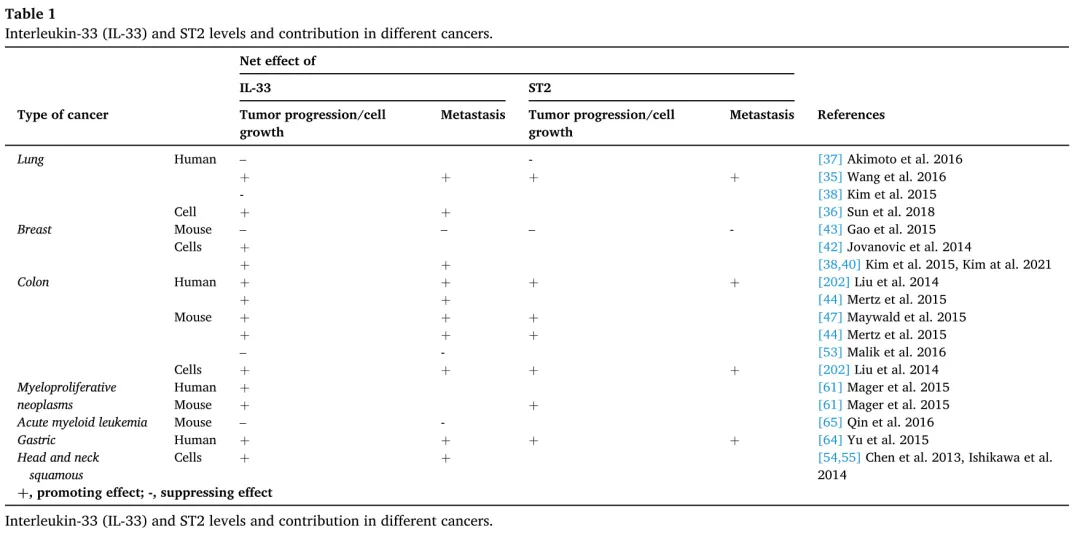
With in-depth research, the IL-33/ST2 signaling pathway has been found to play an important yet often contradictory role in tumor initiation, progression, and prognosis. It demonstrates both tumor-suppressive and tumor-promoting effects in common malignancies such as lung cancer, breast cancer, and colorectal cancer, with its specific function depending on the tumor type, microenvironment context, and disease stage.
-
In lung cancer, some studies suggest that the IL-33/ST2 axis may promote pulmonary fibrosis and carcinogenesis, and using IL-33 inhibitors or upregulating sST2 could delay fibrotic processes. Conversely, other evidence indicates that IL-33 may inhibit tumor metastasis and proliferation by enhancing immune cell infiltration and activation.
-
In breast cancer, IL-33 or ST2 expression levels are often higher in tumor tissues than in normal tissues, suggesting a potential role in tumor progression. However, IL-33 overexpression in animal models significantly suppresses tumor growth and metastasis, demonstrating a protective effect.
-
In colorectal cancer (CRC), the situation is equally complex: some studies suggest that IL-33/ST2 signaling may promote intestinal tumorigenesis, while others report reduced ST2L expression in tumor tissues and indicate that IL-33 deficiency may disrupt B cell regulation, thereby increasing carcinogenesis risk.
Furthermore, in other cancer types, IL-33 has been reported to exert unidirectional effects. These conflicting conclusions may stem from multiple factors, including perturbations in IL-33 expression due to radiotherapy or chemotherapy, species differences between human and mouse models, variations in IL-33 administration doses or genetic manipulation levels, and biological disparities between primary cells and cell lines. Therefore, interpreting IL-33 function requires comprehensive consideration of these parameters.
3. How Does IL-33 Regulate Immune Cells in the Tumor Microenvironment?
IL-33 profoundly influences tumor progression by acting on various immune cells. Its primary regulatory targets include:
-
CD4⁺ T helper cells and regulatory T cells (Tregs): The IL-33/ST2 signaling pathway can promote Th2-type immune responses and, in certain contexts, expand Treg populations. However, some studies also indicate that it may induce IFN-γ secretion via non-ST2-dependent pathways, thereby inhibiting tumors.
-
Cytotoxic lymphocytes: Including CD8⁺ T cells and NK cells. IL-33 can enhance the effector functions of these cells, exerting anti-tumor effects.
-
Macrophages: IL-33 may promote their polarization toward the M2 phenotype, enhancing the immunosuppressive functions of tumor-associated macrophages (TAMs).
-
Myeloid-derived suppressor cells (MDSCs): Depending on the tumor model, IL-33 may either promote or suppress the expansion and immunosuppressive activity of MDSCs, with outcomes being cancer-type-specific.
-
Eosinophils and basophils: IL-33 can directly or indirectly regulate the development, activation, and functions of these cells, thereby influencing anti-tumor immunity or inflammatory responses.
-
Type 2 innate lymphoid cells (ILC2s): As key targets of IL-33, ILC2s produce Th2-type cytokines and play important roles in tumor-associated inflammation and immune regulation.
4. Which Cellular Sources of IL-33 in the Tumor Microenvironment Influence Its Function?
The function of IL-33 in the tumor microenvironment (TME) highly depends on its cellular source. Stromal cells (e.g., cancer-associated fibroblasts, CAFs) are significant producers of IL-33 and can influence tumor progression by modulating immune cell recruitment and angiogenesis. Tumor cells themselves can also express IL-33, directly regulating cytotoxic immune responses. Additionally, endothelial and epithelial cell-derived IL-33 may benefit anti-tumor immunity in certain cancers (e.g., head and neck squamous cell carcinoma, melanoma). It is noteworthy that IL-33 from different cellular sources may exert opposing effects on tumor development by altering the local immune environment.
5. What Factors Dynamically Regulate the Activity and Function of IL-33?
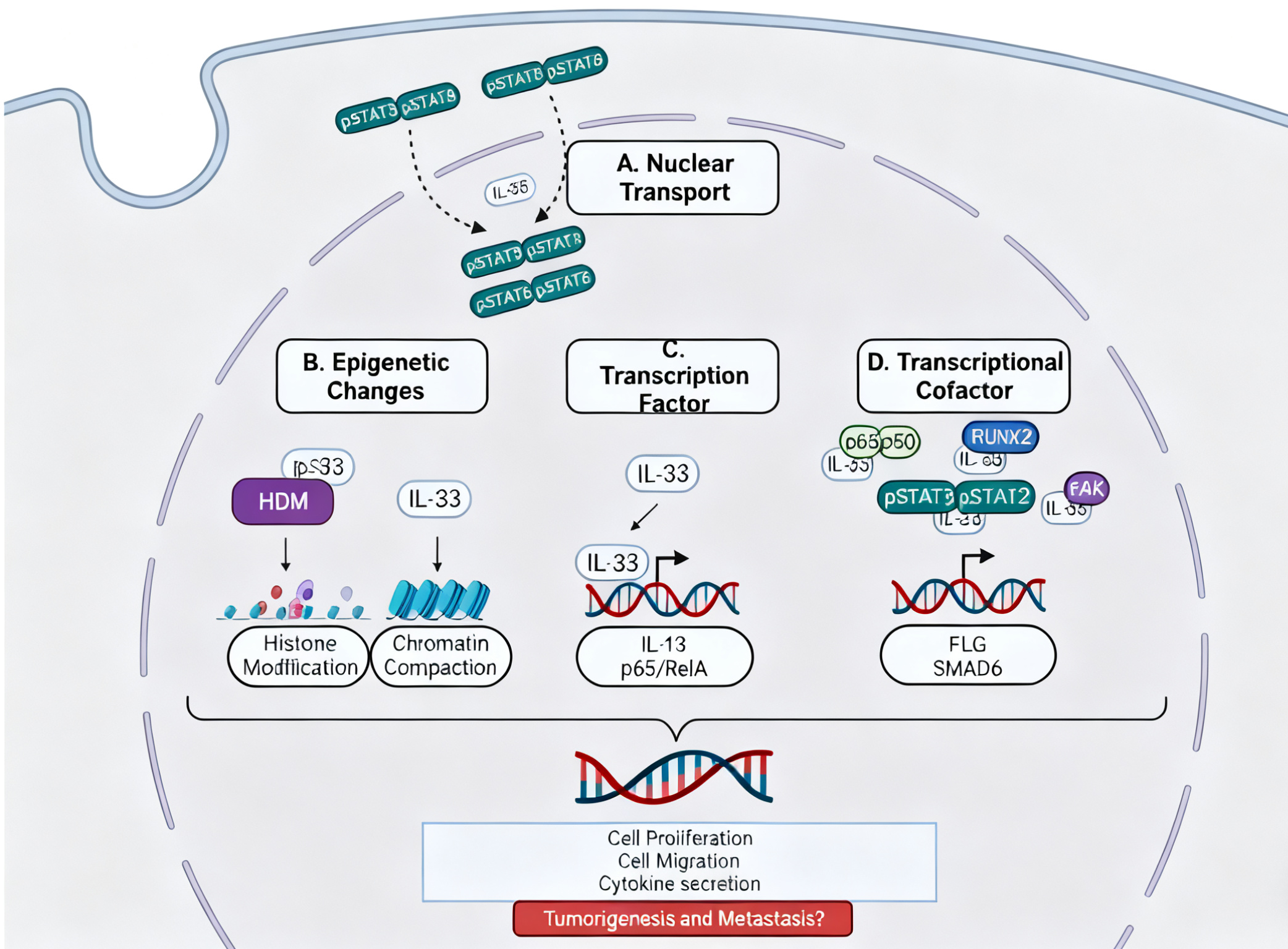
The expression and activity of IL-33 are dynamically regulated across multiple dimensions. It not only functions extracellularly as a secreted alarmin but also resides in the nucleus, where it may influence gene transcription by regulating signaling pathways such as NF-κB, JAK-STAT, and SMAD, thereby participating in tumor-related signal transduction. Furthermore, soluble ST2 (sST2) acts as a decoy receptor that antagonizes the IL-33/ST2L signaling pathway and may even exert independent functions by binding to unknown receptors. These complex regulatory mechanisms contribute to the inconsistent reports regarding IL-33's role in tumors.
6. What Directions Should Future Research on IL-33 Focus On?
Although the importance of the IL-33/ST2 axis in tumor immunoregulation is increasingly recognized, its precise mechanisms remain to be elucidated. Future research should aim to clarify the specific roles of IL-33 at different tumor stages, across cellular sources, and within varying microenvironmental contexts, with particular attention to its nuclear functions and the independent roles of sST2. Multidimensional and multi-model research strategies will help comprehensively evaluate the potential of IL-33 as a tumor diagnostic biomarker and therapeutic target, providing a theoretical basis for developing novel combined immunotherapy strategies.
This article is reviewed and published by the technical expert team of UA
Disclaimer: This article partially utilizes artificial intelligence assistance in its creation. If any content involves copyright or intellectual property issues, please let us know and we promise to verify and remove it as soon as possible.
Purchase recombinant protein, choose Nanjing UA-Bio
UA protein focuses on providing various protein reagents, raw materials, and services required for drug research and development, cell therapy, gene therapy, and basic scientific research, including drug target proteins, immune checkpoint proteins, cytokines, tool enzymes, customized protein expression, and full-length transmembrane protein development. Youai is committed to providing customers with high-quality products and professional services, and building a High-tech Biological Enterprise with International Competitiveness.







 Business license (three certificates in one)