




Targeting IL-17A: A Novel Strategy Against Obesity and Metabolic Disorders?


With the continuous improvement of global living standards, the incidence of obesity and overweight continues to rise, posing a severe public health challenge. Currently, there remains a lack of effective treatments for overnutrition-induced obesity, which involves complex metabolic and immune regulatory mechanisms. Notably, obesity is often accompanied by a low-grade chronic inflammatory state, further triggering metabolic syndrome. However, the specific molecular mechanisms underlying this process remain unclear.
- Recent Advances
- Product Information
With the continuous improvement of global living standards, the incidence of obesity and overweight continues to rise, posing a severe public health challenge. Currently, there remains a lack of effective treatments for overnutrition-induced obesity, which involves complex metabolic and immune regulatory mechanisms. Notably, obesity is often accompanied by a low-grade chronic inflammatory state, further triggering metabolic syndrome. However, the specific molecular mechanisms underlying this process remain unclear.
On April 15, 2021, a team from the Spanish National Cancer Research Centre published a research paper titled *“Inhibition of the IL-17A axis in adipocytes suppresses diet-induced obesity and metabolic disorders in mice”* in Nature Metabolism, revealing the critical role of the interleukin-17A (IL-17A) signaling axis in the development of obesity and providing a new potential therapeutic target.
1. Why Is Obesity Often Associated with Metabolic and Immune Dysfunction?
Currently, 1.9 billion adults worldwide are overweight, and 600 million are obese. It is projected that by 2030, more than half of the global population will be obese. Obesity is not only caused by an imbalance between energy intake and expenditure but also leads to a series of metabolic diseases, including type 2 diabetes, hypertension, non-alcoholic fatty liver disease, cardiovascular diseases, and certain malignancies. Nutrients themselves can trigger inflammatory responses, accompanied by elevated IL-17A levels, suggesting that overnutrition may drive obesity and metabolic disorders through immune regulatory mechanisms.
2. How Does IL-17A Affect Adipocyte Function?
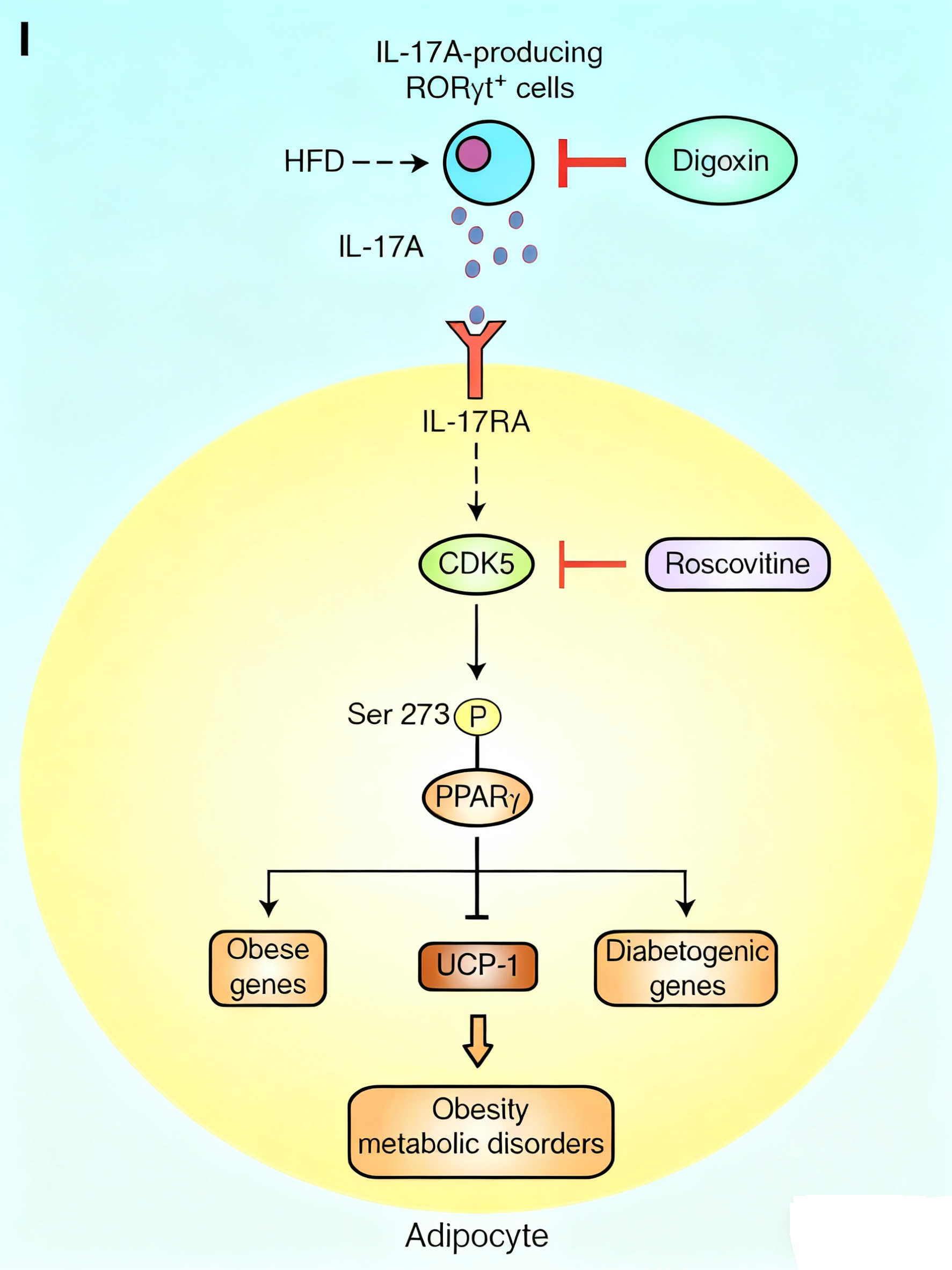
Adipose tissue can be divided into white adipose tissue (WAT), primarily responsible for energy storage, and brown adipose tissue (BAT), which facilitates thermogenesis and energy expenditure. Under certain conditions, white adipose tissue can undergo "browning," acquiring thermogenic properties similar to brown adipose tissue. This study demonstrated that inhibiting IL-17A signaling through various methods—such as using digoxin to block IL-17A, adipocyte-specific knockout of the IL-17A receptor (IL-17RA), or administering an RORγt inhibitor—significantly promoted white adipose browning, enhanced energy expenditure, and effectively suppressed high-fat diet-induced obesity and glucose/lipid metabolic abnormalities.
3. Does IL-17A Function Independently of the Leptin Pathway?
The study further revealed that the IL-17A signaling axis operates independently of the classical leptin regulatory pathway. Mechanistically, IL-17A induces CDK5-dependent phosphorylation of the PPARγ transcription factor at Ser273 in adipocytes, thereby altering the expression of a series of genes associated with obesity and insulin resistance. This mechanism was also validated in human samples: analysis of visceral adipose tissue from 75 morbidly obese patients showed a significant correlation between IL-17A signaling activity and the expression of obesity-related genes.
4. Does Targeting IL-17A Hold Clinical Translation Potential?
This study not only establishes the critical role of IL-17A in obesity and metabolic regulation but also provides preclinical evidence for its potential as a therapeutic target. Inhibiting IL-17A signaling effectively restores adipocyte function, promotes thermogenesis, and improves systemic metabolic homeostasis, thereby controlling body weight without suppressing appetite. These findings support the further development of anti-obesity therapies targeting IL-17A, such as repurposing existing inhibitors (e.g., digoxin or RORγt antagonists) or developing novel drugs.
Conclusion
This study systematically elucidates the central role of IL-17A in diet-induced obesity and metabolic disorders, offering a new perspective on the cross-regulation of immunity and metabolism. Future intervention strategies targeting the IL-17A signaling axis hold promise for providing novel therapeutic options for obesity and related metabolic diseases, ultimately alleviating the global public health burden.
This article is reviewed and published by the technical expert team of UA
Disclaimer: This article partially utilizes artificial intelligence assistance in its creation. If any content involves copyright or intellectual property issues, please let us know and we promise to verify and remove it as soon as possible.
Purchase recombinant protein, choose Nanjing UA-Bio
UA protein focuses on providing various protein reagents, raw materials, and services required for drug research and development, cell therapy, gene therapy, and basic scientific research, including drug target proteins, immune checkpoint proteins, cytokines, tool enzymes, customized protein expression, and full-length transmembrane protein development. Youai is committed to providing customers with high-quality products and professional services, and building a High-tech Biological Enterprise with International Competitiveness.







 Business license (three certificates in one)