




Can DKK-1 Become a Novel Therapeutic Target for Osteogenesis Imperfecta?


Osteogenesis Imperfecta (OI), also known as brittle bone disease, is a rare genetic connective tissue disorder with an incidence of approximately 1/10,000 to 1/20,000. Patients often present with low bone mass, increased bone fragility, recurrent fractures, and may exhibit extra-skeletal manifestations such as blue sclerae, hearing loss, and dentinogenesis imperfecta.
- Recent Advances
- Product Information
- Reference
1.What Is Osteogenesis Imperfecta (OI), and What Are Its Clinical Challenges?
Osteogenesis Imperfecta (OI), also known as brittle bone disease, is a rare genetic connective tissue disorder with an incidence of approximately 1/10,000 to 1/20,000. Patients often present with low bone mass, increased bone fragility, recurrent fractures, and may exhibit extra-skeletal manifestations such as blue sclerae, hearing loss, and dentinogenesis imperfecta. OI is primarily caused by mutations in genes encoding type I collagen (e.g., COL1A1 or COL1A2), leading to abnormal collagen structure, synthesis defects, or impaired post-translational modifications, thereby disrupting bone matrix stability.
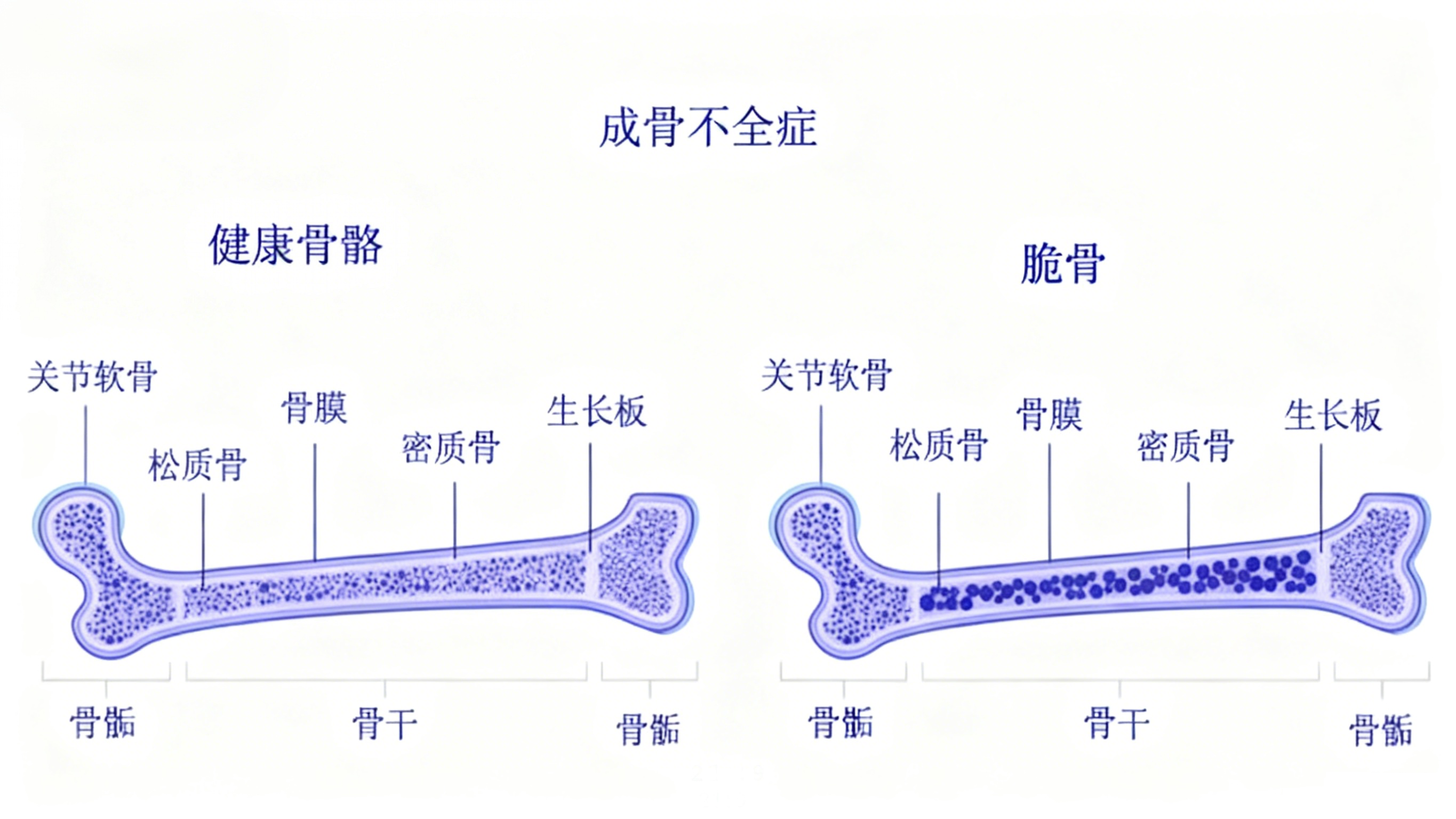
Although conventional treatments such as bisphosphonates, growth hormone, and rehabilitation interventions can partially improve bone density and reduce fracture frequency, they fail to fully correct the underlying pathology, and clinical efficacy remains limited. Recent studies have shown that the severity of OI is not only directly related to collagen metabolism abnormalities but also closely associated with osteoblast dysfunction and bone microenvironment imbalance. However, the deep regulatory mechanisms remain unclear, highlighting the urgent need to develop novel therapeutic strategies targeting new pathways.
2. How Is the Wnt/β-Catenin Pathway Related to Bone Metabolism?
The Wnt/β-catenin signaling pathway is a central regulator of bone formation and homeostasis. It plays a key role in maintaining skeletal structural integrity by regulating osteoblast proliferation, differentiation, and mineralization. Dickkopf-1 (DKK-1), an endogenous antagonist of this pathway, inhibits Wnt signaling by binding with high affinity to the LRP5/LRP6 coreceptors and Kremen protein, thereby negatively regulating osteoblast activity and suppressing bone formation.
As a detectable secretory glycoprotein in the blood, changes in DKK-1 levels are closely associated with various skeletal disorders, such as osteoporosis, rheumatoid arthritis, and multiple myeloma-related bone disease. Growing evidence suggests that DKK-1 is upregulated in bone metabolic disorders, potentially serving as a novel biomarker for assessing bone formation capacity and treatment response.
3. Is DKK-1 Abnormally Expressed in Osteogenesis Imperfecta?
A recent clinical study measured serum DKK-1 concentrations in children with OI and systematically analyzed its correlation with bone density, annual fracture rate, bone turnover markers, and genotype. The results showed that serum DKK-1 levels were significantly elevated in OI children compared to healthy controls. Further statistical analysis revealed a negative correlation between DKK-1 concentration and lumbar spine bone mineral density Z-scores, and a positive correlation with fracture frequency.
Additionally, the study found associations between DKK-1 levels and bone resorption markers (e.g., CTX) as well as certain osteogenic indicators (e.g., P1NP), suggesting that DKK-1 may simultaneously affect both bone formation and resorption processes, contributing to imbalanced bone remodeling in OI. Notably, patients with specific genetic mutation subtypes exhibited higher DKK-1 levels, indicating that different genetic backgrounds may influence phenotypic severity by modulating DKK-1 expression.
These findings not only establish a close link between DKK-1 and OI skeletal phenotypes but also provide preliminary clinical evidence for its potential as a biomarker.
4. Does Targeting DKK-1 Hold Therapeutic Potential for Osteogenesis Imperfecta?
Building on clinical observations, preclinical studies have further explored the effects of targeting DKK-1 on improving bone phenotypes in OI. In a study using an OI mouse model (e.g., Col1a2+/G610C), researchers applied antisense oligonucleotides (ASOs) to inhibit DKK-1 expression. The results demonstrated that DKK-1 inhibition significantly enhanced bone biomechanical strength, increased trabecular bone volume and cortical thickness, and promoted osteoblast differentiation and mineralization.
At the molecular level, DKK-1 inhibition restored the expression of osteogenesis-related genes (e.g., Runx2, Osterix, and Alp) while downregulating key factors for osteoclast differentiation (e.g., RANKL/OPG ratio), indicating its potential to bidirectionally regulate bone remodeling. Furthermore, this treatment improved bone microarchitecture and material properties, suggesting that DKK-1 blockade may enhance OI bone quality across multiple dimensions.
These findings not only deepen the understanding of the role of the Wnt pathway in OI but also provide preclinical evidence for DKK-1 as a therapeutic target. Notably, as DKK-1 is a secretory protein, it can be easily targeted using antibodies, soluble receptors, or nucleic acid-based drugs, offering favorable druggability and translational potential.
5. Outlook: Can DKK-1-Targeted Therapy Address Unmet Clinical Needs in OI?
Despite advances in OI treatment, no curative therapy currently exists, and patients continue to face high fracture risks, limited mobility, and reduced quality of life. The aberrant overexpression of DKK-1—a key regulator of bone formation and resorption balance—in OI provides a promising direction for developing new therapeutic strategies.
Combining DKK-1 inhibitors with existing treatments (e.g., anti-resorptive agents or collagen stabilizers) may yield synergistic effects, more comprehensively improving bone strength and quality. Moreover, as DKK-1 is relatively stable and easily detectable in the blood, it holds potential as a biomarker for predicting disease progression, stratifying patient risk, and evaluating treatment response, advancing OI toward precision medicine.
However, current research remains in its early stages. Future large-scale clinical studies are needed to validate the association between DKK-1 and OI phenotypes and to further elucidate its specific mechanisms in regulating bone cell function. Simultaneously, safe and effective DKK-1-targeted strategies must undergo systematic evaluation in appropriate animal models before gradual translation to clinical applications.
Conclusion
Osteogenesis Imperfecta is a severe genetic bone disease with significant unmet therapeutic needs. Recent studies indicate that DKK-1, a key antagonist of the Wnt signaling pathway, is significantly elevated in OI patients and closely associated with reduced bone density and increased fracture risk. Preclinical experiments demonstrate that inhibiting DKK-1 effectively improves bone mechanical properties, promotes bone formation, and suppresses bone resorption, suggesting its potential as a novel therapeutic target. Future research should focus on advancing DKK-1-targeted strategies toward clinical translation, offering new hope for OI patients.
This article is reviewed and published by the technical expert team of UA
Disclaimer: This article partially utilizes artificial intelligence assistance in its creation. If any content involves copyright or intellectual property issues, please let us know and we promise to verify and remove it as soon as possible.
Purchase recombinant protein, choose Nanjing UA-Bio
UA protein focuses on providing various protein reagents, raw materials, and services required for drug research and development, cell therapy, gene therapy, and basic scientific research, including drug target proteins, immune checkpoint proteins, cytokines, tool enzymes, customized protein expression, and full-length transmembrane protein development. Youai is committed to providing customers with high-quality products and professional services, and building a High-tech Biological Enterprise with International Competitiveness.

[1] Marini JC, et al. Osteogenesis imperfecta. Nat Rev Dis Primers. 2017.
[2] Tournis S, et al. Osteogenesis imperfecta – A clinical update. Metabolism. 2018.
[3] Roschger A, et al. DKK1 antisense treatment enhances bone mass and bone strength in osteogenesis imperfecta mice. Bone. 2022.
[4] Tauer JT, et al. Serum DKK1 levels correlate with bone density and fracture risk in children with osteogenesis imperfecta. J Bone Miner Res. 2023.






 Business license (three certificates in one)