




Human Respiratory Syncytial Virus (hRSV) — Why Is the Prefusion F Protein the Key to Success?


Human Respiratory Syncytial Virus (hRSV), as the leading viral pathogen causing acute lower respiratory infections in children under 5 years old globally, is associated with high rates of infection, severe disease progression, and hospitalization. Its transmission characteristics and pathogenic mechanisms urgently require greater public awareness and understanding.
- Recent Advances
- Product Information
- Reference
Every winter, as influenza viruses and SARS-CoV-2 alternate in activity, a pathogen known as the Human Respiratory Syncytial Virus (hRSV) quietly threatens the health of infants, the elderly, and immunocompromised individuals. As the leading viral cause of acute lower respiratory tract infections in children under 5 globally, hRSV is associated with high rates of infection, severe disease, and hospitalization. Its transmission characteristics and pathogenic mechanisms require deeper public understanding.
I. Viral Characteristics: The "Fusion Expert" with a Syncytial Structure
hRSV belongs to the Pneumoviridae family and is a single-stranded RNA virus with a genome approximately 15.2 kb in length, encoding 11 proteins. Its surface F protein (fusion protein) and G protein (attachment protein) are key tools for viral entry into host cells: the F protein mediates fusion between the viral envelope and the host cell membrane, forming multinucleated syncytial structures (from which the virus gets its name), while the G protein helps the virus adhere to respiratory epithelial cells.
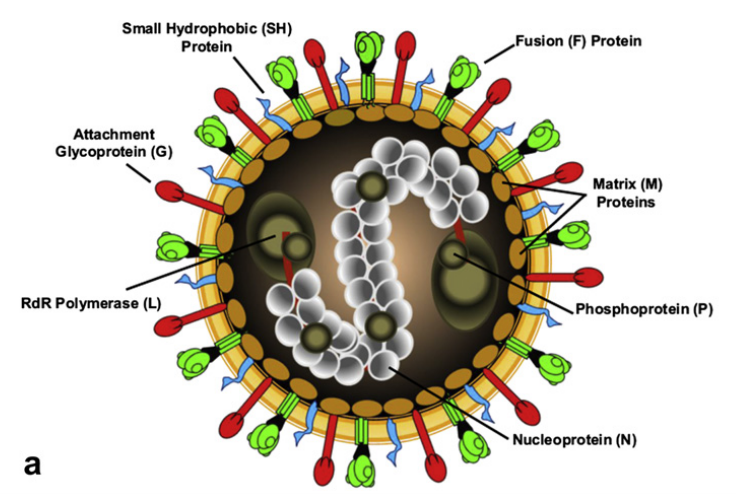
The virus is divided into two subtypes, A and B, and is further classified into 45 genotypes internationally based on variations in the G gene. The currently circulating dominant genotypes globally are the ON1 type of subtype A and the BA9 type of subtype B. Recent surveillance data from China also shows these two types are predominant. hRSV survives longer in cold, dry environments, and reduced indoor ventilation combined with increased crowding during winter contributes to its peak transmission season.
II. Genetic Variation of hRSV-A: Molecular Evolution Mechanisms of Key Proteins
Fusion Protein (F protein): Conservation and Functional Criticality
The F protein is the core protein for hRSV entry into host cells. Its precursor, the F0 protein, is cleaved to form F1 and F2 subunits, which mediate fusion between the virus and cell membrane via a trimeric hairpin structure. Analysis of 330 hRSV-A F gene sequences from China between 2003 and 2014 indicated that this protein's amino acid sequence is highly conserved. Crucially, the binding sites for Palivizumab showed no variation, suggesting that existing monoclonal antibody therapies remain effective against circulating strains in China. However, a small number of non-synonymous mutations were found in the F protein's N-terminal signal peptide and transmembrane regions, which might affect the virus's intercellular transmission efficiency.
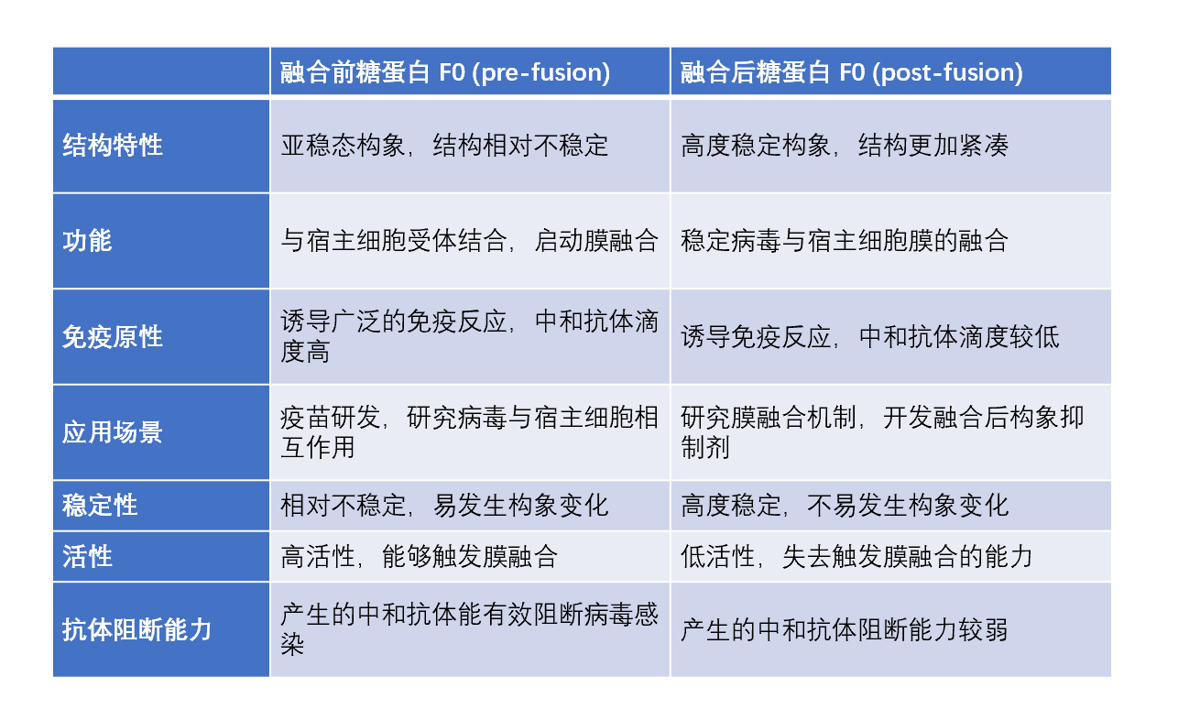
*This table concisely summarizes the main differences between the pre-fusion and post-fusion states of the glycoprotein F0, facilitating quick comparison and understanding.*
Attachment Protein (G protein): Hypervariable Regions Drive Immune Escape
Unlike the F protein, the HVR2 region of the G protein is the core area for hRSV genetic variation. A 72-nucleotide insertion in the ON1 genotype results in an additional 23 amino acids at the C-terminus of the G protein, forming new antigenic epitopes. This might reduce cross-protection in individuals with prior infections through the "original antigenic sin" effect. Chinese surveillance data shows that positive selection pressure acts on multiple sites within the HVR2 region of the G protein in the ON1 genotype. For instance, the amino acid change at position 208 from threonine to isoleucine might enhance the virus's ability to bind host heparan sulfate. Furthermore, the BA9 genotype's G protein acquired a similar advantage through a 60-nucleotide insertion, showing convergent evolutionary patterns with ON1.
III. hRSV Prevention and Control Challenges: Vaccine Development and Public Health Strategies
Scientific Basis and Difficulties in Vaccine Design
Current hRSV vaccine development primarily targets the F protein due to its conserved sequence and ability to induce cross-protective antibodies. For example, both GSK's Arexvy vaccine and Pfizer's Abrysvo vaccine use the prefusion F protein (Pre-F) as the antigen. Clinical trials demonstrated an efficacy of 82.6% against hRSV-A-related lower respiratory tract disease. However, the genetic diversity of circulating strains in China poses a challenge to vaccine effectiveness: although the F protein is conserved, the high variability of the G protein might affect the durability of mucosal immunity induced by vaccines. Moreover, the long-term coexistence of ON1 and BA9 genotypes suggests that multivalent vaccines may need to cover antigenic epitopes from different genotypes.
The Necessity of Molecular Epidemiological Surveillance
The Chinese CDC's surveillance network reveals that genotypic shifts in hRSV-A are closely related to disease burden. For instance, during the shift from NA1 to ON1 in hRSV-A around 2014, the national hospitalization rate for ALRI increased by 12%. Therefore, establishing a real-time genotyping system based on the G gene, combined with monitoring F protein variations, can provide early warning of the spread risk of dominant genotypes. Simultaneously, monitoring hRSV viral loads in hospitals and communities can help optimize the timing for using antiviral drugs (such as Remdesivir derivatives).
IV. Future Prospects: From Genomics to Precision Prevention and Control
With the widespread adoption of third-generation sequencing technologies, whole-genome analysis of hRSV-A will enable more precise tracking of viral transmission chains. For example, using Single-Molecule Real-Time (SMRT) sequencing can identify low-frequency mutations within viral quasispecies, providing early warning of emerging immune escape variants. Furthermore, structure-based vaccine design, such as stabilized Pre-F protein nanoparticle vaccines, might overcome limitations imposed by G protein variation. Ultimately, preventing and controlling hRSV-A requires integrating molecular epidemiology, vaccinology, and clinical medicine to form a comprehensive "Surveillance-Early Warning-Intervention" strategy.
As the 'number one killer' causing respiratory illnesses in children, the complexity of hRSV-A's epidemic patterns and genetic variation far exceeds previous understanding. China's 14 years of continuous surveillance has not only filled gaps in the global hRSV genetic database but has also provided a scientific basis for vaccine development and public health policy.
This article is reviewed and published by the technical expert team of UA
Disclaimer: This article partially utilizes artificial intelligence assistance in its creation. If any content involves copyright or intellectual property issues, please let us know and we promise to verify and remove it as soon as possible.
Purchase recombinant protein, choose Nanjing UA-Bio
UA protein focuses on providing various protein reagents, raw materials, and services required for drug research and development, cell therapy, gene therapy, and basic scientific research, including drug target proteins, immune checkpoint proteins, cytokines, tool enzymes, customized protein expression, and full-length transmembrane protein development. Youai is committed to providing customers with high-quality products and professional services, and building a High-tech Biological Enterprise with International Competitiveness.

- Margarita K. Lay; Pablo A. González; Miguel Ayala León; Pablo F. Céspedes; Susan M. Bueno; et al. Advances in understanding respiratory syncytial virus infection in airway epithelial cells and consequential effects on the immune response.Microbes and Infection.2012.
- Karen Böhmwald; Janyra A. Espinoza; Emma Rey-Jurado; Roberto Gómez; Pablo A. González; et al.Human Respiratory Syncytial Virus: Infection and Pathology.Seminars in Respiratory and Critical Care Medicine.2016.
- Peipei Guan; Congyan Qi; Guoliang Xu; Can Sheng; Siqi Sun; et al.Designing a T cell multi-epitope vaccine against hRSV with reverse vaccinology: an immunoinformatics approach.Colloids and Surfaces B: Biointerfaces.2025.






 Business license (three certificates in one)