




Cytokine-Guided Generation and Functional Regulation of Mouse Lung Organoids


Mouse lung organoids do not grow naturally but are cultivated in vitro by precisely recapitulating the signaling environment of embryonic lung development. This process is entirely orchestrated by a core set of cytokines.
- Recent Advances
- Product Information
The successful construction and functional realization of mouse lung organoids fundamentally rely on cytokines as the core "instruction system." The relationship between the two can be clearly summarized as follows: cytokines are the guiding "language" and "instructions," while the organoids are the physical "structure" and functional "carrier" that manifest after these instructions are executed. Together, they form a complete research system spanning from molecular signals to three-dimensional structure.
Part 1: Cytokines Drive Organoid Formation
Mouse lung organoids do not grow naturally but are cultivated in vitro by precisely mimicking the signaling environment of embryonic lung development. This process is entirely directed by a core set of cytokines:
-
The FGF (Fibroblast Growth Factor) family (e.g., FGF10) acts as the "architect," driving epithelial cell proliferation and outward migration to form the initial branching structure of the organoid.
-
The Wnt and BMP signaling pathways serve as "fate decision-makers," working synergistically to precisely regulate whether stem cells maintain their stemness or differentiate into specific alveolar or airway cells.
At this stage, the cytokine network functions like a precise "architectural blueprint," directing the cells to self-assemble, ultimately constructing a miniature lung with complex structures such as lumens and branches from a single stem cell source.
Part 2: Cytokines Maintain Organoid Homeostasis
Once the basic structure is formed, the role of cytokines shifts from "architect" to "property manager," responsible for maintaining cellular homeostasis and specific functions within the organoid. By continuously supplying specific cytokine combinations, it is possible to:
-
Promote the synthesis and secretion of pulmonary surfactant by alveolar type II cells.
-
Induce the formation of motile cilia in ciliated cells, mimicking the airway clearance mechanism.
-
Maintain the proportional balance of different cell populations, ensuring the organoid can survive long-term, stably, and perform its core physiological functions.
Part 3: Construction of the Mouse Lung Organoid Model
Preparation of Complete Medium for Mouse Lung Organoids: Combine basal medium, cytokines, and various additives in established proportions to prepare the complete medium.
1. Primary Culture
(1) In a biosafety cabinet, place the lung tissue in pre-cooled PBS (supplemented with penicillin, streptomycin, primary antibiotics) for washing.
(2) Collect the washed tissue fragments into a 1.5 ml EP tube. Use sterile sharp-tipped ophthalmic surgical scissors to mince the tissue as much as possible (to a paste-like consistency). The degree of mincing correlates with digestion time; finer mincing shortens digestion time. Transfer the minced tissue to a 15 ml sterile centrifuge tube.
(3) Add 10 times the tissue volume of tissue digestion solution. Digest at 37°C with shaking for 10-30 minutes, monitoring the progress periodically. Digestion can be terminated when a large number of cells are observed under the microscope.
(4) To the confirmed digested tissue suspension, add Fetal Bovine Serum (FBS) to a final concentration of 2-5% or BSA to a final concentration of 0.1%. Mix by pipetting.
(5) Filter the tissue and cell suspension through a 70 µm cell strainer. Centrifuge the filtered cell suspension at 300 x g for 3 minutes, then discard the supernatant.
(6) If obvious red pellet (red blood cells) is observed after centrifugation, add 2 ml of red blood cell lysis buffer, mix by pipetting, and let stand for 3 minutes. Centrifuge at 300 x g for 3 minutes, then discard the supernatant.
(7) Resuspend the pellet in an appropriate amount of basal medium or PBS.
(8) Mix the cell suspension with Matrigel at a suitable ratio. Using a 24-well cell culture plate as an example, plate 25-30 µl of the Matrigel-cell mixture per well (perform operations at 4°C).
(9) Place the plated culture plate in a 37°C incubator for 20-30 minutes for gel formation. Add an appropriate amount of complete medium for mouse lung organoids and begin culture.
2. Organoid Passaging
(1) Aspirate the medium using a pipette. Add 1-2 ml of 4°C PBS to each well and let stand for 2 minutes.
(2) Gently pipette to dissociate the Matrigel. Collect the contents into a 15 ml centrifuge tube. Adjust the volume to 10-14 ml with PBS and let stand at 4°C for 20-30 minutes (pool 3-5 wells per group). Centrifuge at 300 x g for 3 minutes, discard the supernatant, and retain the pellet.
(3) Add 1 ml of organoid digestion solution to the collected pellet, mix by pipetting, and incubate at 37°C for 2-3 minutes. Add basal medium to stop digestion. Centrifuge at 300 x g for 3 minutes, discard the supernatant, and retain the pellet.
(4) Resuspend the organoids in an appropriate amount of Matrigel. Plate 25-30 µl of the Matrigel-organoid mixture per well in a 24-well cell culture plate. Place in the incubator for 20-30 minutes for gel formation. Add an appropriate amount of complete medium for mouse lung organoids and continue culture.
3. Organoid Cryopreservation
(1) Aspirate the medium using a pipette. Add 1-2 ml of 4°C PBS to each well and let stand for 2 minutes.
(2) Gently pipette to dissociate the Matrigel. Collect the contents into a 15 ml centrifuge tube. Adjust the volume to 10-14 ml with PBS and let stand at 4°C for 20-30 minutes (pool 3-5 wells per group). Centrifuge at 300 x g for 3 minutes, discard the supernatant, and retain the pellet.
(3) Add an appropriate amount of organoid freezing medium. Gently pipette to resuspend. Using a 24-well plate as a reference, freeze the content of 2-3 wells per cryovial, with a volume of 1 ml per vial.
(4) Label the vials with relevant information. Perform controlled-rate freezing, then transfer to liquid nitrogen for long-term storage.
4. Organoid Thawing
(1) Place 10 ml of DMEM/F12 basal medium into a 15 ml centrifuge tube.
(2) Retrieve the frozen organoids from the liquid nitrogen tank and quickly place them in a 37°C water bath to thaw.
(3) During thawing in the water bath, gently shake the cryovial to ensure the freezing medium completely thaws within 1-2 minutes.
(4) Quickly transfer the thawed organoids to the 15 ml centrifuge tube. Gently pipette 6-8 times. Centrifuge at 300 x g for 3 minutes, then remove the supernatant and collect the organoid pellet.
(5) Resuspend in Matrigel. Plate 25-30 µl of the Matrigel-organoid mixture per well in a 24-well cell culture plate. Place in the incubator for 20-30 minutes for gel formation. Add an appropriate amount of complete medium for mouse lung organoids.
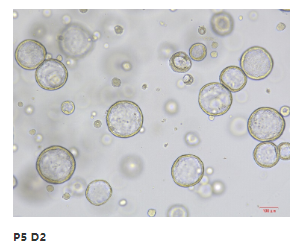
Lung organoids Complete Medium,Mouse/小鼠正常肺类器官完全培养基_UA090045_优爱(UA BIOSCIENCE)官网
This article is reviewed and published by the technical expert team of UA
Disclaimer: This article partially utilizes artificial intelligence assistance in its creation. If any content involves copyright or intellectual property issues, please let us know and we promise to verify and remove it as soon as possible.
Purchase recombinant protein, choose Nanjing UA-Bio
UA protein focuses on providing various protein reagents, raw materials, and services required for drug research and development, cell therapy, gene therapy, and basic scientific research, including drug target proteins, immune checkpoint proteins, cytokines, tool enzymes, customized protein expression, and full-length transmembrane protein development. Youai is committed to providing customers with high-quality products and professional services, and building a High-tech Biological Enterprise with International Competitiveness.







 Business license (three certificates in one)