




What is the progress in drug development targeting different EGFR mutation types?


EGFR (Epidermal Growth Factor Receptor), also known as ERBB1, is the expression product of the proto-oncogene c-erbB1 and a member of the HER family, which also includes HER2 (erbB2, NEU), HER3 (erbB3), and HER4 (erbB4). These receptors belong to the receptor tyrosine kinase (RTKs) family.
- Recent Advances
- Product Information
Overview of EGFR
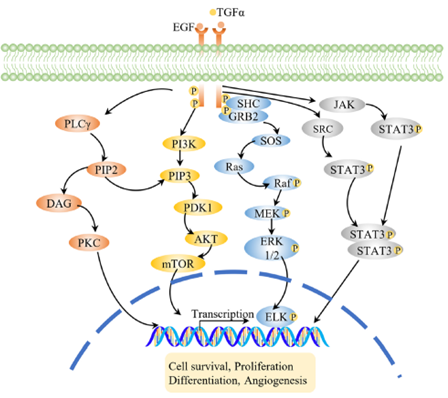
Figure: Schematic diagram of EGFR mechanism of action
EGFR (Epidermal Growth Factor Receptor), also known as ERBB1, is the expression product of the proto-oncogene c-erbB1 and a member of the HER family, which also includes HER2 (erbB2, NEU), HER3 (erbB3), and HER4 (erbB4). These receptors belong to the receptor tyrosine kinase (RTKs) family.
EGFR is located on chromosome 7p11.2 and is a transmembrane glycoprotein composed of 1186 amino acids. EGFR contains three main functional domains: the extracellular ligand-binding domain, the transmembrane domain, and the intracellular tyrosine kinase domain.
Upon binding of ligands such as EGF and TGF-α to the extracellular ligand-binding domain of EGFR, EGFR can form homodimers or heterodimers with other HER family members. This leads to conformational changes in the intracellular tyrosine kinase domain, resulting in autophosphorylation of tyrosine residues and activation of downstream signaling pathways, including the Ras/Raf/MAPK, PI3K-Akt, and JAK-STAT pathways. The PI3K-Akt pathway is involved in cell proliferation and metastasis; MAPK promotes cell proliferation and survival; and the JAK-STAT pathway is associated with gene transcription during tumor formation.
EGFR is implicated in non-small cell lung cancer (NSCLC), gliomas, colorectal cancer, melanoma, and other cancers. Among these, EGFR-mutant NSCLC is more sensitive to EGFR-targeted drugs, making it an important subtype of NSCLC.
In NSCLC, mutations in the EGFR tyrosine kinase domain include exons 18, 19, 20, and 21, with the most common mutations occurring in exons 19 and 21.
T790M Mutation
The T790M mutation is a common mutation type, present in approximately 50-60% of NSCLC patients. Patients with this mutation exhibit resistance to gefitinib or erlotinib. The 790 residue is located at a critical position in the hydrophobic pocket entrance of the ATP-binding cleft, hence the T790M mutation is also referred to as the "gatekeeper" mutation. EGFR-TKIs mimic the structure of ATP and competitively bind to the EGFR kinase domain. The mutation at the 790 amino acid position hinders the binding of EGFR-TKIs to EGFR.
EGFR's binding affinity to ATP is enhanced, significantly reducing the efficacy of EGFR-TKIs.
Currently, two mechanisms explain the cause of this mutation: one is the result of subclonal selection, and the other is an acquired mutation.
C797S Mutation
The C797S mutation is a common cause of osimertinib resistance. In this mutation, the cysteine at position 797, which binds to ATP, is replaced by serine, preventing osimertinib from binding to the mutant EGFR. However, in rare cases where both T790M and C797S mutations coexist, the mutant EGFR shows sensitivity to first-generation EGFR-TKIs. Therefore, a combination of osimertinib and gefitinib can be used for treatment. When both alleles are mutated, the mutant EGFR exhibits resistance to both single and combined use of EGFR-TKIs.
In cases where the C797S mutation is present without T790M, the mutant EGFR is sensitive to first- and second-generation EGFR-TKIs. However, in preclinical and clinical cases, this mutant type tends to evolve into the C797S/T790M double mutation.
In the AURA3 clinical trial, osimertinib was used as a second-line treatment, and the C797S mutation in EGFR accounted for approximately 15% of resistance cases.
G796R/D Mutation
In osimertinib-treated lung adenocarcinoma, approximately 0.56% of cases exhibit the G796R mutation. Molecular docking results show that G796R not only sterically hinders the binding of osimertinib to EGFR due to its bulky side chain but also disrupts the binding of the drug's hydrophobic region with hydrophilic groups, making the binding energetically unfavorable.
Compared to the L858R/T790M double mutation, the L858R/T790M/G796R triple mutation in EGFR shows up to 110-fold resistance to osimertinib.
The G796D mutation was initially identified in osimertinib-resistant NSCLC patients, with the mutant EGFR showing a 50-fold increase in GI50 for osimertinib.
G724S Mutation
The G724S mutation is a very rare mutation type that confers resistance to third-generation EGFR inhibitors. Structural analysis and computer modeling suggest that the G724S mutation in EGFR may alter the structure of the glycine-rich loop, leading to structural incompatibility with third-generation TKIs. However, it does not confer resistance to second-generation inhibitors. Therefore, the G724S mutation may be an extremely rare mutation induced by different generations of EGFR-TKIs.
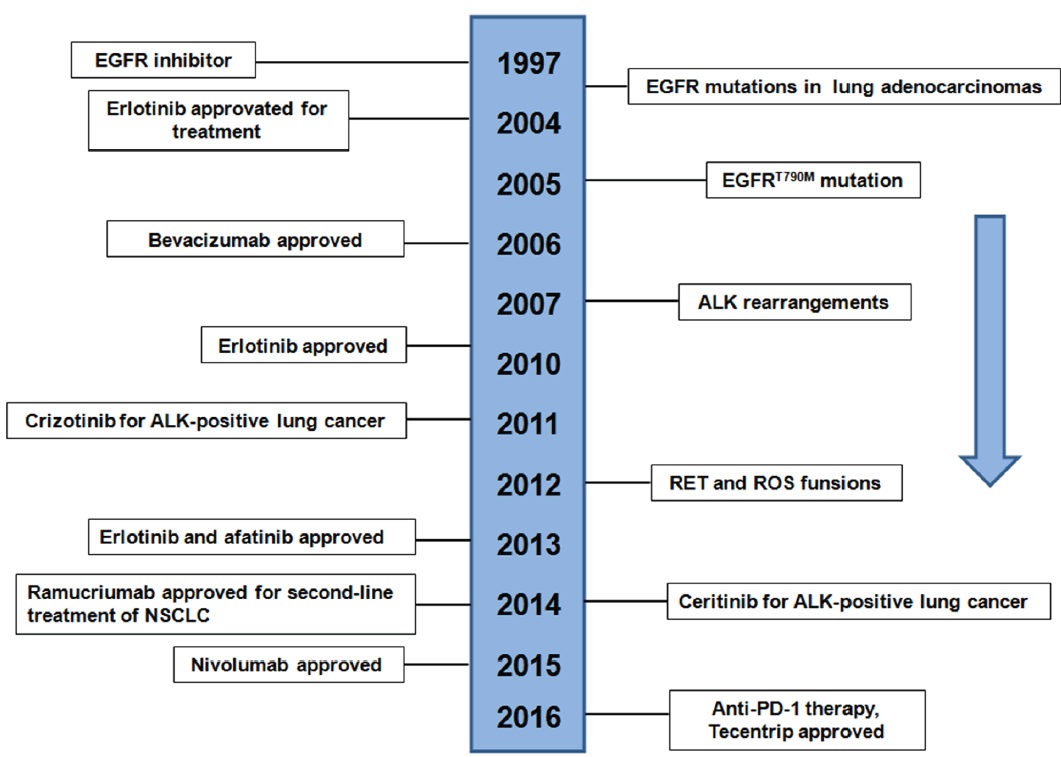
Figure: Development of EGFR-related drugs
Based on different EGFR mutation types, various drugs have been developed, such as Almonertinib, Alflutinib, Lazertinib (YH25448), and Abivertinib (AC0010). Additionally, research combining other methods targeting EGFR is ongoing, including bispecific antibodies and ADCs, small molecules targeting EGFR degradation (PROTAC), poly polymerase and PARP inhibitors, and Aurora kinase inhibitors.
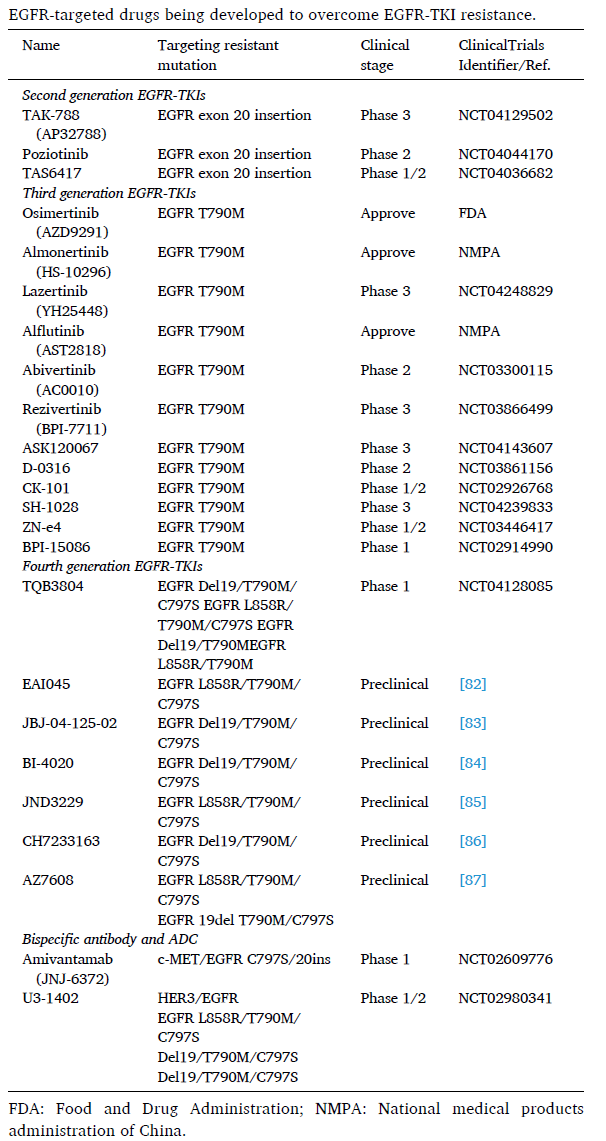
Figure: Drugs targeting EGFR mutations
Click here to explore more target proteins.
This article is reviewed and published by the technical expert team of UA
Disclaimer: This article partially utilizes artificial intelligence assistance in its creation. If any content involves copyright or intellectual property issues, please let us know and we promise to verify and remove it as soon as possible.
Purchase recombinant protein, choose Nanjing UA-Bio
UA protein focuses on providing various protein reagents, raw materials, and services required for drug research and development, cell therapy, gene therapy, and basic scientific research, including drug target proteins, immune checkpoint proteins, cytokines, tool enzymes, customized protein expression, and full-length transmembrane protein development. Youai is committed to providing customers with high-quality products and professional services, and building a High-tech Biological Enterprise with International Competitiveness.







 Business license (three certificates in one)