IL-6 Protein: Molecular Characteristics, Functions, and Targeted Therapy


Interleukin-6 (IL-6) is a single-chain glycoprotein composed of 212 amino acids, with a molecular weight of approximately 26 kDa, and its encoding gene is located on human chromosome 7p21.
- Recent Advances
- Product Information
1. Molecular Structure and Nomenclature History of IL-6 Protein
Interleukin-6 (IL-6) is a single-chain glycoprotein composed of 212 amino acids, with a molecular weight of approximately 26 kDa, encoded by a gene located on human chromosome 7p21. Initially identified in 1980 as "β2-interferon (IFN-β2)" due to its antiviral activity in viral infection models, this molecule was officially named IL-6 in 1986 as a multifunctional cytokine that transmits signals between leukocytes. The IL-6 protein features a four-α-helix bundle structure, with its receptor-binding domain primarily located at the C-terminal region, a structural characteristic that determines its specific interaction mechanism with receptors.
2. Expression Regulation of IL-6 Protein
The expression of IL-6 protein is precisely regulated by multiple transcription factors and signaling pathways. During immune responses, pathogen-associated molecular patterns can activate transcription factors such as NF-κB and AP-1 through pattern recognition receptors like Toll-like receptors, thereby promoting IL-6 gene transcription. Additionally, inflammatory cytokines such as TNF-α and IL-1 can upregulate IL-6 expression via autocrine or paracrine mechanisms. Notably, IL-6 protein is not only produced by immune cells (e.g., monocytes/macrophages, T cells) but can also be secreted by endothelial cells, fibroblasts, and certain tumor cells under stress or inflammatory conditions.
3. Signal Transduction Mechanism of IL-6 Protein
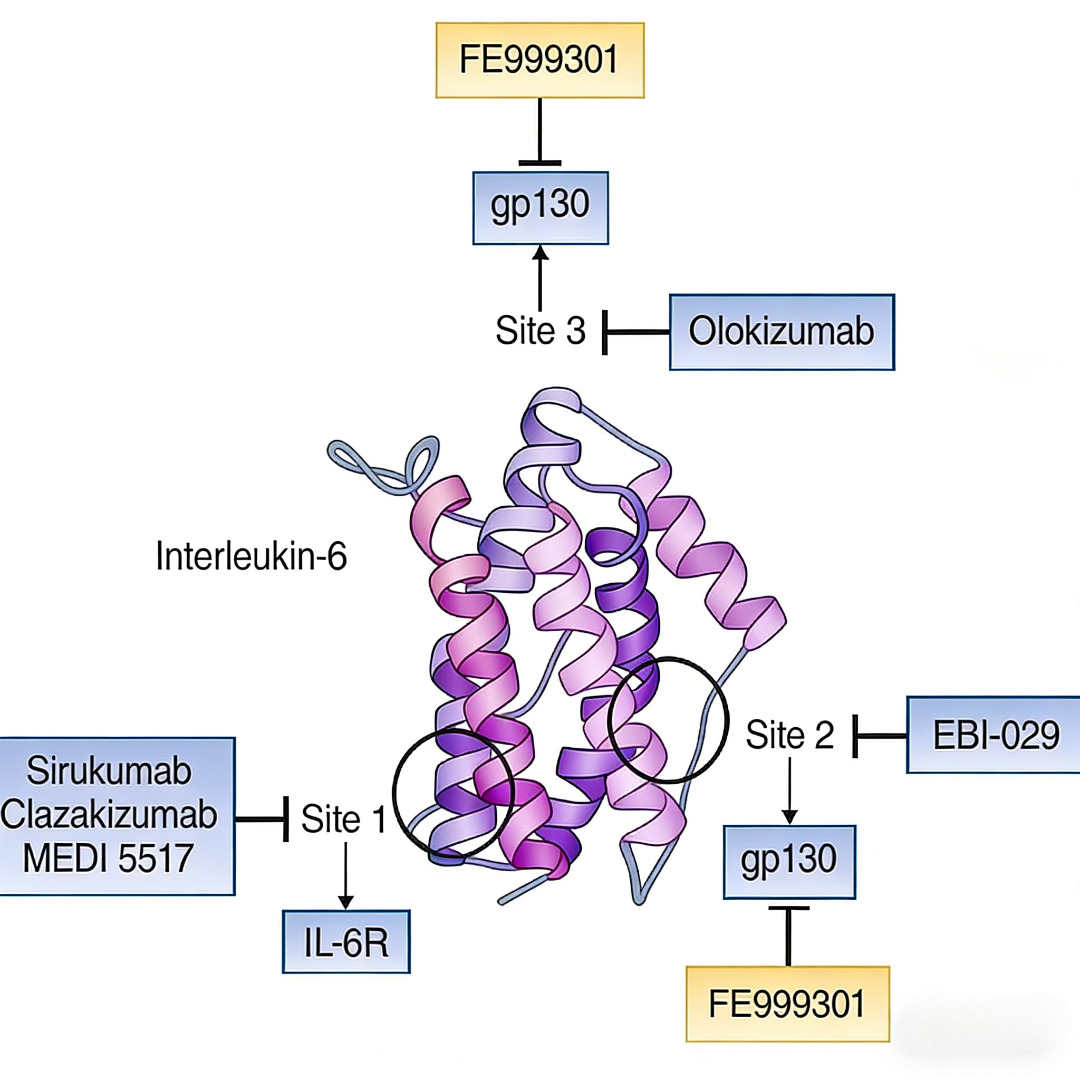
IL-6 protein exerts its biological functions by binding to its receptor system, which involves two types of receptor proteins:
1. IL-6 receptor (IL-6R, CD126): An 80 kDa transmembrane protein with cell-type-restricted expression;
2. gp130 (CD130): A 130 kDa transmembrane signal-transducing subunit widely expressed in various cell types.
IL-6 protein signal transduction occurs via two modes:
Classical signaling pathway: IL-6 protein directly binds to membrane-bound IL-6R, recruiting gp130 to form an activation complex and initiating the downstream JAK-STAT pathway (primarily STAT3 phosphorylation);
Trans-signaling pathway: IL-6 protein binds to soluble IL-6R (sIL-6R), and this complex can activate cells expressing gp130, thereby expanding the scope of IL-6 protein action.
Both pathways lead to STAT3 dimerization, nuclear translocation, and target gene transcription activation, while synergistically activating the MAPK and PI3K/Akt pathways.
4. Pleiotropic Biological Functions of IL-6 Protein
As a pleiotropic cytokine, IL-6 protein plays a key role in the following physiological and pathological processes:
Immune regulation: Promotes B cell differentiation into plasma cells and antibody class switching; synergistically participates in T cell activation and differentiation;
Acute-phase response: Induces hepatocyte synthesis of acute-phase proteins such as C-reactive protein and serum amyloid A;
Hematopoietic regulation: Supports hematopoietic stem cell proliferation and promotes megakaryocyte differentiation and platelet production;
Metabolism and tissue repair: Involved in lipid metabolism, bone remodeling, and tissue regeneration processes;
Pathological roles: Sustained high expression is closely associated with chronic inflammation, autoimmune diseases, tumor progression, and cytokine release syndrome (CRS).
5. Future Perspectives
As a central molecule in the immune and inflammatory network, research on the structure and function of IL-6 protein provides critical insights into understanding various pathological processes. Targeted therapies against IL-6 protein and its pathways have demonstrated significant clinical value. Future studies will further explore its regulatory mechanisms and application potential in fields such as tumor immunology, metabolic diseases, and neuroinflammation, advancing the development of personalized treatment strategies.
6. Which Manufacturers Provide IL-6 Protein?
Nanjing YouAi Protein independently developed IL-6 Protein, Human (Catalog No.: UA040052), a high-purity, high-activity recombinant human interleukin-6 (IL-6) protein produced using a mammalian expression system, fully retaining its natural biological functions and conformation. This product has undergone rigorous validation in terms of purity, activity, and stability, making it suitable for various applications such as inflammation mechanism research, immune regulation experiments, cell culture additives, antibody drug screening, and target validation.
Core Product Advantages:
| Advantage | Detailed Description |
|---|---|
| High Purity and Native Conformation | Expressed via a mammalian expression system, ensuring correct folding and glycosylation modifications. Purified through multiple chromatography steps with purity >95% and low endotoxin levels, accurately mimicking the biological activity of native IL-6. |
| Exceptional Bioactivity | Validated through IL-6-dependent cell proliferation assays, exhibiting high specific activity and effective activation of the IL-6 signaling pathway, suitable for cell function studies and in vitro efficacy evaluation. |
| Broad Applicability | Applicable to various experimental systems, including cell stimulation and signal transduction studies, antibody/inhibitor screening (ELISA/SPR/BLI), as a standard for quantitative detection, and as an immunogen for antibody development. |
| Excellent Stability and Batch Consistency | Manufactured using standardized processes and strict quality control systems, ensuring consistent purity, activity, and stability across batches, guaranteeing experimental reproducibility and reliability. |
| Professional Technical Support | We provide detailed product manuals, recommended experimental protocols, storage recommendations, and professional technical consultation and support for IL-6 research in fields such as inflammation, tumor immunology, and cell therapy. |
Nanjing YouAi Protein is committed to providing high-quality core protein tools for immunology research, inflammatory disease model construction, and innovative drug development. For detailed technical information, activity validation data, or application inquiries regarding IL-6 Protein, Human (Catalog No.: UA040052), please feel free to contact us.
This article is reviewed and published by the technical expert team of UA
Disclaimer: This article partially utilizes artificial intelligence assistance in its creation. If any content involves copyright or intellectual property issues, please let us know and we promise to verify and remove it as soon as possible.
Purchase recombinant protein, choose 
UA protein focuses on providing various protein reagents, raw materials, and services required for drug research and development, cell therapy, gene therapy, and basic scientific research, including drug target proteins, immune checkpoint proteins, cytokines, tool enzymes, customized protein expression, and full-length transmembrane protein development. Nanjing Univ is committed to providing customers with high-quality products and professional services, and building a High-tech Biological Enterprise with International Competitiveness.







 Business license (three certificates in one)