




The Synergistic Magic of Cytokines in CAR-T Cell Cultivation


Chimeric Antigen Receptor T-Cell (CAR-T) therapy represents a revolutionary approach in cancer treatment, involving the engineering of a patient's own T cells to recognize and attack cancer cells. Although CAR-T therapy has demonstrated remarkable efficacy in treating certain hematologic malignancies, its application in solid tumors remains fraught with numerous challenges. Cytokines play a pivotal role in the expansion, survival, and functional modulation of CAR-T cells.
- Recent Advances
- Product Information
- Reference
Introduction
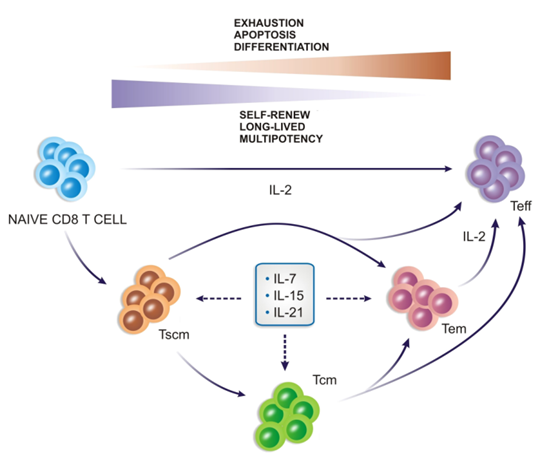
Chimeric Antigen Receptor T-Cell (CAR-T) therapy represents a revolutionary approach in cancer treatment, involving the engineering of a patient's own T cells to recognize and attack cancer cells. Although CAR-T therapy has demonstrated remarkable efficacy in treating certain hematologic malignancies, its application in solid tumors remains fraught with numerous challenges. Cytokines play a pivotal role in the expansion, survival, and functional modulation of CAR-T cells. This article explores several key cytokines, including IL-2, IL-7, IL-15, and IL-21, as well as the critical role of CD3/CD28 antibodies in CAR-T therapy.
IL-2 (Interleukin-2)
IL-2, one of the earliest discovered T-cell growth factors, is widely used in immunotherapy. It not only promotes T-cell proliferation and activation but also enhances their anti-tumor capabilities.
In CAR-T therapy, IL-2 has the following applications:
1. T-Cell Expansion: IL-2 plays a crucial role in the in vitro expansion of CAR-T cells by stimulating T-cell proliferation, thereby generating a sufficient number of functional CAR-T cells.
2. Enhanced Anti-Tumor Activity: IL-2 can augment the cytotoxic activity of CAR-T cells, giving them an advantage in the tumor microenvironment.
3. Persistence and Tolerance: Studies have shown that IL-2 improves the persistence of CAR-T cells, allowing them to remain active in the body for longer periods and enhancing therapeutic efficacy.
However, the use of IL-2 is accompanied by certain side effects, including cytokine release syndrome and toxic reactions. Therefore, balancing the dosage and administration of IL-2 is critical to ensuring safety.
IL-2 Protein, Human (UA040057)


Immobilized IL-2 His Tag, Human (Cat. No. UA040057) at 0.5μg/mL (100μL/well) can bind IL-2R alpha/CD25 Fc Chimera, Human (Cat. No. UA010260) with EC50 of 1.23-1.99ng/ml.
IL-7 (Interleukin-7)
IL-7 plays a significant role in T-cell survival and homing, particularly in the maintenance of long-term memory T cells. Its role in CAR-T therapy includes the following aspects:
1. T-Cell Survival: IL-7 significantly improves the survival rate of CAR-T cells and reduces apoptosis, especially in low IL-2 environments.
2. Memory T-Cell Maintenance: IL-7 helps maintain the population of central memory CAR-T cells (T_CM), which are advantageous in long-term anti-tumor immunity.
3. Enhanced Homing Ability: IL-7 enhances the homing ability of CAR-T cells to tumor sites by modulating the expression of chemokine receptors, thereby improving their infiltration into the tumor microenvironment.
IL-7 Protein, Human (UA040234)


Measured in a cell proliferation assay using Murine 2E8 cells,The EC50 for this effect is less than 0.5ng/ml.
IL-15 (Interleukin-15)
IL-15 plays a critical role in enhancing the survival and function of natural killer (NK) cells and T cells. Its role in CAR-T therapy includes:
1. Promoting CAR-T Cell Proliferation and Survival: IL-15 enhances CAR-T cell proliferation and survival by sharing the β and γ chains of the IL-2 receptor.
2. Enhanced Anti-Tumor Activity: Studies have shown that IL-15 significantly improves the anti-tumor activity of CAR-T cells, increasing their cytotoxic efficiency in vivo.
3. Reduction of Inhibitory Signals: IL-15 can mitigate inhibitory signals in the tumor microenvironment, such as those from TGF-β and IL-10, thereby enhancing CAR-T cell function.
IL-15 Protein, Human (UA040010)
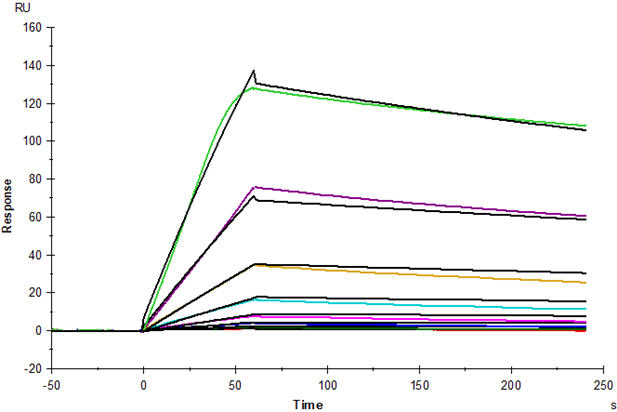

The EC50 as determined by the dose-dependent stimulation of the proliferation of CTLL-2 was found to be <0.2ng/ml.
IL-21 (Interleukin-21)
IL-21 plays an important role in regulating the function of T cells and B cells and promotes the expansion and functionalization of cytotoxic T cells. Its primary roles in CAR-T therapy include:
1. Enhanced Cytotoxicity: IL-21 enhances the cytotoxicity of CAR-T cells, making them more effective at killing tumor cells.
2. Promotion of Memory T-Cell Formation: IL-21 facilitates the formation of effector memory T cells (T_EM), which can rapidly respond to antigen stimulation and exert cytotoxic effects.
3. Improved Cell Persistence: IL-21 enhances the persistence and anti-tumor capacity of CAR-T cells by modulating T-cell metabolism and survival signals.
IL-21 Protein, Human (UA040009)
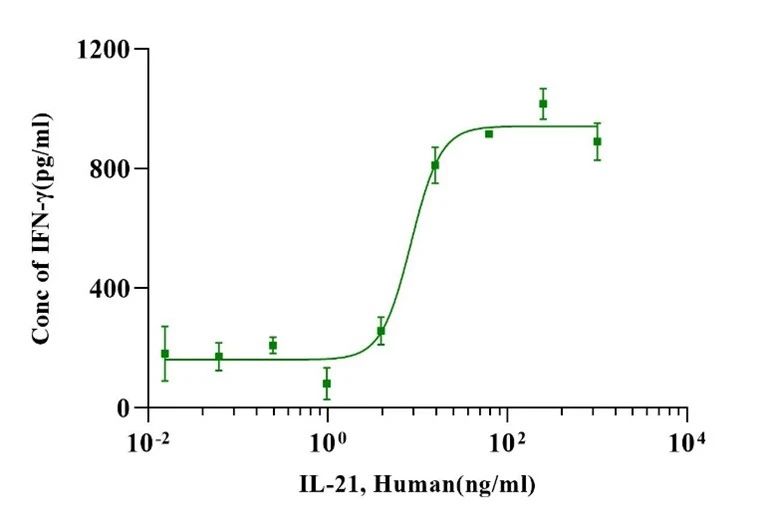
Measured by its ability to enhance IFN-γ secretion in NK-92 human natural killer lymphoma cells. The EC50 for this effect is <10 ng/ml.
T-Cell Activation and Expansion—CD3/CD28 Antibodies
CD3 antibodies bind to the CD3 molecules on the surface of T cells, providing the necessary signals for T-cell activation. CD28 antibodies, as co-stimulatory factors, are expressed on the surface of T cells and bind to B7 molecules on antigen-presenting cells (APCs). This binding mediates co-stimulation of T cells following activation by the first signal transmitted through CD3 molecules, further promoting T-cell survival, proliferation, and cytokine production.
Conclusion
Cytokines play a crucial role in CAR-T cell therapy. IL-2, IL-7, IL-15, and IL-21, through distinct mechanisms, contribute significantly to the proliferation, survival, functional enhancement, and persistence of CAR-T cells. However, the use of cytokines requires careful balancing of their therapeutic effects and potential side effects. Future research will continue to explore how to optimize the application of these cytokines to improve the safety and efficacy of CAR-T therapy, particularly in the treatment of solid tumors.
This article is reviewed and published by the technical expert team of UA
Disclaimer: This article partially utilizes artificial intelligence assistance in its creation. If any content involves copyright or intellectual property issues, please let us know and we promise to verify and remove it as soon as possible.
Purchase recombinant protein, choose Nanjing UA-Bio
UA protein focuses on providing various protein reagents, raw materials, and services required for drug research and development, cell therapy, gene therapy, and basic scientific research, including drug target proteins, immune checkpoint proteins, cytokines, tool enzymes, customized protein expression, and full-length transmembrane protein development. Youai is committed to providing customers with high-quality products and professional services, and building a High-tech Biological Enterprise with International Competitiveness.

1. June, C. H., O'Connor, R. S., Kawalekar, O. U., Ghassemi, S., & Milone, M. C. (2018). CAR T cell immunotherapy for human cancer. Science, 359(6382), 1361-1365.
2. Rafiq, S., Hackett, C. S., & Brentjens, R. J. (2020). Engineering strategies to overcome the current roadblocks in CAR T cell therapy. Nature Reviews Clinical Oncology, 17(3), 147-167.






 Business license (three certificates in one)