




EGFR—The Superstar Among Therapeutic Targets


EGFR, a receptor belonging to the ErbB family, is encoded by exons 18–24 of the EGFR gene. Mutations that activate the EGFR kinase domain primarily occur in exons 18–21, leading to the activation of downstream signaling pathways such as Ras/Raf/MEK/ERK, Janus kinase (JAK)/STAT, and PI3K/Akt/mTOR. These mutations are closely associated with human non-small cell lung cancer (NSCLC). The EGFR pathway has been extensively studied as an oncogenic driver in NSCLC.
- Recent Advances
- Product Information
Introduction
EGFR, a receptor belonging to the ErbB family, is encoded by exons 18–24 of the EGFR gene. Mutations that activate the EGFR kinase domain primarily occur in exons 18–21, leading to the activation of downstream signaling pathways such as Ras/Raf/MEK/ERK, Janus kinase (JAK)/STAT, and PI3K/Akt/mTOR. These mutations are closely associated with human non-small cell lung cancer (NSCLC). The EGFR pathway has been extensively studied as an oncogenic driver in NSCLC. Patients with EGFR-sensitive mutations in NSCLC can benefit from treatment with EGFR-tyrosine kinase inhibitors (TKIs), including first-generation EGFR-TKIs (gefitinib and erlotinib), second-generation EGFR-TKIs (dacomitinib and afatinib), and third-generation EGFR-TKIs (osimertinib).

Figure 1: EGFR Mutations
On May 20, 2024, the third-generation EGFR inhibitor "Rezivertinib" developed by Beta Pharma was approved for market release. It exhibits significant inhibitory activity against EGFR-sensitive single mutations and EGFR T790M-positive resistance mutations.
Currently, fourth-generation EGFR-TKIs are in the early stages of clinical development. For example, BBT-176, a novel oral fourth-generation EGFR TKI, selectively and non-covalently inhibits triple-mutant EGFR 19Del/T790M/C797S and L858R/T790M/C797S at nanomolar concentrations. It shows promising therapeutic potential for patients who develop EGFR C797S triple resistance mutations after osimertinib treatment.
EGFR (d746-750/T790M/C797S)
The activity of EGFR[d746-750/T790M/C797S] protein was detected using HTRF technology. After incubation with ATP and substrate at 25°C for 60 minutes, detection antibodies were added and incubated for another 60 minutes. The Ratio value (665/620) was calculated.
Catalog Number: UA080255
Species: Human
Expression System: Baculovirus-Insect Cells
Purity: > 90%
Specifications: 10 μg/100 μg
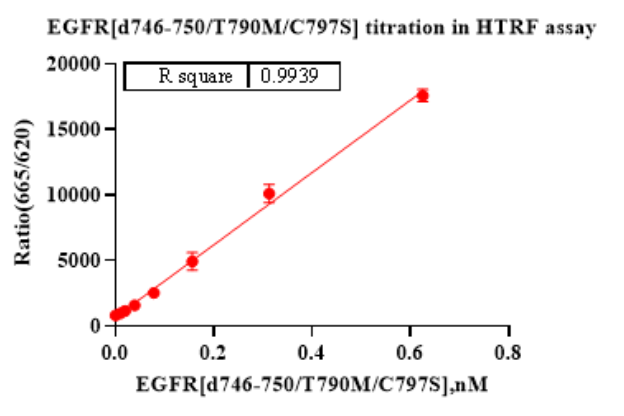

Figure 2:EGFR[d746-750/T790M/C797S] titration and inhibitor IC50 determination
EGFR[L858R/T790M]
The activity of EGFR[L858R/T790M] protein was detected using HTRF technology. After incubation with ATP and substrate at 25°C for 60 minutes, detection antibodies were added and incubated for another 60 minutes. The Ratio value (665/620) was calculated.
Catalog Number: UA080073
Species: Human
Expression System: Baculovirus-Insect Cells
Purity: > 90%
Specifications: 10 μg/100 μg/1 mg


Figure 3:EGFR[L858R/T790M] titration and inhibitor IC50 determination
EGFR
The activity of EGFR[d746-750/T790M/C797S] protein was detected using HTRF technology. After incubation with ATP and substrate at 25°C for 60 minutes, detection antibodies were added and incubated for another 60 minutes. The Ratio value (665/620) was calculated.
Catalog Number: UA080068
Species: Human
Expression System: Baculovirus-Insect Cells
Purity: > 90%
Specifications: 10 μg/100 μg/1 mg


Figure 4:EGFR titration and inhibitor IC50 determination
Click on the product catalog numbers below to access detailed information on our official website.
This article is reviewed and published by the technical expert team of UA
Disclaimer: This article partially utilizes artificial intelligence assistance in its creation. If any content involves copyright or intellectual property issues, please let us know and we promise to verify and remove it as soon as possible.
Purchase recombinant protein, choose Nanjing UA-Bio
UA protein focuses on providing various protein reagents, raw materials, and services required for drug research and development, cell therapy, gene therapy, and basic scientific research, including drug target proteins, immune checkpoint proteins, cytokines, tool enzymes, customized protein expression, and full-length transmembrane protein development. Youai is committed to providing customers with high-quality products and professional services, and building a High-tech Biological Enterprise with International Competitiveness.







 Business license (three certificates in one)