The Core Role of CD40/CD40L Signaling Pathway in Immunotherapy and Targeted Strategies


CD40 (also known as TNFRSF5) is a key member of the tumor necrosis factor receptor superfamily (TNF-R-SF), a type I transmembrane glycoprotein with a molecular weight of approximately 48 kDa.
- Recent Advances
- Product Information
I. Overview of CD40/CD40L Molecules
CD40 (also known as TNFRSF5) is a key member of the tumor necrosis factor receptor superfamily (TNF-R-SF), a type I transmembrane glycoprotein with a molecular weight of approximately 48 kDa. It is widely expressed on various immune cells, particularly B cells, dendritic cells, monocytes, and macrophages, and is also found on some non-hematopoietic cells (e.g., endothelial cells, fibroblasts) and certain tumor cells. CD40 is a central bridging molecule connecting innate and adaptive immune responses.
CD40L (also known as CD154 or TNFSF5) is the natural ligand of CD40, a 39 kDa type II transmembrane protein. Its expression is primarily limited to activated immune cells, including activated T cells, B cells, platelets, and natural killer cells. The binding of CD40L to CD40 is a critical upstream event initiating specific humoral and cellular immune responses.
II. Signal Transduction Mechanism of the CD40/CD40L Pathway
The CD40/CD40L pathway is a classic example of the TNF superfamily signaling system. This pathway initiates precise intracellular signaling cascades through ligand-mediated receptor trimerization:
1. Receptor Activation and Complex Formation: Membrane-bound or soluble trimeric CD40L binds to cell surface CD40, inducing precise spatial aggregation and trimerization of CD40 receptors to form a functional signaling initiation platform.
2. Adaptor Protein Recruitment and Signal Diversification: The intracellular domain of activated CD40 recruits various downstream adaptor proteins, primarily members of the TNF receptor-associated factor (TRAF) family, through specific structural domains. Different TRAF proteins mediate distinct downstream pathways:
- TRAF2/5 and TRAF6: Mainly activate the canonical NF-κB pathway and MAPK pathway.
- TRAF3: Typically acts as a negative regulator, and its degradation facilitates activation of the non-canonical NF-κB pathway.
- Other Effector Molecules: Pathways such as PI3K/Akt and JAK/STAT can also be activated.
3. Biological Effect Output: Activation of these signaling pathways ultimately leads to a series of critical cellular functional changes, including secretion of pro-inflammatory cytokines and chemokines, upregulation of co-stimulatory molecules, enhanced cell survival and proliferation, and optimization of antigen-presenting functions.
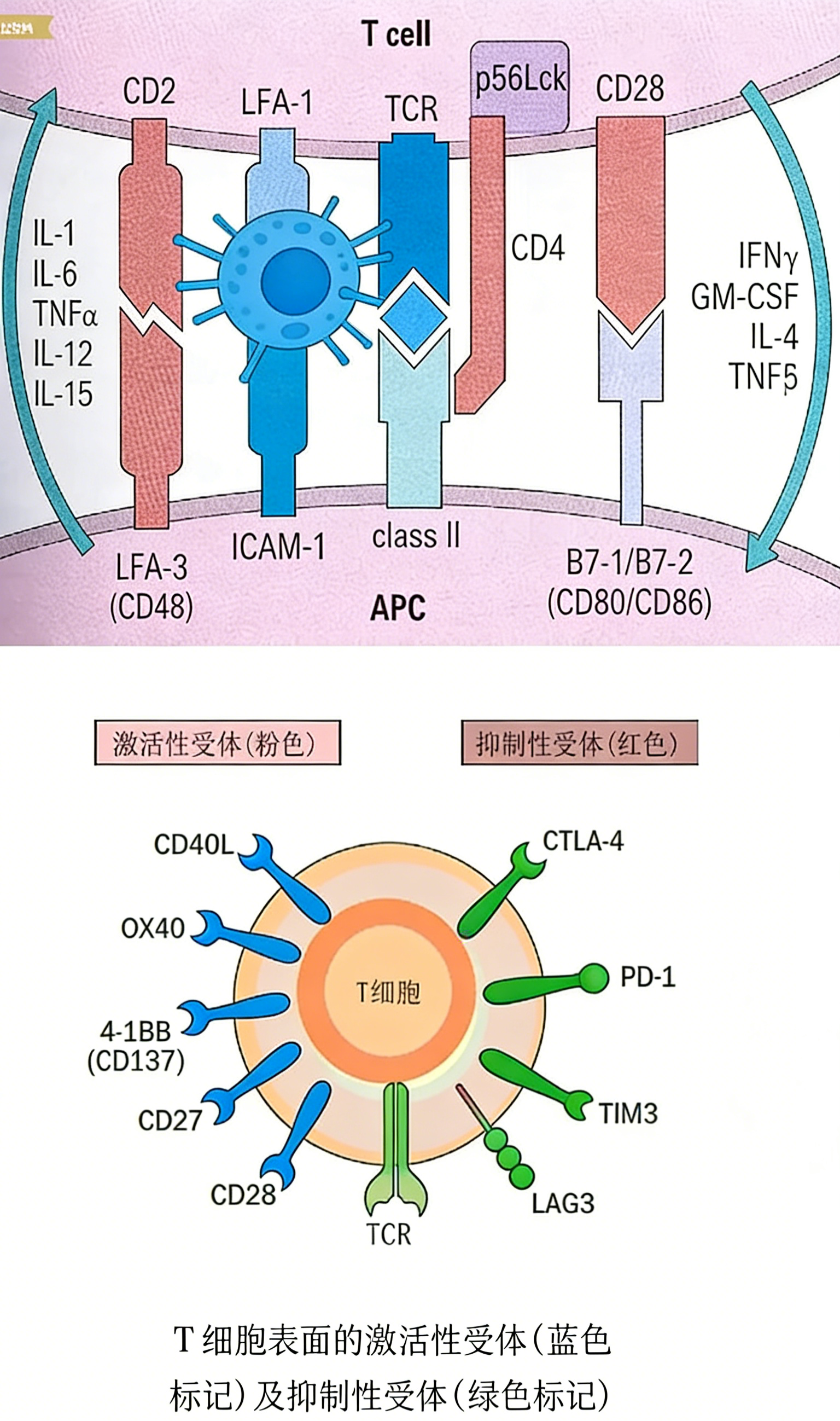
III. Core Functions of CD40/CD40L in the Immune System
CD40 signaling plays a central regulatory role at multiple levels of immune responses:
1. "Licensing" and Activation of Dendritic Cells (DCs): This is one of the most critical functions of the pathway. Activated CD4+ T cells express CD40L, which binds to CD40 on DC surfaces. This "licensing" signal drives full DC maturation, characterized by significant upregulation of antigen-presenting molecules, co-stimulatory molecules, and secretion of key cytokines like IL-12. Mature DCs thus acquire optimal ability to activate naïve CD8+ T cells, driving cytotoxic T lymphocyte production.
2. B Cell Activation and Humoral Immunity: In B cells, CD40 signaling is essential for germinal center formation, B cell clonal proliferation, antibody class switching, and affinity maturation, which are critical for generating high-affinity, long-lasting antibody responses.
3. Macrophage Function Regulation: CD40 signaling can activate macrophages, enhancing their antigen-presenting capacity, promoting pro-inflammatory cytokine secretion, and conferring anti-tumor activity, such as tumor cell killing and tumor microenvironment remodeling.
4. Bridging Innate and Adaptive Immunity: By activating antigen-presenting cells (APCs), the CD40 pathway effectively transmits early innate immune recognition signals to T and B lymphocytes, initiating and amplifying specific adaptive immune responses.
IV. The Critical Role of CD40/CD40L Research Kits in Target Research and Drug Evaluation
Basic research and drug development targeting the CD40/CD40L pathway heavily rely on reliable and standardized in vitro detection tools. Dedicated CD40/CD40L research kits provide scientists with comprehensive solutions from molecular interactions to functional validation.
1. Target Binding and Interaction Analysis:
Using enzyme-linked immunosorbent assay (ELISA) or surface plasmon resonance (SPR) technologies, these kits can precisely measure the affinity and kinetic parameters of candidate therapeutic molecules with CD40 or CD40L proteins, forming the basis for lead compound screening.
2. Cell-Level Receptor Activation and Signaling Pathway Detection:
These kits provide standardized methods to evaluate agonist activity in specific cell lines (e.g., CD40-expressing DC cell lines). By detecting downstream key events, such as NF-κB reporter gene activity, ERK phosphorylation levels, or upregulation of specific cell surface markers, the potency of candidate drugs can be quantitatively assessed.
3. Functional Immunology Assays:
Co-culture systems are provided to evaluate the impact of the CD40 pathway on immune cell functions. For example, the ability of CD40 agonists to activate allogeneic T cell proliferation by DCs or changes in B cell antibody secretion levels can be detected, directly translating molecular-level effects into functional data.
4. Evaluation of Engineered Cells (e.g., CAR-T Cells):
For engineered cells expressing CD40L, such as CAR-T cells, these kits can assess their interaction strength with CD40-positive target cells, ability to trigger DC maturation, and potential to induce secondary immune responses (e.g., memory T cell generation) under simulated conditions.
V. Which Manufacturers Provide CD40/CD40L Research Kits?
Nanjing U-Protein Biotechnology has independently developed the "TR-FRET Human CD40/CD40L Binding Kit" (Catalog No.: UA086020), a high-sensitivity detection platform based on advanced time-resolved fluorescence energy transfer (TR-FRET) technology, specifically designed for accurate quantification of the specific binding between CD40 and its ligand CD40L (CD154). This kit is suitable for immunostimulatory signal research, antibody drug screening, autoimmune diseases, and tumor immunotherapy, providing efficient, homogeneous, and reliable detection solutions.
| Core Advantages of the Product |
|---|
| High Sensitivity and Low Background Noise: Utilizing TR-FRET technology with time-resolved and dual-wavelength detection advantages, it effectively eliminates sample autofluorescence and compound interference, significantly improving the signal-to-noise ratio and enabling precise detection of low-affinity interactions. |
| Mimicking Natural Binding Conformation: The kit provides rigorously validated high-purity, high-activity human CD40 and CD40L proteins, both maintaining correct spatial conformation and full biological activity, ensuring binding experiments reflect physiological receptor-ligand interactions. |
| Homogeneous Detection and Easy Operation: Featuring a "mix-incubate-detect" homogeneous operation mode, it eliminates washing or separation steps, simplifies the workflow, and is compatible with automated workstations, greatly enhancing experimental efficiency and data consistency. |
| Excellent Stability and Batch-to-Batch Consistency: Through advanced recombinant expression systems and strict production quality control, the protein products exhibit high purity, superior long-term stability, and excellent batch-to-batch consistency, supporting long-term, continuous drug screening and functional research. |
| Complete Solutions and Professional Support: We provide detailed and optimized experimental protocols, typical data curves, result interpretation guides, and professional technical support and customized analysis recommendations for various applications (e.g., antibody competition assays, agonist/antagonist evaluation). |
Nanjing U-Protein Biotechnology is committed to providing high-performance, high-quality research tools and solutions for immunology, antibody drug development, and tumor immunotherapy. For detailed technical information, validation data, or application inquiries regarding the "TR-FRET Human CD40/CD40L Binding Kit" (Catalog No.: UA086020), please feel free to contact us.
This article is reviewed and published by the technical expert team of UA
Disclaimer: This article partially utilizes artificial intelligence assistance in its creation. If any content involves copyright or intellectual property issues, please let us know and we promise to verify and remove it as soon as possible.
Purchase recombinant protein, choose 
UA protein focuses on providing various protein reagents, raw materials, and services required for drug research and development, cell therapy, gene therapy, and basic scientific research, including drug target proteins, immune checkpoint proteins, cytokines, tool enzymes, customized protein expression, and full-length transmembrane protein development. Nanjing Univ is committed to providing customers with high-quality products and professional services, and building a High-tech Biological Enterprise with International Competitiveness.







 Business license (three certificates in one)