




Targeting TGF-β2: Reshaping the Immunosuppressive Tumor Microenvironment to Enhance Anti-Tumor Immunity


Pancreatic ductal adenocarcinoma is one of the most malignant solid tumors, with an extremely poor prognosis and a poor response to various treatment modalities, including immune checkpoint inhibitors.
- Recent Advances
- Product Information
I. Research Background: The Dilemma of Immunotherapy in Pancreatic Cancer and the Role of TGF-β
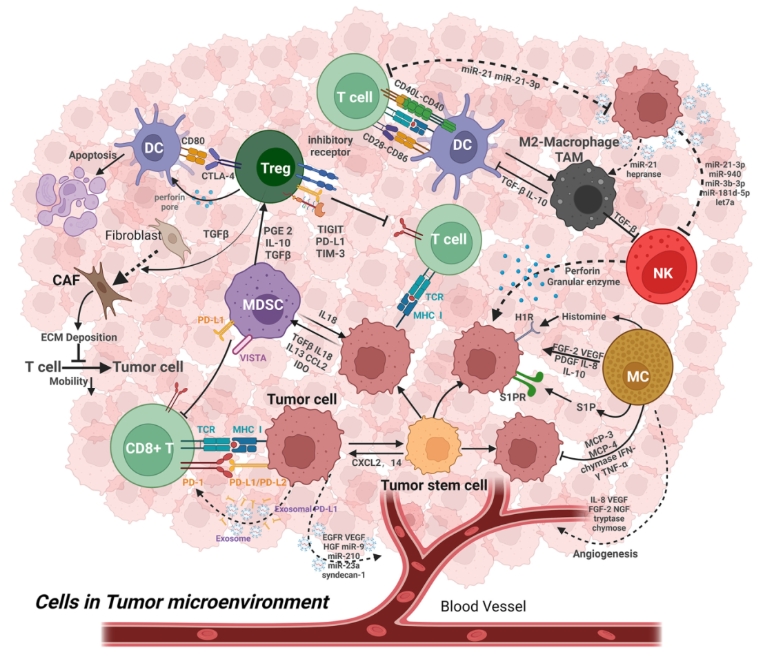
Pancreatic ductal adenocarcinoma is one of the most malignant solid tumors, with extremely poor prognosis and limited response to various treatments, including immune checkpoint inhibitors. A core reason for this therapeutic resistance is the unique tumor microenvironment of pancreatic cancer—an immunological "desert" characterized by extensive fibrotic stroma proliferation and sparse immune cell infiltration. Transforming growth factor-beta (TGF-β) plays a central role in shaping this microenvironment. It not only promotes the activation of cancer-associated fibroblasts and extracellular matrix deposition, forming physical and biochemical barriers but also directly suppresses effector T cell function and induces regulatory T cell generation, thereby establishing a potent immunosuppressive state.
II. Focus on TGF-β2 Protein as a Specific Target
The TGF-β family comprises three main isoforms (TGF-β1, β2, β3), which share signaling pathways (primarily through Smad proteins) but exhibit distinct regulatory patterns and biological functions. TGF-β2 protein, as a crucial isoform, has been found to be specifically overexpressed in various tumors, including pancreatic cancer, and is closely associated with tumor invasion, metastasis, and immune evasion. Compared to TGF-β1, targeting TGF-β2 may offer a more selective intervention strategy with reduced potential off-target toxicity, making it a highly promising precision target in recent tumor immunotherapy research.
III. Core Research Strategy: TGF-β2 Antisense Oligonucleotide Combined with IL-2
A recent study utilized a humanized immune system mouse model to investigate the role of targeted TGF-β2 inhibition combined with immune stimulation in pancreatic cancer treatment.
1. Treatment Strategy Design: The study employed TGF-β2 antisense oligonucleotide (TASO) to specifically suppress TGF-β2 protein production in the tumor microenvironment and combined it with the immune-stimulating factor interleukin-2 (IL-2), aiming to simultaneously relieve immunosuppression and activate anti-tumor immune responses.
2. Key Findings:
- Enhanced Cytotoxicity: TASO treatment significantly enhanced the in vitro killing activity of IL-2-stimulated human peripheral blood mononuclear cells against pancreatic cancer cells.
- Tumor Growth Inhibition: In animal models, TASO combined with IL-2 therapy effectively delayed pancreatic cancer growth.
- Remodeling of Fibrotic Microenvironment: The combination therapy inhibited Akt phosphorylation and activated glycogen synthase kinase-3β (GSK-3β), thereby downregulating β-catenin and α-smooth muscle actin expression. This led to attenuation of tumor stromal fibrosis, creating conditions for cytotoxic T lymphocyte (CTL) infiltration.
- Modulation of Immune Cell Composition: The combination therapy significantly reduced Foxp3+ regulatory T cells in peripheral blood and tumor tissues while increasing pro-inflammatory cytokines (e.g., IFN-γ, TNF-α) and decreasing anti-inflammatory cytokines (e.g., TGF-βs), thereby reversing the immune microenvironment from a suppressed state to a pro-inflammatory, anti-tumor state.
IV. Molecular Mechanisms and Potential Applications
The study revealed that the effect of TASO combined with IL-2 extends beyond direct inhibition of the TGF-β2/Smad pathway. More importantly, it modulates the non-canonical (non-Smad-dependent) Akt/GSK-3β/β-catenin signaling axis, achieving effective intervention in tumor stromal fibrosis. This dual remodeling of the tumor's physical barrier and immunosuppressive environment is key to overcoming pancreatic cancer's immunotherapy resistance. Based on this, TGF-β2 protein and its signaling pathway emerge as highly promising therapeutic targets. Strategies targeting TGF-β2 (e.g., antisense oligonucleotides, neutralizing antibodies, receptor traps) provide a clear direction for developing novel combination immunotherapies for pancreatic cancer. Future applications of such strategies in combination with immune checkpoint inhibitors, cell therapies, or other targeted drugs hold promise for new treatment options for pancreatic cancer patients.
V. Summary
This study successfully reversed the immunosuppressive microenvironment of pancreatic cancer and inhibited tumor growth in preclinical models by targeting TGF-β2 protein and combining it with immune-stimulating therapy. This highlights the value of TGF-β2 as a critical node in pancreatic cancer treatment. The mechanism involves regulation of fibrotic stroma and restoration of immune cell function, providing important theoretical and practical foundations for developing effective immunotherapy strategies for "cold tumors." Further exploration of precision immune intervention strategies targeting TGF-β2 holds significant clinical translation potential.
VI. Which Manufacturers Provide TGF-β2 Protein?
Nanjing U-Protein's independently developed TGF-β2 Protein, Human (Catalog No.: UA040490) is a high-purity, high-activity recombinant human transforming growth factor-beta 2 (TGF-β2) produced using a mammalian expression system and subjected to acid activation to ensure delivery in its biologically active mature form. TGF-β2 is a key member of the TGF-β superfamily, playing a central role in cell growth, differentiation, embryonic development, immune regulation, and tissue fibrosis in various physiological and pathological processes. This product is an essential tool for studying tissue repair, fibrotic diseases, tumorigenesis, and immunosuppression.
| Core Product Advantages |
|---|
| High Purity and Active Mature Form: Expressed in a mammalian system to ensure correct dimeric folding and necessary post-translational modifications. The product undergoes specialized purification and in vitro acid activation, delivered as a high-purity (>95%), low-endotoxin active mature form, ready for functional experiments without additional activation steps. |
| Validated Biological Activity: Rigorously tested in TGF-β-sensitive cell assays (e.g., A549 or Mv-1-lu cell growth inhibition) or reporter gene assays (e.g., CAGA-luc), demonstrating high specific activity and effective activation of the canonical Smad pathway and downstream gene expression, ensuring reliability in functional studies. |
| Broad and Deep Application Compatibility: Suitable for multiple cutting-edge research areas: - Fibrotic Disease Models: Induces epithelial-mesenchymal transition (EMT) for studying fibrosis mechanisms in lung, liver, kidney, and other organs. - Immune Regulation Studies: Modulates Treg cell differentiation or suppresses effector T cell function to investigate tumor immune microenvironments. - Stem Cell and Differentiation Research: Collaborates with other factors to regulate stem cell differentiation into specific lineages (e.g., chondrocytes). - Signaling Pathway Studies: Serves as a positive control for TGF-β/Smad pathway activation and regulation. |
| Excellent Stability and Batch Consistency: Strict production processes and quality control ensure long-term activity stability and high consistency in purity and bioactivity across batches, guaranteeing reproducible experimental results. |
Professional Technical Support: We provide detailed product documentation, including recommended concentrations (note: TGF-β2 is highly active, typically at picogram to nanogram per milliliter levels), cell experiment protocols, storage recommendations, and specialized technical consultation tailored to your specific needs in disease models or mechanistic studies.
Nanjing U-Protein is committed to providing high-quality core cytokine tools for developmental biology, fibrotic diseases, tumor immunology, and regenerative medicine research. For detailed technical parameters, specific activity data, or application protocols for TGF-β2 Protein, Human (Catalog No.: UA040490), please feel free to contact us.
Disclaimer: This article partially utilizes artificial intelligence assistance in its creation. If any content involves copyright or intellectual property issues, please let us know and we promise to verify and remove it as soon as possible.
Purchase recombinant protein, choose Nanjing UA-Bio
UA protein focuses on providing various protein reagents, raw materials, and services required for drug research and development, cell therapy, gene therapy, and basic scientific research, including drug target proteins, immune checkpoint proteins, cytokines, tool enzymes, customized protein expression, and full-length transmembrane protein development. Youai is committed to providing customers with high-quality products and professional services, and building a High-tech Biological Enterprise with International Competitiveness.







 Business license (three certificates in one)