




The mechanism of the IL-6 pathway in systemic lupus erythematosus, its potential for targeted therapy, and evaluation tools


Systemic lupus erythematosus is a systemic autoimmune disease characterized by immune system dysregulation, which produces a large number of autoantibodies and attacks multiple organ systems, leading to widespread inflammation and tissue damage.
- Recent Advances
- Product Information
I. The Core Relationship Between Systemic Lupus Erythematosus and IL-6
Systemic lupus erythematosus (SLE) is a systemic autoimmune disease characterized by immune system dysregulation, leading to the production of large quantities of autoantibodies that attack multiple organ systems, resulting in widespread inflammation and tissue damage. Among the cytokine networks involved in its pathological processes, interleukin-6 (IL-6) has been demonstrated to play a pivotal role. IL-6 is a pleiotropic cytokine produced by virtually all stromal and immune cells. In SLE patients, serum and affected tissue levels of IL-6 are often abnormally elevated and correlate with disease activity and specific clinical manifestations (e.g., arthritis, skin lesions, anemia, and neuropsychiatric symptoms). Basic research indicates that IL-6 contributes deeply to SLE pathogenesis and progression by promoting the proliferation and differentiation of autoreactive B cells, driving pathogenic autoantibody production, disrupting immune cell homeostasis (e.g., affecting naive T/B cell balance), and amplifying overall inflammatory cascades.
II. IL-6 Signaling Mechanism
The biological functions of IL-6 are mediated through its receptor complex, which consists of a ligand-binding subunit (membrane-bound IL-6R or soluble IL-6R) and a signal-transducing subunit, glycoprotein 130 (gp130). Upon binding of IL-6 to IL-6R, gp130 homodimerizes, activating the Janus kinase/signal transducer and activator of transcription (JAK/STAT) pathway and initiating downstream signaling cascades such as Ras/mitogen-activated protein kinase (MAPK). This process ultimately regulates the transcription of target genes, mediating various physiological and pathological effects, including acute-phase protein production, terminal B cell differentiation, Th17 cell differentiation, and osteoclast generation.
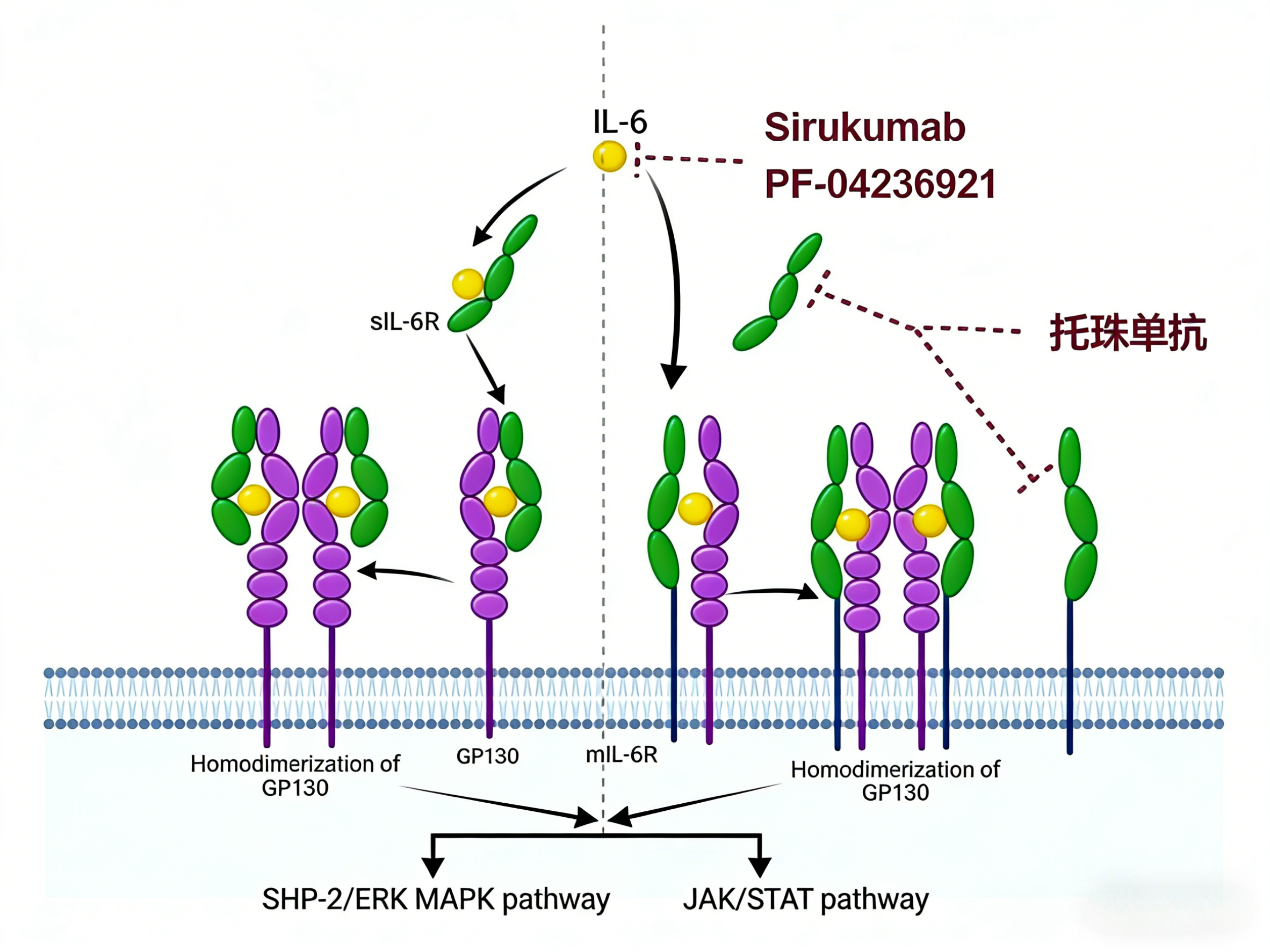
III. The Value of IL-6 Protein (GMP) in Research and Translation
To deeply investigate the role of IL-6 in disease and advance therapeutic strategy development, high-standardized research tools are essential. IL-6 Protein (GMP) refers to a highly purified, well-characterized recombinant protein produced under Good Manufacturing Practice (GMP) standards. It holds unique value in lupus research:
1. Standardized Mechanism Studies: As a reference standard, it can be used to establish in vitro cell models (e.g., B cells, T cells, fibroblasts) to precisely evaluate the dose-dependent effects of IL-6 on cell proliferation, differentiation, antibody secretion, and inflammatory cytokine production, providing reliable data for mechanistic studies.
2. Drug Screening and Potency Assessment Platform: In developing IL-6 pathway inhibitors (e.g., IL-6R or IL-6 neutralizing antibodies, small-molecule inhibitors), IL-6 Protein (GMP) serves as a critical reference for validating candidate drug blocking efficacy and calculating neutralizing activity. Its high-quality stability ensures the accuracy and reproducibility of screening results.
3. Preclinical Safety and Pharmacodynamic Evaluation: In animal models, GMP-grade proteins can more reliably simulate IL-6 effects under pathological conditions, enabling the assessment of potential therapies' in vivo effects and helping to understand the physiological impacts of intervening in this pathway.
IV. Clinical Exploration and Challenges of Targeting the IL-6 Pathway in Lupus Treatment
Based on strong preclinical evidence (including observations in lupus mouse models that targeting IL-6/IL-6R improves nephritis, reduces autoantibody titers, and prolongs survival), therapeutic strategies targeting this pathway have entered clinical evaluation.
1. Clinical Research Review: Multiple early-stage clinical studies have evaluated the efficacy and safety of various IL-6/IL-6R-targeting monoclonal antibodies in SLE patients (including lupus nephritis and cutaneous lupus). Some studies showed positive signals, such as improved arthritis symptoms, reduced specific autoantibody levels, stabilized skin-related quality of life, and higher treatment response rates in high-disease-activity subgroups.
2. Efficacy and Safety Profile: However, overall efficacy varied across studies, failing to consistently meet primary endpoints in all trials. Regarding safety, common adverse events included infections and gastrointestinal symptoms, with serious infections and neutropenia requiring attention. Excessive immunosuppression at high doses may correlate with increased adverse event risks.
3. Existing Challenges: Currently, although targeting IL-6 for SLE treatment shows promise, its clinical application remains unestablished. Challenges include how to precisely identify patient subgroups most likely to benefit, determine optimal dosing and duration to balance efficacy and safety, and define the best combination strategies with other standard therapies (e.g., glucocorticoids, hydroxychloroquine, and novel biologics).
V. Summary and Outlook
IL-6 is a key cytokine driving the immunopathology of systemic lupus erythematosus, and targeting its signaling pathway offers a promising new direction for treating this complex disease. Preclinical research and early clinical trials have provided proof of concept. Moving forward, leveraging high-quality research tools like IL-6 Protein (GMP) for deeper mechanistic exploration, combined with better-designed clinical trials (e.g., targeting biomarker-selected patients, optimizing dosing regimens), will help clarify the role of IL-6-targeted therapies in SLE treatment and advance their translation from potential strategies to routine clinical practice.
VI. Which Manufacturers Provide IL-6 Protein (GMP)?
Univ Bioscience offers IL-6 Protein, Human (GMP) (Catalog No.: UA040052-GMP), a recombinant human interleukin-6 (IL-6) protein strictly produced, purified, and quality-controlled under Good Manufacturing Practice (GMP) standards. This product is manufactured using a mammalian expression system. Beyond the high purity and bioactivity typical of research-grade products, its entire production process adheres to GMP systems, ensuring compliance with stringent regulatory and quality requirements for applications such as cell therapy, gene therapy, vaccine development, and preclinical/clinical research in terms of consistency, purity, sterility, and low endotoxin levels.
| Core Product Advantages |
|---|
| GMP System Assurance: Produced in GMP-compliant cleanrooms, the product follows strict GMP protocols from cell banking to manufacturing and quality control, ensuring traceability, stability, and consistency of the production process and providing regulatory support for downstream clinical research. |
| Exceptional Quality and Purity Standards: Beyond conventional SDS-PAGE purity (>95%) and bioactivity validation, this product undergoes rigorous release testing, including but not limited to: host cell protein (HCP) residuals, host cell DNA residuals, endotoxin levels (typically <1 EU/μg), and sterility testing, ensuring suitability for high-safety applications. |
| Superior Bioactivity and Batch Consistency: Validated via IL-6-dependent cell proliferation assays (e.g., TF-1 or 7TD1 cells), the product exhibits high and stable specific activity. Stringent GMP quality control ensures highly consistent activity, purity, and performance across production batches, which is critical for long-term, stable drug supply in clinical studies. |
| Professional Documentation Support: A Certificate of Analysis (CoA) with detailed testing items and results is provided. Upon request, more comprehensive Drug Master Files (DMF) or technical documentation can be negotiated to support customer regulatory submissions. |
| Clear Application Directions |
|---|
| Cell Therapy: Serves as a key cytokine for in vitro T cell or NK cell expansion and activation. |
| Stem Cell Research: Supports pluripotent or hematopoietic stem cell maintenance and differentiation. |
| Vaccine Development: Acts as an immune adjuvant or cell culture additive. |
| Biopharmaceutical Development: Serves as a critical raw material or positive control for therapeutic antibody or protein drug potency evaluation and quality control. |
End-to-End Professional Support: Our team not only provides products but also offers expert consultation and technical support regarding regulatory compliance, process validation, and submission strategies for GMP-grade materials.
Univ Bioscience is committed to delivering core materials of the highest quality standards for biopharmaceuticals, advanced therapies, and clinical research. For detailed specifications, release testing reports, pricing, or project-specific inquiries regarding IL-6 Protein, Human (GMP) (Catalog No.: UA040052-GMP), please feel free to contact us.
Disclaimer: This article partially utilizes artificial intelligence assistance in its creation. If any content involves copyright or intellectual property issues, please let us know and we promise to verify and remove it as soon as possible.
Purchase recombinant protein, choose Nanjing UA-Bio
UA protein focuses on providing various protein reagents, raw materials, and services required for drug research and development, cell therapy, gene therapy, and basic scientific research, including drug target proteins, immune checkpoint proteins, cytokines, tool enzymes, customized protein expression, and full-length transmembrane protein development. Youai is committed to providing customers with high-quality products and professional services, and building a High-tech Biological Enterprise with International Competitiveness.







 Business license (three certificates in one)