




Mechanism and Intervention Study of Matrix Metalloproteinase-9 in T Cell Dysfunction during Sepsis


Sepsis is a significant cause of patient mortality worldwide, with its complex pathophysiological process involving systemic inflammatory response and subsequent immune suppression.
- Recent Advances
- Product Information
I. Research Background: Immune Heterogeneity and T Cell Exhaustion in Sepsis
Sepsis is a leading cause of death worldwide, involving a complex pathophysiological process characterized by systemic inflammatory response and subsequent immune suppression. Recent studies indicate significant immune heterogeneity among sepsis patients, with some exhibiting an immunosuppressive phenotype marked by severe T cell dysfunction, closely associated with poor prognosis. This study systematically analyzes large-scale human peripheral blood samples to elucidate the molecular basis of immune heterogeneity in sepsis from a network biology perspective and explores key regulatory factors and intervention strategies driving T cell exhaustion.
II. Key Findings: MMP-9 as the Core Factor Driving CD4+ T Cell Exhaustion
Through integrated analysis of multicenter cohort data (1,862 samples), the research team identified three sepsis subtypes with distinct prognostic features. Among them, the C1 subtype exhibited the worst prognosis, characterized by severe CD4+ T cell exhaustion. In-depth mechanistic investigations combining single-cell transcriptomics and proteomics revealed that monocyte-derived matrix metalloproteinase-9 (MMP-9) is the key molecule mediating CD4+ T cell dysfunction. Serum MMP-9 levels were significantly elevated in sepsis patients and positively correlated with disease severity, demonstrating important diagnostic value.
III. Research Tool: MMP-9(20-469) His Tag Protein, Cynomolgus
High-quality recombinant proteins are essential for precise studies of MMP-9's biological functions and inhibitory effects. The MMP-9(20-469) His Tag Protein, Cynomolgus offers the following key research advantages:
1. Species Specificity and Homology: Derived from cynomolgus monkeys (Macaca fascicularis), this protein shares high sequence homology with human MMP-9, making it an ideal preclinical tool for evaluating drug candidates in non-human primate models.
2. High Purity and Traceability: The C-terminal His tag enables efficient, standardized purification via metal chelate chromatography, ensuring high-purity, low-endotoxin protein preparations for reliable and reproducible results.
3. Functional Domains: This recombinant protein includes MMP-9's catalytic domain, retaining full proteolytic activity for in vitro enzyme kinetics studies, inhibitor screening (e.g., IC50 evaluation of selective inhibitors like MMP9-in-1), and binding assays with substrates or inhibitory receptors.
IV. Molecular Mechanisms of MMP-9-Induced T Cell Exhaustion
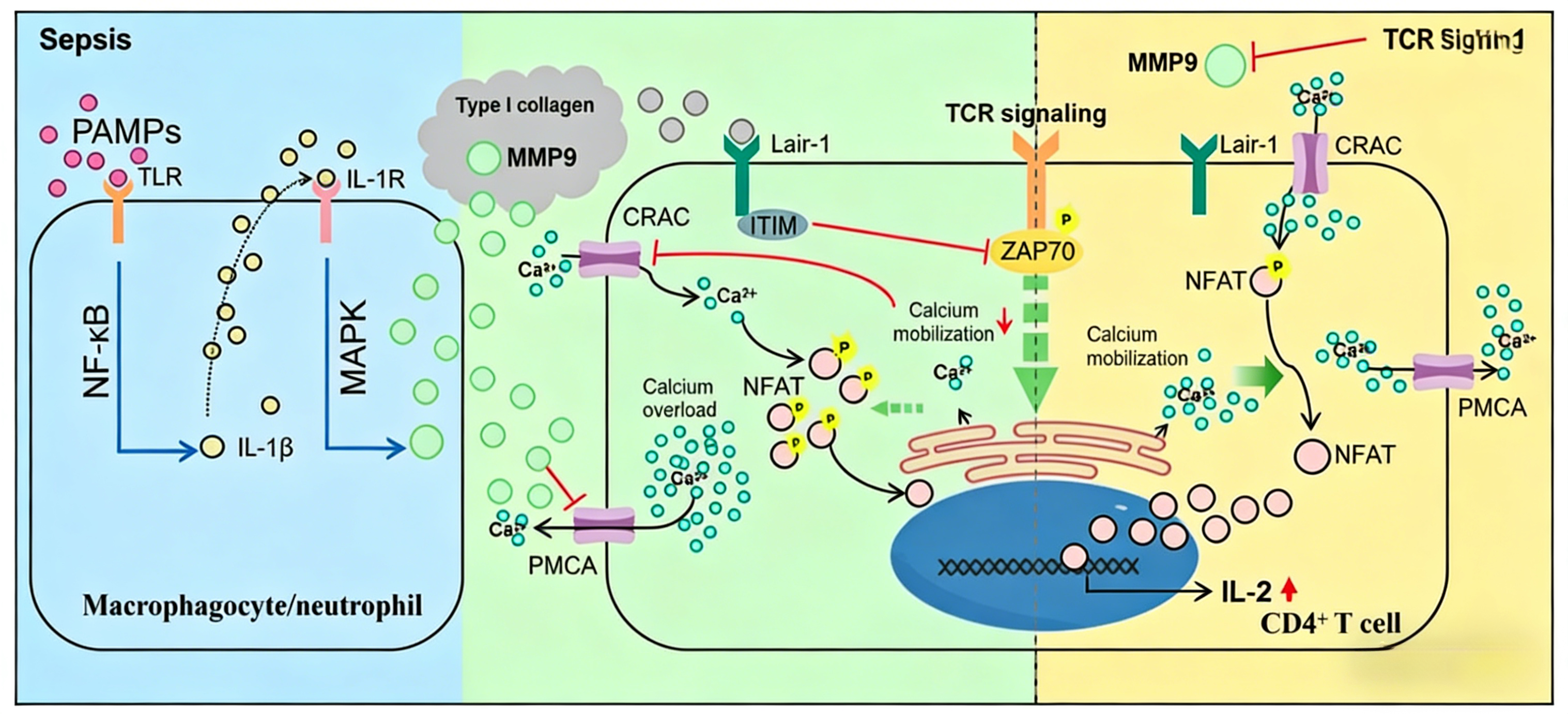
Studies show MMP-9 disrupts T cell function through dual pathways:
1. Inhibition of TCR Signaling: MMP-9 promotes clustering of the inhibitory receptor LAIR-1 on T cell membranes, directly interfering with phosphorylation of the key TCR downstream signaling molecule ZAP70 and weakening TCR signal initiation.
2. Disruption of Calcium Homeostasis and NFAT Signaling: MMP-9 impairs calcium release-activated calcium channels and inhibits calcium pumps on cell membranes and the endoplasmic reticulum, leading to dysregulated intracellular calcium clearance and homeostasis. Abnormal calcium signaling further blocks calcineurin-mediated dephosphorylation of nuclear factor of activated T cells (NFAT), inhibiting its nuclear translocation and downstream pro-inflammatory cytokine (e.g., IL-2, IFN-γ) gene transcription, ultimately causing T cell exhaustion and upregulation of programmed cell death protein-1 (PD-1).
V. Therapeutic Potential of Targeting MMP-9
Both in vitro and in vivo experiments confirm that MMP-9 inhibition effectively reverses these pathological processes.
1. In Vitro Functional Recovery: The selective MMP-9 inhibitor MMP9-in-1 restores calcium homeostasis in MMP-9-treated T cells, promotes NFAT nuclear translocation, significantly enhances IL-2 and IFN-γ secretion, and reduces PD-1 expression.
2. In Vivo Efficacy and Safety: In a cecal ligation and puncture-induced sepsis mouse model, MMP9-in-1 treatment significantly improved survival rates, reduced pathological damage in tissues like the spleen, and partially restored peripheral CD4+ T cell numbers and function (evidenced by increased cytokine secretion and decreased PD-1 expression). Preliminary safety assessments showed good tolerability at therapeutic doses.
VI. Summary and Translational Prospects
This study systematically elucidates MMP-9's role as the core driver of CD4+ T cell exhaustion in immunosuppressive sepsis subtypes and its dual mechanisms. In-depth mechanistic studies using tools like MMP-9(20-469) His Tag Protein, Cynomolgus provide a solid theoretical foundation for developing MMP-9-targeted therapies. Selective MMP-9 inhibitors demonstrate promising potential in preclinical models for reversing T cell exhaustion, restoring immune homeostasis, and improving outcomes, positioning them as novel adjuvant immunotherapies for sepsis. Future studies should validate their safety and efficacy in large animal models and clinical trials, while exploring combination therapies with existing treatments to offer new precision medicine options for sepsis patients.
VII. Suppliers of MMP-9(20-469) His Tag Protein, Cynomolgus
Nanjing UniLove Biotechnology's MMP-9(20-469) His Tag Protein, Cynomolgus (Catalog No.: UA011296) is a high-purity, high-activity recombinant protein derived from cynomolgus monkeys, featuring potential pro-enzyme activation. Expressed in mammalian systems, it includes MMP-9's catalytic domain (residues 20-469) with a C-terminal His tag for purification. MMP-9 (gelatinase B) is a key enzyme degrading extracellular matrix (especially type IV collagen and gelatin), pivotal in tissue remodeling, inflammation, tumor invasion, and angiogenesis. Designed for studies requiring high species relevance (e.g., cynomolgus disease models, antibody cross-reactivity testing).
| Core Advantages |
|---|
| Species Specificity and High Purity: Derived from cynomolgus monkeys, this protein shares high homology with human MMP-9, bridging preclinical research (especially primate models) and human disease studies. Mammalian expression and affinity chromatography ensure high purity (>95%) and low endotoxin levels. |
| Core Catalytic Domain: The sequence includes MMP-9's catalytic domain, retaining intact enzymatic active sites and zinc-binding sites. Provided as a pro-enzyme, it can be activated in vitro (e.g., with APMA) for functional studies, ensuring safety and controllability. |
| Designed for Drug Discovery and Cross-Reactivity Studies: - Inhibitor Screening: Serves as a target for high-throughput screening or evaluating small-molecule MMP-9 inhibitors. - Antibody Development and Testing: Acts as a key antigen for developing or validating cross-reactive therapeutic/detection antibodies against cynomolgus and human MMP-9, crucial for preclinical efficacy and safety assessments. - Enzyme Activity and Kinetics: Used to determine specific activity, catalytic efficiency, and inhibitor IC50 values. |
| Rigorous Quality Control: Each batch undergoes purity, concentration, and potential activation validation to ensure consistency, providing reliable data for early-stage drug development. |
Expert Technical Support: We provide detailed protocols, including activation recommendations, enzyme activity assays (e.g., fluorescent substrates), and specialized consultations for cynomolgus model studies and antibody cross-reactivity testing.
Nanjing UniLove Biotechnology is committed to providing cross-species, high-performance tool proteins for oncology, inflammatory diseases, and translational research. For detailed specifications, activation protocols, or application support for MMP-9(20-469) His Tag Protein, Cynomolgus (Catalog No.: UA011296), please contact us anytime.
Disclaimer: This article partially utilizes artificial intelligence assistance in its creation. If any content involves copyright or intellectual property issues, please let us know and we promise to verify and remove it as soon as possible.
Purchase recombinant protein, choose Nanjing UA-Bio
UA protein focuses on providing various protein reagents, raw materials, and services required for drug research and development, cell therapy, gene therapy, and basic scientific research, including drug target proteins, immune checkpoint proteins, cytokines, tool enzymes, customized protein expression, and full-length transmembrane protein development. Youai is committed to providing customers with high-quality products and professional services, and building a High-tech Biological Enterprise with International Competitiveness.







 Business license (three certificates in one)