




Study on the mechanism of endothelial cell-derived stem cell factor in regulating lipid accumulation in brown adipocytes


Brown adipose tissue is a crucial thermogenic organ in mammals, which consumes glucose and fatty acids through non-shivering thermogenesis, playing a key role in maintaining energy metabolism balance and combating obesity-related metabolic diseases.
- Recent Advances
I. Research Background and Scientific Questions
Brown adipose tissue (BAT) is a crucial thermogenic organ in mammals, consuming glucose and fatty acids through non-shivering thermogenesis, playing a key role in maintaining energy metabolism balance and resisting obesity-related metabolic diseases. BAT is highly vascularized, and its function is finely regulated by sympathetic nerves and the local microenvironment. Endothelial cells, as the main component of blood vessel walls, not only serve as barriers for material exchange but are also considered important paracrine cells that interact with adipocytes to regulate tissue function. The stem cell factor (SCF) and its receptor tyrosine kinase c-Kit play significant roles in various physiological processes. Previous studies have shown that they are indispensable for the development and functional maintenance of metabolic tissues (e.g., pancreas), and their expression levels are negatively correlated with obesity. However, it remains unclear whether endothelial cells communicate with brown adipocytes by secreting SCF and how this specifically regulates lipid metabolism and energy homeostasis in the latter.
II. Core Discovery: Endothelial-Adipocyte Functional Crosstalk via the SCF/c-Kit Axis
The research team systematically analyzed the cellular heterogeneity within BAT using single-nucleus RNA sequencing and predicted receptor-ligand interactions, revealing for the first time the potential SCF/c-Kit signaling pathway between endothelial cells and brown adipocytes. The study found that the c-Kit receptor is highly expressed in brown adipocytes, while its ligand SCF is not only produced by adipocytes themselves but also significantly secreted by endothelial cells. This discovery provides a new molecular framework for understanding intercellular communication within adipose tissue.
Further experiments showed that the status of the c-Kit signaling pathway is closely related to the thermogenic activity of BAT. Under thermogenic conditions induced by cold stimulation or β-adrenergic receptor activation (mimicking sympathetic nerve excitation), the number of c-Kit-positive cells and protein expression in BAT significantly decreased. Conversely, in a model with sympathetic denervation (mimicking thermogenic inhibition), c-Kit expression was significantly upregulated, accompanied by increased adipocyte volume and elevated expression of lipogenic enzyme genes. This suggests that the c-Kit signaling pathway may negatively regulate BAT thermogenic function, instead promoting lipid storage.
III. Application Value of SCF His Tag Protein in Mechanism Research
To thoroughly validate the specific effects of endothelial-derived SCF on adipocytes and establish precise dose-response relationships, high-purity recombinant proteins with confirmed biological activity are essential research tools. The SCF His Tag protein provides critical support for this research:
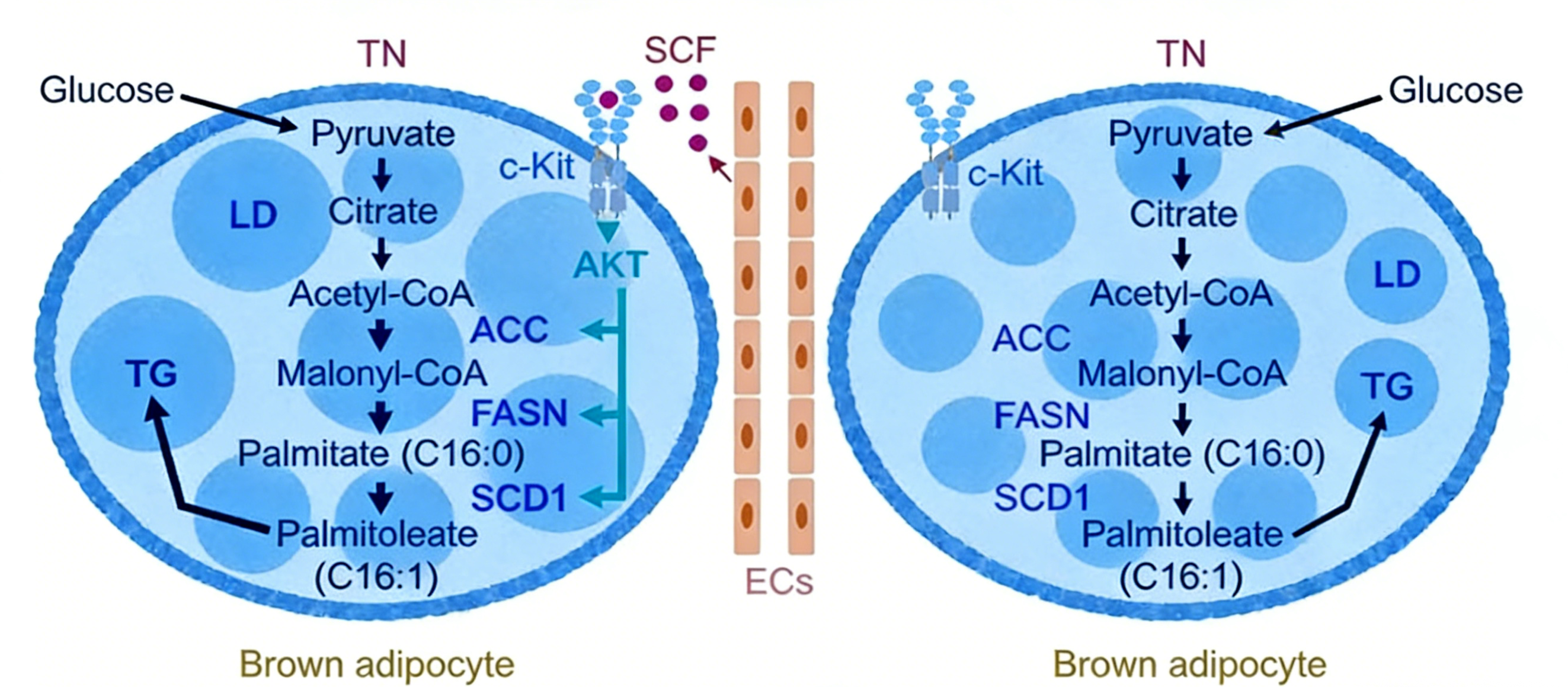
1. Functional Validation and Mechanism Research: This recombinant protein can be directly used to stimulate cultured brown adipocyte cell lines or primary cells in vitro, mimicking the paracrine effects of endothelial cells, thereby directly observing SCF's impact on adipocyte lipid synthesis, related gene expression (e.g., SCD1), and activation of downstream PI3K-AKT signaling pathways.
2. Signaling Pathway Analysis: By applying the SCF His Tag protein in combination with c-Kit inhibitors or gene knockdown techniques, it is possible to confirm that its effects are mediated through the c-Kit receptor and to finely dissect the specific downstream signal transduction cascades.
3. Control and Standardization: In functional experiments such as constructing endothelial cell-conditioned medium, the SCF His Tag protein can serve as a positive control or supplemental factor to determine the contribution of SCF within the complex secretome.
IV. Molecular Mechanism: SCF/c-Kit Drives Lipid Synthesis via the PI3K-AKT Pathway
The study elucidated the specific molecular mechanism by which the SCF/c-Kit axis regulates lipid metabolism. After endothelial cell-secreted SCF binds to the c-Kit receptor on brown adipocyte membranes, it activates the PI3K-AKT signaling pathway. Activated AKT upregulates the expression and enzymatic activity of key lipogenic enzymes such as stearoyl-CoA desaturase 1 (SCD1). This process promotes fatty acid desaturation and triglyceride synthesis, ultimately leading to lipid droplet accumulation in brown adipocytes. The researchers validated this mechanism in vivo using an endothelial cell-specific SCF knockout mouse model: in knockout mice, SCD1 protein levels and enzymatic activity in BAT were significantly reduced, fatty acid composition was altered (decreased C16:1/C16:0 ratio), and the number of large lipid-accumulating adipocytes decreased.
V. Research Significance and Future Perspectives
This study systematically reveals for the first time a novel paracrine regulatory mechanism by which endothelial cells promote lipid synthesis in brown adipocytes via the SCF/c-Kit-PI3K-AKT signaling axis. This discovery not only deepens our understanding of intercellular communication networks within adipose tissue but also provides new potential targets for metabolic disease intervention. Inhibiting the SCF/c-Kit signaling pathway may become a strategy to reduce abnormal lipid deposition in BAT and improve systemic metabolic status.
Future research could further explore: the specific regulatory networks of SCF/c-Kit signaling under different metabolic stress conditions (e.g., cold exposure, high-fat diet); whether this pathway regulates other key enzymes of lipid metabolism besides SCD1; and whether targeting this pathway can improve metabolism without affecting BAT's basal thermoprotective functions. Tools such as the SCF His Tag protein will continue to play important roles in addressing these follow-up questions.
Disclaimer: This article partially utilizes artificial intelligence assistance in its creation. If any content involves copyright or intellectual property issues, please let us know and we promise to verify and remove it as soon as possible.
Purchase recombinant protein, choose Nanjing UA-Bio
UA protein focuses on providing various protein reagents, raw materials, and services required for drug research and development, cell therapy, gene therapy, and basic scientific research, including drug target proteins, immune checkpoint proteins, cytokines, tool enzymes, customized protein expression, and full-length transmembrane protein development. Youai is committed to providing customers with high-quality products and professional services, and building a High-tech Biological Enterprise with International Competitiveness.







 Business license (three certificates in one)