




LILRB4: An Emerging Therapeutic Target with Multiple Immunomodulatory Functions


Leukocyte immunoglobulin-like receptor B4 is an important inhibitory receptor member of the leukocyte immunoglobulin-like receptor family.
- Recent Advances
- Product Information
I. Biological Characteristics and Structure of LILRB4
Leukocyte immunoglobulin-like receptor B4 (LILRB4) is a crucial inhibitory receptor member of the leukocyte immunoglobulin-like receptor family. Its protein structure features are distinctive: unlike most family members with four Ig-like domains, LILRB4 contains only two immunoglobulin-like domains (D1 and membrane-proximal domain), forming a unique extracellular region. The intracellular region harbors tyrosine-based immunoreceptor inhibitory motifs that recruit and activate SH2 domain-containing phosphatases to transmit negative regulatory signals. Under physiological conditions, LILRB4 is primarily expressed on antigen-presenting cells (e.g., monocytes, dendritic cells) and some plasma cells, participating in immune homeostasis maintenance and tolerance induction.
II. Multifaceted Roles of LILRB4 in Physiological and Pathological Processes
Through its inhibitory signaling, LILRB4 serves as a complex yet critical "immune brake" in various physiological and pathological contexts.
1. Immune Regulation and Tolerance Induction: On antigen-presenting cells, LILRB4 activation downregulates co-stimulatory molecule expression and suppresses excessive T-cell activation, thereby controlling inflammation and preventing autoimmune responses.
2. Role in Autoimmune and Inflammatory Diseases: Studies indicate that aberrant LILRB4 expression or function correlates with autoimmune diseases like systemic lupus erythematosus and Kawasaki disease. In inflammatory environments, LILRB4 modulates NF-κB signaling to influence inflammatory progression and apoptosis.
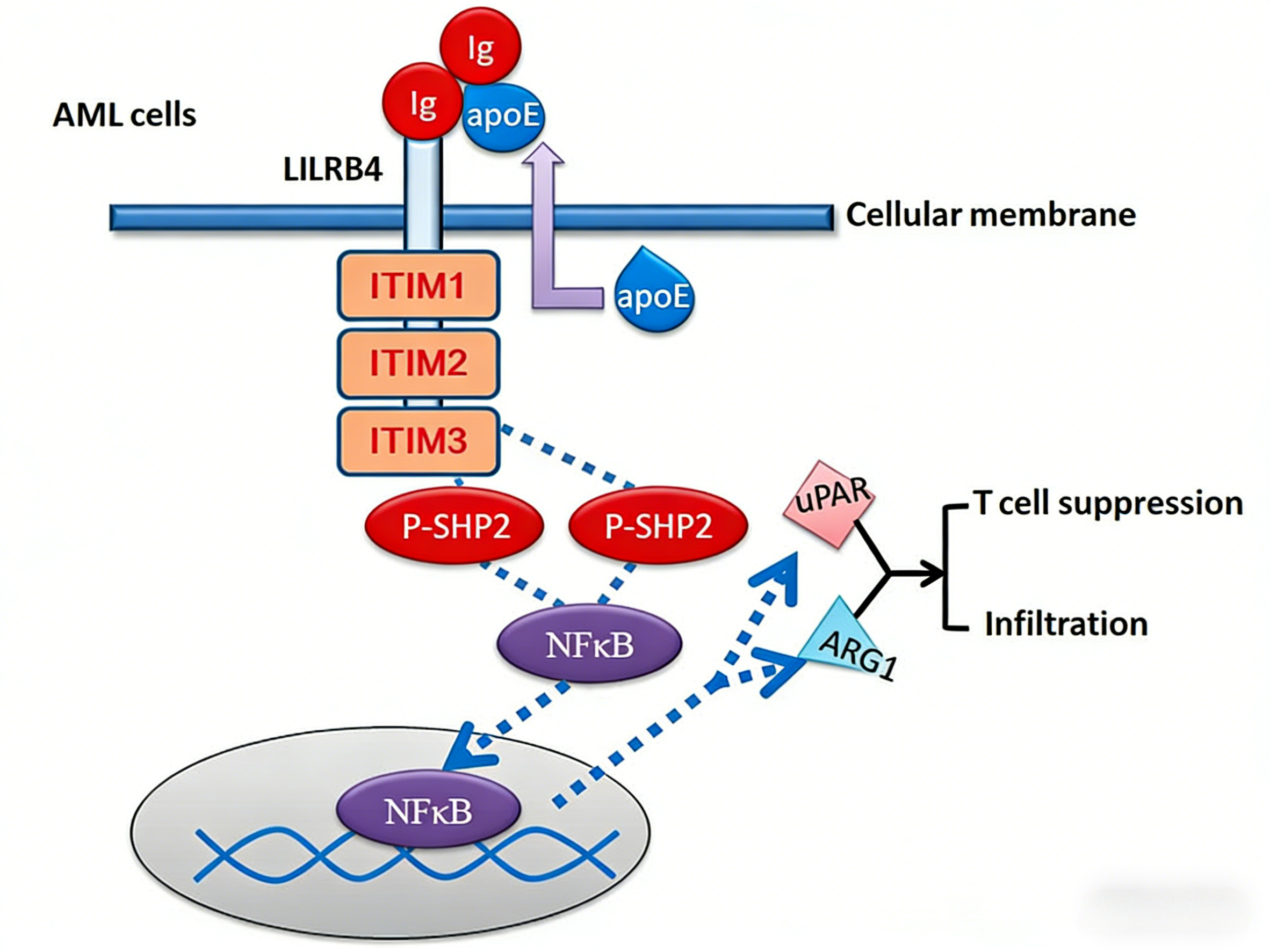
3. Pivotal Role in Acute Myeloid Leukemia: LILRB4 is a specific marker for monocyte-derived acute myeloid leukemia (AML). Research reveals that LILRB4 mediates a complex signaling axis (involving ApoE, SHP-2, uPAR) to promote leukemic cell tissue infiltration while suppressing T-cell function in the tumor microenvironment, enabling immune evasion. Thus, blocking LILRB4 signaling emerges as a promising therapeutic strategy for AML.
4. Potential Involvement in CNS Disorders: Preliminary studies suggest LILRB4 may participate in CNS immune surveillance, possibly linking its function to the immunopathology of neurological diseases like multiple sclerosis.
III. Research Utility of Biotinylated LILRB4/CD85K/ILT3 Fc&Avi Tag Protein
To elucidate LILRB4 mechanisms and advance therapeutic development, well-designed recombinant protein tools are essential. The Biotinylated LILRB4/CD85K/ILT3 Fc&Avi Tag protein integrates multiple technical advantages as an ideal research tool:
1. Dual-Tag Design: This chimeric protein fuses the human LILRB4 extracellular domain with IgG Fc (enhancing stability/solubility), while incorporating AviTag and biotin modifications. The His tag facilitates purification, and AviTag enables site-specific biotinylation.
2. Ultra-Stable Immobilization: Pre-biotinylation allows near-irreversible fixation via streptavidin/avidin high-affinity binding, ideal for SPR, BLI, and high-density biosensor chip preparation.
3. Versatile Applications:
- Receptor-ligand interaction studies: As "bait" for systematic screening/identification of natural/artificial ligands and precise binding kinetics measurement.
- Antibody/inhibitor evaluation: As standardized antigen to assess therapeutic mAbs, small molecules, or peptides for binding activity/affinity.
- Cell binding/signaling studies: In flow cytometry, streptavidin-fluorophore complexes can indirectly label this protein to detect cell-surface LILRB4-binding molecules.
IV. Current Landscape of LILRB4-Targeted Therapeutic Strategies
Given LILRB4's pathogenic role in AML, diverse therapeutic modalities are under development, showcasing broad translational potential.
1. Inhibitory Monoclonal Antibodies: Designed to block LILRB4-ligand interaction or disrupt inhibitory signaling, thereby reversing T-cell suppression and potentially inhibiting leukemic infiltration. Early clinical trials are underway.
2. Antibody-Drug Conjugates: Leveraging LILRB4's AML-specific expression, these conjugates link targeting antibodies to cytotoxic payloads for precise leukemic cell elimination, demonstrating favorable preclinical efficacy.
3. CAR-T Cell Therapy: LILRB4-targeted CAR-T cells exhibit potent AML-specific cytotoxicity in vitro/vivo with low hematopoietic stem cell toxicity, offering new hope for refractory AML.
V. Suppliers of Biotinylated LILRB4/CD85K/ILT3 Fc&Avi Tag Protein
Nanjing UA Biotech's Biotinylated LILRB4/CD85K/ILT3 Fc&Avi Tag Protein, Human (Cat#: UA011339) integrates high affinity, efficient biotinylation, and exceptional detection flexibility. This product fuses human LILRB4 extracellular domain with IgG Fc and AviTag to form stable homodimers, achieving site-specific, uniform biotinylation. As a key immunosuppressive receptor in tumor immune evasion and autoimmunity, it's ideal for mechanistic studies and drug discovery.
| Key Advantages |
|---|
| Stable Dimer Structure & High Affinity: Fc-mediated homodimers mimic native receptor multivalency, enabling stronger avidity for ligands (e.g., MHC-I, ANGPTLs). |
| Efficient Specific Biotinylation: AviTag enables site-specific biotinylation with high efficiency and batch consistency, allowing robust streptavidin/NeutrAvidin coupling for enhanced assay sensitivity. |
| Dual Functional Tags: Fc tag supports Protein A/G purification/detection; AviTag-biotin system enables ultrasensitive immobilization, bridging traditional and cutting-edge technologies. |
| Superior Stability & Batch Consistency: Rigorous production ensures long-term stability and inter-batch consistency in purity, biotinylation efficiency, and activity. |
Nanjing UA Biotech specializes in engineered protein tools for tumor immunology and immunotherapy. For detailed specifications or application support regarding Biotinylated LILRB4/CD85K/ILT3 Fc&Avi Tag Protein, Human (Cat#: UA011339), please contact us.
Disclaimer: This article partially utilizes artificial intelligence assistance in its creation. If any content involves copyright or intellectual property issues, please let us know and we promise to verify and remove it as soon as possible.
Purchase recombinant protein, choose Nanjing UA-Bio
UA protein focuses on providing various protein reagents, raw materials, and services required for drug research and development, cell therapy, gene therapy, and basic scientific research, including drug target proteins, immune checkpoint proteins, cytokines, tool enzymes, customized protein expression, and full-length transmembrane protein development. Youai is committed to providing customers with high-quality products and professional services, and building a High-tech Biological Enterprise with International Competitiveness.







 Business license (three certificates in one)