




Study on the mechanism by which IL-4/IL-13 mediates abnormal skin lipid metabolism in atopic dermatitis through regulation of steroid synthesis


Atopic dermatitis is a common chronic inflammatory skin disease characterized by dry skin, severe itching, and impaired epidermal barrier function.
- Recent Advances
- Product Information
I. Research Background and Scientific Questions
Atopic dermatitis (AD) is a common chronic inflammatory skin disease characterized by dry skin, severe itching, and impaired epidermal barrier function. Type 2 immune responses play a central role in the pathogenesis of AD, with interleukin-4 (IL-4) and interleukin-13 (IL-13) being key driving factors. Clinical studies have confirmed significantly elevated levels of IL-4/IL-13 in AD lesions, and biologics targeting this pathway have shown remarkable clinical efficacy. However, the specific downstream molecular mechanisms by which IL-4/IL-13 lead to AD-characteristic skin lipid (particularly triglyceride) metabolic abnormalities and barrier dysfunction remain incompletely understood. Elucidating this mechanism linking immune responses to epidermal cell metabolism is of great significance for deepening the understanding of AD pathophysiology and developing new therapies.
II. Core Discovery: IL-4/IL-13 Activates the STAT6-HSD3B1-Androgen Axis
This study systematically reveals, for the first time, a complete signaling pathway driven by IL-4/IL-13 that ultimately leads to skin lipid metabolic abnormalities, integrating data from cells, clinical samples, and animal models.
1. Induction of HSD3B1 Expression: The study found that IL-4 and IL-13 specifically and significantly upregulate the expression of 3β-hydroxysteroid dehydrogenase 1 (HSD3B1) in human sebaceous gland cells. HSD3B1 is the rate-limiting enzyme catalyzing the synthesis of all active steroid hormones. Clinical data analysis further confirmed that HSD3B1 mRNA levels in AD lesions are significantly higher than in healthy skin or non-lesional areas of the same patients, and its expression can be effectively reversed after IL-4Rα-targeted therapy.
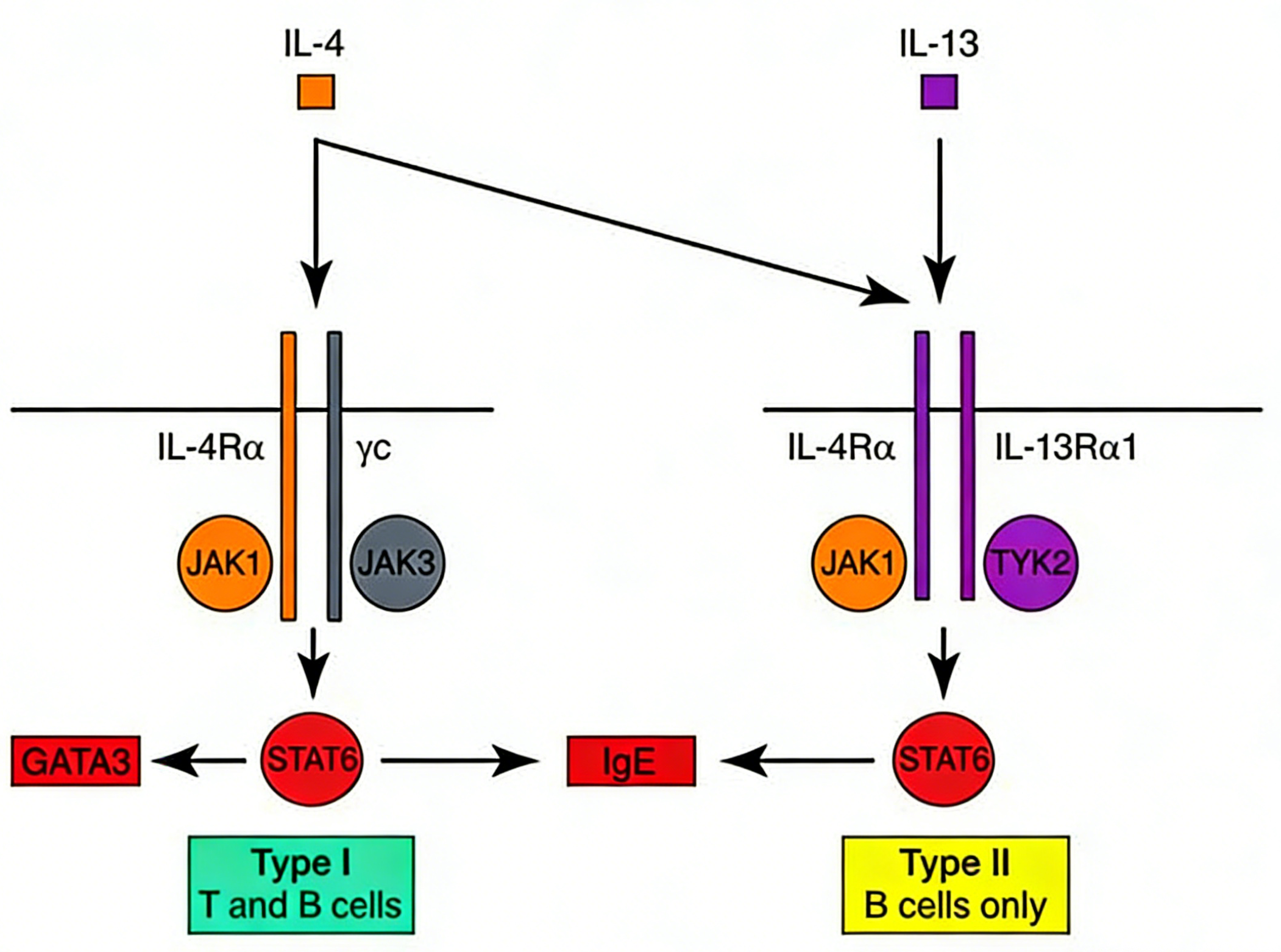
2. STAT6-Mediated Transcriptional Regulation: Mechanistic studies showed that IL-4/IL-13 drives HSD3B1 expression by activating its downstream key transcription factor STAT6 (phosphorylation). Bioinformatics prediction, electrophoretic mobility shift assays, and gene knockdown experiments collectively confirmed that phosphorylated STAT6 directly binds to specific sequences in the HSD3B1 gene promoter region, thereby activating its transcription.
3. Promotion of Local Androgen Synthesis: Functionally, the upregulation of HSD3B1 directly promotes androgen synthesis in sebaceous gland cells. Cells treated with IL-4/IL-13 showed significantly increased production of active androgens such as androstenedione and dihydrotestosterone when provided with precursor substances. Knockdown of HSD3B1 blocked this process.
III. The Critical Role of IL-13 Protein in Mechanistic Research
In elucidating the above complex mechanisms, high-purity, biologically active recombinant IL-13 protein is an indispensable core research tool.
1. Core Stimulus for Mechanism Validation: In vitro cell experiments, recombinant IL-13 protein (often used in combination with IL-4) was used to directly stimulate sebaceous gland cells, mimicking the pathological microenvironment of AD, thereby successfully inducing key phenotypes such as HSD3B1 upregulation, STAT6 phosphorylation, and subsequent androgen synthesis increase, providing direct evidence for establishing causal relationships.
2. Signal Pathway Analysis: By applying IL-13 protein in combination with STAT6 inhibitors or gene silencing techniques, the study clarified the necessity and specificity of IL-13 signaling in this pathway.
3. Standardized Basis for Functional Research: This protein ensures consistency in experimental conditions across different laboratories and research batches, making the analysis results of downstream lipidomics and gene expression profiles reliable and comparable.
IV. Downstream Effects: Androgen Signaling Leads to Lipid Synthesis Inhibition
The study further elucidated how elevated local androgen levels lead to AD-characteristic lipid abnormalities.
1. Triglyceride Depletion: Lipidomics analysis showed that IL-4/IL-13 treatment significantly reduced the content of important triglycerides in sebaceous gland cells.
2. Molecular Mechanism: The study found that IL-4/IL-13 stimulation, HSD3B1 overexpression, or direct testosterone administration all upregulated the expression of insulin-induced gene 1 (INSIG1). INSIG1 is a key protein in the endoplasmic reticulum that inhibits the activation of sterol regulatory element-binding proteins (SREBPs), thereby negatively regulating fatty acid and triglyceride synthesis. Meanwhile, the expression of multiple key genes involved in lipid synthesis was suppressed. Thus, the HSD3B1/androgen axis upregulates INSIG1 and inhibits lipid synthesis programs, ultimately depleting lipids required for skin barrier function.
V. Animal Model Validation and Clinical Significance
In the MC903-induced mouse model of atopic dermatitis, researchers observed trends consistent with human cell experiments: model mice showed elevated androgen levels in the skin and significantly reduced total triglyceride content. This supports the idea that the "immune-hormone-lipid metabolism" axis may be conserved across species.
The study has important theoretical and clinical implications:
1. Theoretical Innovation: For the first time, it reveals that Th2 cytokines can regulate skin-localized "steroid hormone generation," a non-classical pathway, directly affecting epidermal cell lipid metabolism and thereby disrupting barrier function. This provides a new paradigm for understanding the dialogue between the immune system and epithelial cell metabolism.
2. Clinical Value: Not only does it explain the deeper mechanisms of existing IL-4/IL-13-targeted therapies (e.g., IL-4Rα monoclonal antibodies) from a new perspective, but more importantly, it suggests that HSD3B1 and its downstream androgen signaling pathway may become new therapeutic targets for restoring skin lipid barriers in AD patients. Additionally, this mechanism may also play a role in other diseases characterized by type 2 inflammation and barrier dysfunction.
VI. Which Vendors Provide IL-13 Protein?
Nanjing UniLove Biotechnology's self-developed IL-13 Protein, Human (Catalog No.: UA040506) is a high-purity, high-activity recombinant human interleukin-13 (IL-13) protein, produced using a mammalian expression system with spatial conformation and post-translational modifications consistent with the natural protein. This product is a core tool for studying type 2 immune responses, allergic diseases, asthma, and fibrosis mechanisms.
| Core Product Advantages |
|---|
| High Purity and Natural Conformation: Expressed in mammalian cells to ensure correct folding and glycosylation, with purity >95% after multi-step purification and low endotoxin content, accurately simulating the biological functions of natural IL-13. |
| Exceptional Bioactivity: Validated through proliferation assays using IL-13-dependent cells (e.g., TF-1 cells), demonstrating high specific activity and effective activation of the IL-13Rα1/IL-4Rα receptor complex and downstream STAT6 signaling pathway. |
| Broad Experimental Applications: Suitable for cell stimulation and signaling studies, antibody/inhibitor screening (ELISA/SPR/BLI competitive binding assays), as a standard for quantitative detection, and as an immunogen for antibody development. |
| Excellent Stability and Consistency: Standardized production and strict quality control ensure high consistency in purity, activity, and stability across batches, guaranteeing experimental reproducibility and data reliability. |
| Professional Technical Support: Provides detailed technical documentation, experimental protocols, storage guidance, and professional consultation on IL-13-related research in allergies, asthma, fibrosis, and tumor microenvironments. |
Nanjing UniLove Biotechnology is committed to providing high-quality core protein tools for immunology research, disease model construction, and innovative drug development. For detailed technical parameters, activity validation data, or application consultation regarding IL-13 Protein, Human (Catalog No.: UA040506), please feel free to contact us.
Disclaimer: This article partially utilizes artificial intelligence assistance in its creation. If any content involves copyright or intellectual property issues, please let us know and we promise to verify and remove it as soon as possible.
Purchase recombinant protein, choose Nanjing UA-Bio
UA protein focuses on providing various protein reagents, raw materials, and services required for drug research and development, cell therapy, gene therapy, and basic scientific research, including drug target proteins, immune checkpoint proteins, cytokines, tool enzymes, customized protein expression, and full-length transmembrane protein development. Youai is committed to providing customers with high-quality products and professional services, and building a High-tech Biological Enterprise with International Competitiveness.







 Business license (three certificates in one)