




Biomarkers for predicting the efficacy of immune checkpoint inhibitors


Immune checkpoint blockade therapy, represented by PD-1/PD-L1 inhibitors, is a major breakthrough in the field of cancer treatment.
- Recent Advances
- Product Information
1. PD-1/PD-L1 Signaling Pathway and Immunotherapy
Immune checkpoint blockade therapy, represented by PD-1/PD-L1 inhibitors, represents a significant breakthrough in cancer treatment. These drugs work by blocking the interaction between the PD-L1 protein on tumor cells or immune cells in the tumor microenvironment and the PD-1 receptor on T cells, thereby releasing the suppression of T cell function and restoring the body's anti-tumor immune response. However, there is significant heterogeneity in patient responses to treatment. Therefore, identifying biomarkers that can effectively predict treatment response is crucial for achieving precision immunotherapy, selecting beneficiary populations, and avoiding ineffective treatments.
2. Core Biomarkers for Predicting Efficacy of Immune Checkpoint Inhibitors
Based on evidence from multiple clinical studies, several clinically valuable biomarkers have been established to predict the potential efficacy of PD-1/PD-L1 inhibitors.
1. PD-L1 Expression Level in Tumor Cells: The PD-L1 protein expression level on tumor cells or tumor-infiltrating immune cells is the earliest widely studied and clinically applied predictive biomarker. In cancers such as non-small cell lung cancer, high PD-L1 expression (e.g., TPS ≥ 50% by immunohistochemistry) typically indicates a higher likelihood of response to PD-1/PD-L1 monotherapy and longer survival benefits. For patients with intermediate expression levels, combination therapy strategies may be more advantageous.
2. Tumor Mutational Burden (TMB): TMB refers to the total number of somatic nonsynonymous mutations per million base regions in the tumor genome. A high TMB state is associated with the production of more neoantigens, which can be recognized by the immune system, potentially making tumors more sensitive to immunotherapy. Clinical trial data show that TMB-H patients exhibit superior clinical outcomes after PD-1/PD-L1 inhibitor treatment. Tissue- or blood-based TMB testing has gradually been applied as a companion diagnostic or efficacy predictor for certain solid tumors.
3. Mismatch Repair Deficiency/Microsatellite Instability-High (dMMR/MSI-H): The dMMR/MSI-H status reflects high genomic instability and mutational burden in tumors. Tumors with dMMR/MSI-H features, such as colorectal cancer and endometrial cancer, show significant sensitivity to PD-1/PD-L1 inhibitors, making this one of the most definitive biomarkers for predicting immunotherapy efficacy across multiple cancer types.
4. EBV Infection Status: In specific cancers like gastric cancer, EBV infection status is associated with immunotherapy efficacy. Studies indicate that EBV-positive gastric cancer patients may benefit more significantly from PD-1/PD-L1 inhibitor treatment, providing a molecular basis for treatment selection in this patient subgroup.
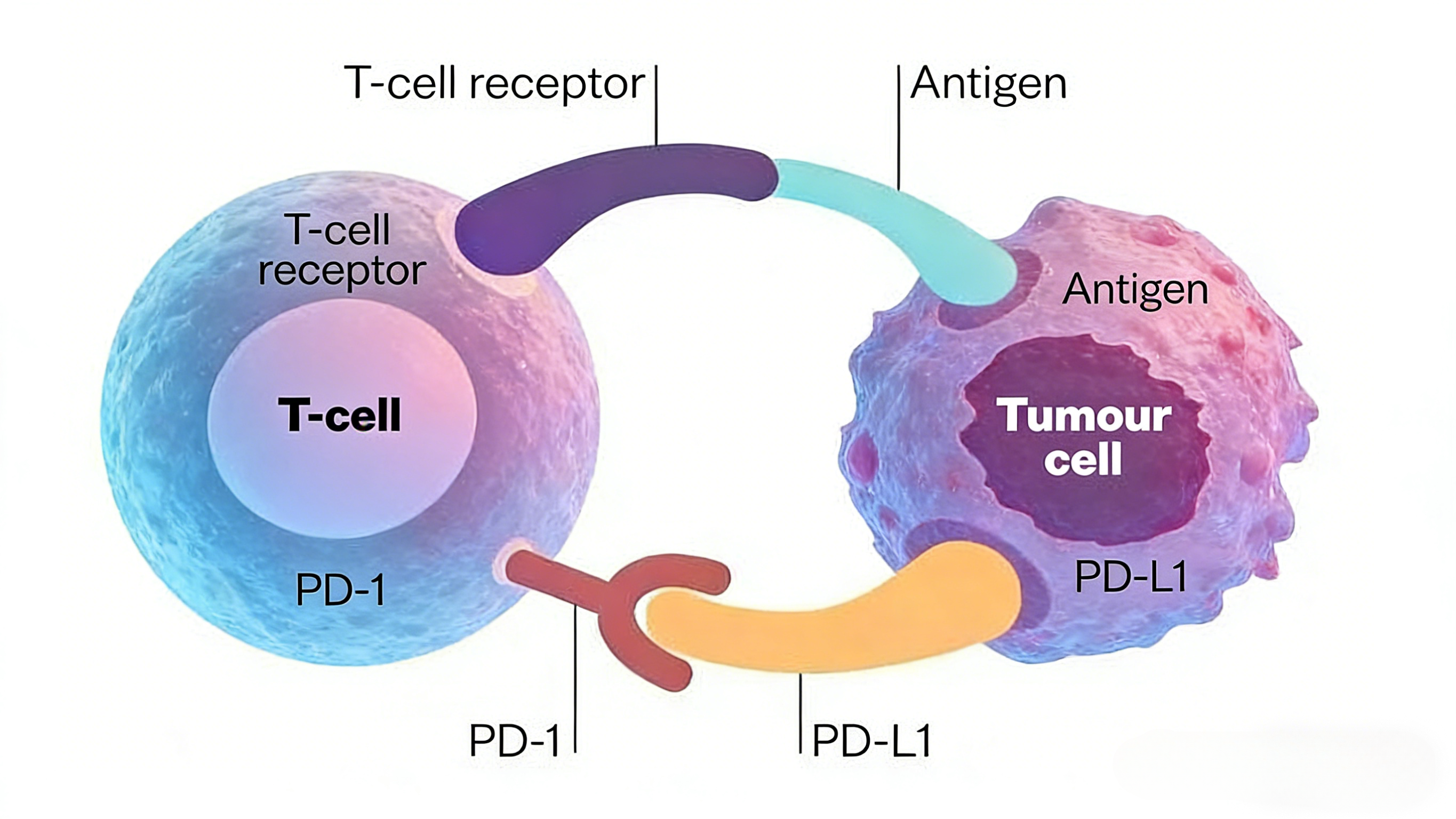
3. Application Value of Human PD1/PD-L1 Binding Assay Kits in Related Research
In the development and screening of immune checkpoint inhibitor drugs and the preparation of companion diagnostic reagents, accurately evaluating the binding characteristics and blocking efficacy of candidate drugs to their targets (PD-1/PD-L1) is a fundamental and critical task. The Human PD1/PD-L1 Binding Assay Kit provides a standardized, high-throughput in vitro detection platform for such research.
1. Antibody/Inhibitor Screening and Efficacy Evaluation: The kit is typically based on homogeneous or heterogeneous detection principles such as time-resolved fluorescence resonance energy transfer (TR-FRET), AlphaLISA, or enzyme-linked immunosorbent assay (ELISA). By immobilizing recombinant human PD-1 protein (or its extracellular domain) and PD-L1 protein in the detection system, it enables rapid, quantitative screening of monoclonal antibodies, small-molecule inhibitors, or peptides that effectively block PD-1/PD-L1 interaction. Parameters such as half-maximal inhibitory concentration (IC50) can be calculated to precisely compare the in vitro binding and blocking capabilities of different candidate molecules.
2. Binding Affinity and Kinetic Analysis: Using the standardized system provided by the kit, the natural binding affinity between PD-1 and PD-L1 proteins can be quantitatively measured, and the binding kinetic characteristics of therapeutic antibodies or engineered proteins (e.g., bispecific antibodies, Fc fusion proteins) with the targets can be evaluated, providing data support for molecular optimization.
3. Development and Validation of Biomarker Detection Methods: In developing companion diagnostic methods based on PD-L1 expression, the high-purity, high-activity recombinant proteins in the kit can serve as critical calibrators for constructing standard curves or validating the specificity and sensitivity of detection methods, ensuring the accuracy and reliability of clinical test results.
4. Summary and Outlook
Biomarkers such as PD-L1 expression, TMB, and MSI/MMR status constitute the current multi-dimensional evaluation system for predicting the efficacy of PD-1/PD-L1 inhibitors, serving as an important foundation for achieving precision tumor immunotherapy. As research progresses, novel biomarkers (e.g., tumor microenvironment immune phenotypes, gut microbiome) are continuously emerging. In this process, the Human PD1/PD-L1 Binding Assay Kit, as a standardized molecular interaction research tool, will continue to provide critical technical support for the development of next-generation, more effective immune checkpoint inhibitors, the exploration of novel combination therapy strategies, and the establishment of precision companion diagnostic solutions, ultimately extending the benefits of immunotherapy to a broader patient population.
5. Which Manufacturers Provide Human PD1/PD-L1 Binding Assay Kits?
Nanjing UniOne Protein has independently developed the UniOne® TR-FRET Human PD1/PD-L1 Binding Kit (Catalog No.: UA086026), a high-performance, high-throughput detection platform based on UniOne® Homogeneous Time-Resolved Fluorescence Resonance Energy Transfer (TR-FRET) Technology. It is specifically designed for accurately and efficiently quantifying the binding activity between programmed death protein 1 (PD-1) and its ligand PD-L1 and evaluating the potency of inhibitors (e.g., antibodies, small molecules) that block this interaction. This kit is a core tool for tumor immunotherapy drug development, mechanism research, and efficacy evaluation.
| Core Advantages of the Product |
|---|
| High Sensitivity and Superior Signal-to-Noise Ratio: Based on UniOne® TR-FRET technology, time-resolved and dual-wavelength detection effectively eliminates interference from compound and sample autofluorescence, achieving ultra-low background and high signal-to-noise ratio detection. This is particularly suitable for evaluating weak-affinity binders or conducting high-precision IC50 determination. |
| Ready-to-Use Homogeneous Detection Platform: The "mix-incubate-detect" homogeneous operation mode requires no washing, separation, or immobilization steps, making the workflow extremely simple. The kit provides pre-optimized PD-1 and PD-L1 proteins (typically labeled with specific paired tags, such as europium cryptate and allophycocyanin), compatible with automated workstations, significantly improving high-throughput screening efficiency. |
| Directly Reflects True Inhibitory Potency of Binding: Directly detects the competitive blocking ability of candidate molecules on PD-1/PD-L1 protein-protein interaction, with results intuitively reflecting their biological activity and potency (IC50) at the molecular level. This makes it an ideal method for antibody efficacy evaluation, biosimilar comparability studies, and small-molecule inhibitor screening. |
| Excellent Stability and Batch-to-Batch Consistency: Through strictly controlled protein production and labeling processes, the kit's core components exhibit outstanding stability and highly consistent performance across different batches, ensuring data reliability and comparability for long-term research projects. |
| Professional Technical Support: We provide detailed and optimized standard operating procedures, typical data curves (e.g., standard competition curves), and data analysis guidelines, along with professional technical consultation and solution support tailored to specific drug development needs. |
Nanjing UniOne Protein is committed to providing cutting-edge, reliable, and efficient standardized detection solutions for tumor immunotherapy and innovative drug development. For detailed technical specifications, validation data (e.g., Z'-factor), or specific application protocols of the UniOne® TR-FRET Human PD1/PD-L1 Binding Kit (Catalog No.: UA086026), please feel free to contact us.
This article is reviewed and published by the technical expert team of UA
Disclaimer: This article partially utilizes artificial intelligence assistance in its creation. If any content involves copyright or intellectual property issues, please let us know and we promise to verify and remove it as soon as possible.
Purchase recombinant protein, choose Nanjing UA-Bio
UA protein focuses on providing various protein reagents, raw materials, and services required for drug research and development, cell therapy, gene therapy, and basic scientific research, including drug target proteins, immune checkpoint proteins, cytokines, tool enzymes, customized protein expression, and full-length transmembrane protein development. Youai is committed to providing customers with high-quality products and professional services, and building a High-tech Biological Enterprise with International Competitiveness.







 Business license (three certificates in one)