




Immunoglobulin G: Structure, Function, and Biological Significance


Immunoglobulins are the core effector molecules of the body's adaptive immune response, produced by plasma cells derived from activated B lymphocytes.
- Recent Advances
- Product Information
I. Overview of the Immunoglobulin Family
Immunoglobulins are the core effector molecules of the body's adaptive immune response, produced by plasma cells differentiated from activated B lymphocytes. These glycoproteins can specifically recognize and bind exogenous antigens such as bacteria and viruses, clearing pathogens through mechanisms like neutralization, agglutination, opsonization, and complement activation. Immunoglobulins are widely present in blood, tissue fluid, lymph, and various exocrine fluids, serving as the primary functional molecules mediating humoral immunity. Based on structural differences in their heavy chain constant regions, immunoglobulins can be classified into five subtypes: IgA, IgD, IgE, IgG, and IgM, each performing distinct immune effector functions and working synergistically within the body's defense network.
II. Core Characteristics and Biological Functions of Immunoglobulin G
Immunoglobulin G (IgG) is the most abundant and widely distributed immunoglobulin subtype in serum and extracellular fluids, accounting for approximately 75% to 80% of total serum immunoglobulins. It plays a central role in the body's immune defense system.
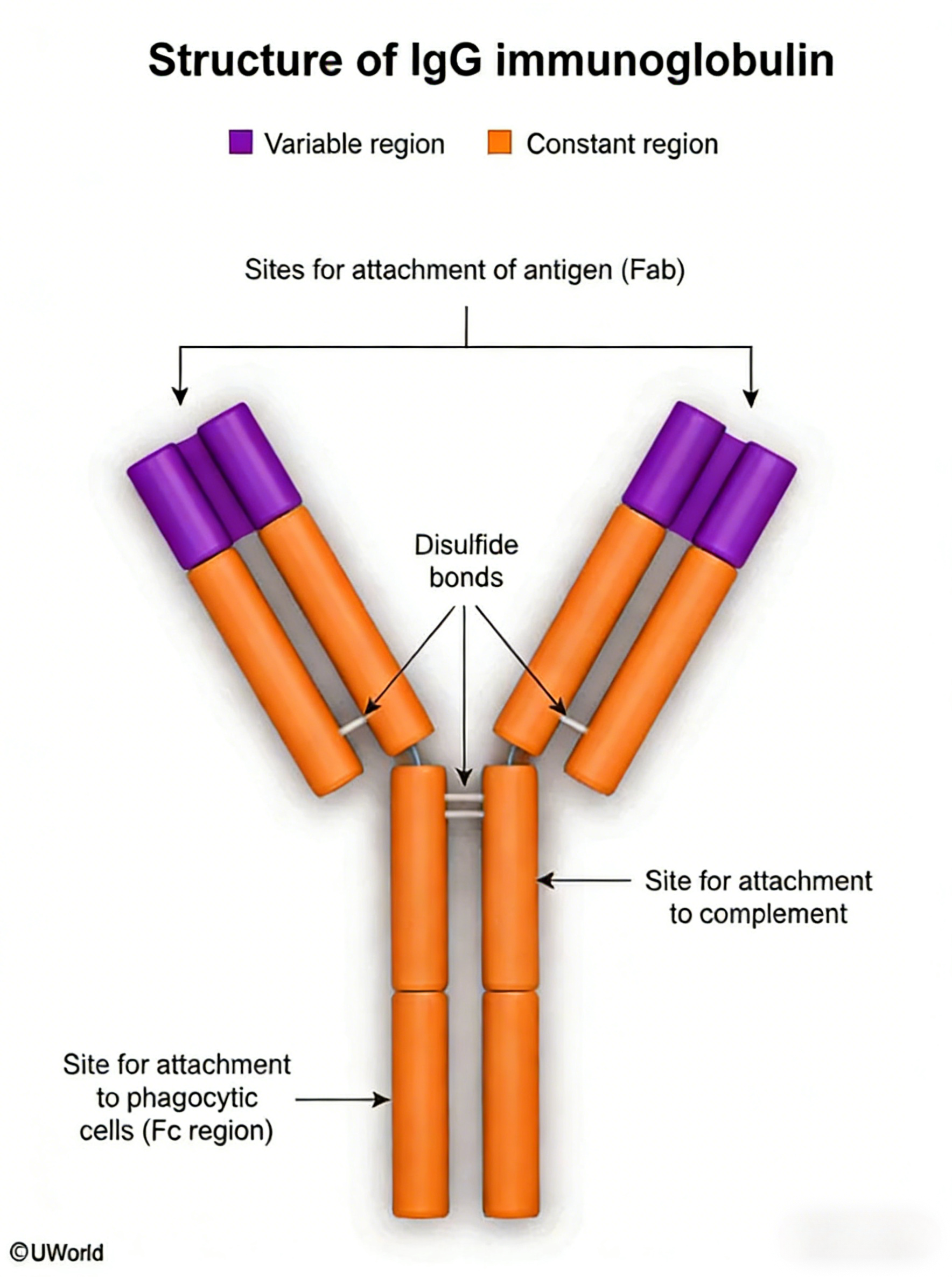
1. Primary Defense Against Infections: IgG is the main antibody type that protects against bacterial and viral pathogens. It specifically binds antigens to neutralize toxins and viral particles, and its Fc segment interacts with Fcγ receptors on phagocytes, effectively promoting opsonophagocytosis. This mechanism is indispensable in preventing systemic infections such as bacteremia and sepsis.
2. Placental Transfer and Neonatal Passive Immunity: IgG is the only immunoglobulin subtype capable of crossing the human placental barrier. This unique property relies on the specific binding of its Fc segment to neonatal Fc receptors on trophoblast cells, facilitating the active transport of IgG from maternal circulation to fetal circulation. As a result, newborns have IgG levels comparable to their mothers at birth, providing critical passive immune protection before their own immune systems mature. Additionally, breast milk (especially colostrum) is rich in IgG, offering continued intestinal and systemic immune support for neonates.
3. Long Half-Life and Immune Memory: IgG has the longest half-life among immunoglobulins, approximately 21 to 23 days. This extended metabolic cycle is closely related to its recycling mechanism via the FcRn receptor, ensuring prolonged immune protection and making IgG a key component of humoral immune memory.
III. Distribution and Nutritional Significance of IgG in Mammalian Milk
In bovine milk and colostrum, IgG is the most abundant immunoglobulin, and its concentration is widely used as a functional indicator to assess colostrum quality. Milk-derived IgG shares high homology in structure and function with serum IgG. Upon ingestion, it can neutralize pathogens and agglutinate bacteria locally in the intestines, while some active fragments may be absorbed into circulation, contributing to systemic immune regulation. Therefore, IgG-rich dairy products are often studied for their potential to support immune health in both general populations and immunocompromised individuals.
IV. Research and Application Value of Human IgG Kit (HICA)
In fields such as basic immunology research, vaccine efficacy evaluation, autoimmune disease diagnosis, and therapeutic antibody development, the precise, sensitive, and specific quantification of total IgG or antigen-specific IgG levels in biological samples is a critical technical requirement. The Human IgG Kit (HICA) is designed to meet this need as a standardized immunoassay platform.
1. Principle Overview: The kit typically employs a sandwich enzyme-linked immunosorbent assay (ELISA) principle. Anti-human IgG-specific antibodies are pre-coated onto microplate wells to capture human IgG in samples. Enzyme-labeled detection antibodies are then added to form a "capture antibody-antigen-detection antibody" complex. Substrate addition produces a colorimetric signal, with absorbance values proportional to IgG concentration.
2. Key Application Areas:
- Basic Immunology Research: Quantify total IgG levels in cell culture supernatants, serum, plasma, saliva, or milk, or measure antigen-specific IgG antibody levels post-stimulation to evaluate humoral immune response intensity.
- Vaccine and Drug Development: In preclinical and clinical trials, the kit detects vaccine antigen-specific IgG antibody titers in serum, serving as a core metric for assessing vaccine immunogenicity.
- Autoimmune and Immunodeficiency Disease Diagnosis: Monitoring total IgG or IgG subclass levels aids in evaluating humoral immune function and diagnosing primary/secondary immunodeficiencies, multiple myeloma, and certain autoimmune diseases.
- Therapeutic Antibody Pharmacokinetics: For human IgG-based monoclonal antibody therapies, the kit facilitates pharmacokinetic studies in animal models or humans to analyze blood concentration dynamics.
3. Kit Advantages: High-quality HICA kits offer high sensitivity, specificity, broad detection range, and batch-to-batch consistency, effectively minimizing interference from other immunoglobulin subtypes and heterophilic antibodies for reliable results.
V. Suppliers of Human IgG Kit (HICA)
Nanjing U-APEX Biotech's Human IgG Kit (HICA) (Catalog No.: UA086034) is an innovative quantitative assay for total human IgG developed on the High-sensitivity Immuno-Capture Assay (HICA) platform. This product overcomes limitations of traditional ELISA or TR-FRET methods in sample volume, matrix effects, and sensitivity, catering to micro-volume samples, complex matrices, and ultra-sensitive detection needs, providing cutting-edge solutions for biologics R&D, immunology analysis, and biomarker research.
| Core Advantages |
|---|
| HICA Patent Technology: The kit features a unique immunocapture and signal amplification system, significantly enhancing sensitivity with a detection limit as low as pg/mL, ideal for trace IgG analysis. |
| Minimal Sample Volume: Optimized for ultra-low sample volumes (1-5 μL), perfect for precious animal samples, micro-volume cell cultures, microfluidic chip outputs, or pediatric/small animal sera. |
| Superior Matrix Tolerance: HICA technology excels in handling complex matrices (serum, plasma, cell culture media, saliva, tears) without extensive preprocessing, ensuring high precision and reproducibility. |
| Wide Dynamic Range & Accuracy: The kit offers excellent linearity across a broad concentration range (pg/mL to μg/mL), eliminating dilution needs for high-concentration samples, improving efficiency and accuracy. |
| User-Friendly & High-Throughput: Simplified "add-incubate-detect" workflow, no washing steps, compatible with automation and 96/384-well plates for high-throughput screening. |
| Rigorous QC & Batch Consistency: Each batch undergoes strict validation for sensitivity, specificity, and stability, ensuring reliable performance for long-term, multi-center studies. |
Nanjing U-APEX Biotech is committed to delivering breakthrough detection technologies for cutting-edge bioanalysis and translational medicine. For detailed specifications, sensitivity validation data, or application protocols for Human IgG Kit (HICA) (Catalog No.: UA086034), please feel free to contact us.
This article is reviewed and published by the technical expert team of UA
Disclaimer: This article partially utilizes artificial intelligence assistance in its creation. If any content involves copyright or intellectual property issues, please let us know and we promise to verify and remove it as soon as possible.
Purchase recombinant protein, choose Nanjing UA-Bio
UA protein focuses on providing various protein reagents, raw materials, and services required for drug research and development, cell therapy, gene therapy, and basic scientific research, including drug target proteins, immune checkpoint proteins, cytokines, tool enzymes, customized protein expression, and full-length transmembrane protein development. Youai is committed to providing customers with high-quality products and professional services, and building a High-tech Biological Enterprise with International Competitiveness.







 Business license (three certificates in one)