




The Biological Characteristics of Human IL-2 and IL-2R and the Clinical Application Value of Detection Kits


Interleukin-2 (IL-2) is a key cytokine with bidirectional immunomodulatory functions. In 1984, IL-2 was first applied clinically using a high-dose administration regimen to activate conventional T cells.
- Recent Advances
- Product Information
I. The Dual Immunomodulatory Effects of IL-2 and Its Clinical Discovery Journey
Interleukin-2 (IL-2) is a pivotal cytokine with dual immunomodulatory functions. In 1984, IL-2 was first applied clinically using high-dose regimens to activate conventional T cells and enhance their tumor-killing activity. Based on this mechanism, the U.S. FDA approved high-dose IL-2 for treating metastatic renal cell carcinoma and metastatic melanoma.
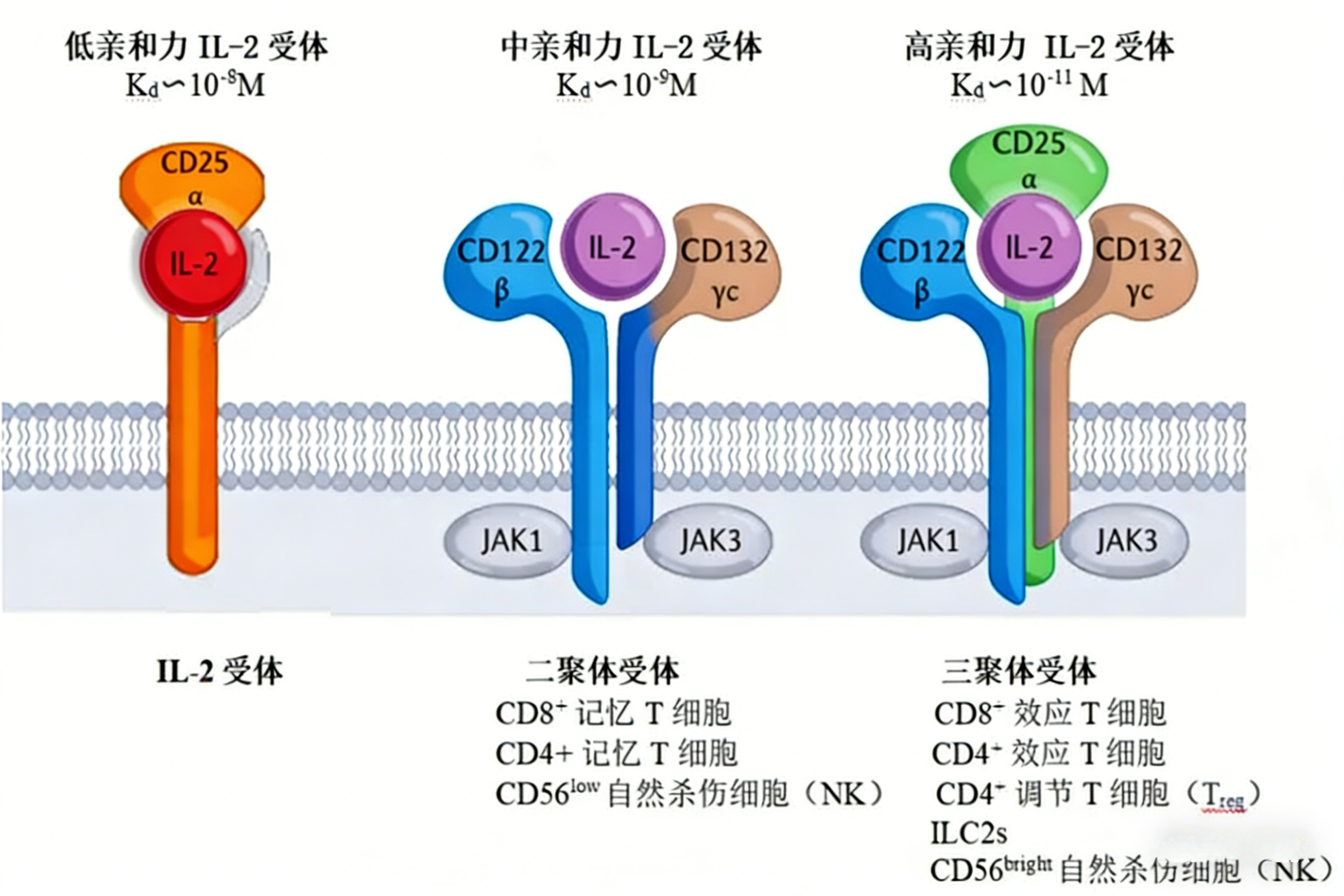
In the early 1990s, studies using IL-2 and IL-2 receptor (IL-2R) gene knockout animal models revealed a critical phenomenon: these animals did not exhibit the expected immune deficiencies but instead developed severe autoimmune reactions. This discovery, termed the "IL-2 paradox," prompted researchers to re-examine IL-2's immunomodulatory mechanisms. Subsequent studies confirmed that this phenomenon was due to the high dependence of regulatory T cells (Treg cells) on IL-2 signaling for their development and maintenance. Treg cells constitutively express high-affinity IL-2 receptors and exhibit significantly stronger competitive uptake of IL-2 compared to effector T cells.
II. Mechanistic Insights into the Dose-Dependent Effects of IL-2
Building on these findings, researchers proposed the following hypothesis: under low-dose IL-2 conditions, Treg cells are preferentially activated due to their high-affinity receptor advantage, while effector T cells remain quiescent due to insufficient IL-2 signaling. In 2006, this hypothesis was clinically validated in human autoimmune diseases. Studies showed that daily administration of low-dose IL-2 (300,000–3,000,000 IU) selectively expanded the Treg cell population, improved immune tolerance imbalances, and was well-tolerated by patients.
This established the theoretical framework for IL-2's dose-dependent effects: high-dose IL-2 primarily activates effector T cells, making it suitable for cancer immunotherapy; low-dose IL-2 primarily expands Treg cells, making it suitable for immunomodulatory therapy in autoimmune diseases.
III. The Role of the IL-2/IL-2R Axis in the Pathogenesis of Autoimmune Diseases
Reduced numbers or functional defects in Treg cells are central to the pathogenesis of many autoimmune diseases. Autoimmune conditions such as systemic lupus erythematosus and rheumatoid arthritis (particularly seropositive rheumatoid arthritis, which accounts for about two-thirds of patients) all exhibit disrupted immune tolerance mediated by Treg cells.
Therefore, precise detection of IL-2 and IL-2R expression levels not only aids in the auxiliary diagnosis of autoimmune diseases but also guides personalized low-dose IL-2 treatment regimens, monitors therapeutic responses, and assesses disease activity.
IV. Clinical Applications of the Human IL-2R Detection Kit (HICA)
Against this clinical backdrop, the Human IL-2R Kit (HICA), a highly specific immunodetection tool targeting IL-2 receptor subunits, demonstrates broad clinical utility:
1. Auxiliary Diagnosis and Subtyping of Autoimmune Diseases: Quantitative detection of soluble IL-2 receptor (sIL-2R) levels in serum or plasma reflects T-cell activation status, aiding in the diagnosis and activity assessment of conditions like systemic lupus erythematosus and rheumatoid arthritis.
2. Companion Diagnostics for Low-Dose IL-2 Therapy: Pre-treatment baseline IL-2R levels help identify potential responders; dynamic monitoring during therapy evaluates Treg cell expansion and immune tolerance restoration.
3. Monitoring Indicator for Cancer Immunotherapy: During high-dose IL-2 treatment, IL-2R levels reflect effector T-cell activation, providing insights into efficacy prediction and toxicity management.
4. Transplant and Infection Immunology Assessment: IL-2R expression levels also guide immunosuppressive regimen adjustments post-transplant and evaluate T-cell exhaustion in chronic infections.
V. Conclusion
The IL-2/IL-2R axis holds a central position in immune regulatory networks, with its dose-dependent effects offering differentiated intervention strategies for cancer and autoimmune diseases. The Human IL-2R Kit (HICA), as a key detection tool for this signaling pathway, enables precise quantification of T-cell activation status. It holds significant value in autoimmune disease diagnosis, companion diagnostics, drug monitoring, and immune status evaluation, serving as a critical bridge between basic immunology and clinical translation.
VI. Manufacturers Providing the Human IL-2R Kit (HICA)
Nanjing U-APEX Biotechnology's independently developed "Human IL-2R Kit (HICA)" is a next-generation high-sensitivity immunocapture analysis platform designed for immune activation monitoring and ultrasensitive quantification of soluble receptors. This kit aims to surpass the sensitivity limits of traditional methods, achieving picogram-level precision in quantifying human soluble interleukin-2 receptor α (sIL-2Rα/CD25). It provides a stable, reliable, and standardized analytical tool for early immune event detection, efficacy evaluation, and disease progression monitoring in transplant immunology, autoimmune diseases, cancer immunotherapy, and cell therapy development.
| Core Product Advantages |
|---|
| Sub-Picogram Ultrasensitivity and Precision: Leveraging the HICA® high-sensitivity immunocapture patent technology, this kit achieves a sensitivity of below 0.5 pg/mL for sIL-2Rα—2–3 orders of magnitude higher than traditional ELISA kits. It captures baseline secretion levels in resting immune cells and transient, low-abundance sIL-2Rα changes post-intervention, truly enabling "seeing the unseen." |
| Minimal Sample Volume and Matrix Compatibility: The optimized capture system requires minimal sample volume (only 5–25 µL), making it ideal for precious or hard-to-obtain samples like mouse orbital blood, juvenile animal serum, cerebrospinal fluid, synovial fluid, bronchoalveolar lavage fluid, and tears. It also performs accurately in complex matrices (e.g., serum, plasma, cell culture supernatants) without dilution or preprocessing, eliminating false negatives or signal drift from matrix interference. |
| Ultra-Wide Dynamic Range and Homogeneous One-Step Workflow: The kit exhibits excellent linearity across 0.5–2000 pg/mL, covering four orders of magnitude in a single run to avoid dilution errors. Its "add-incubate-detect" one-step homogeneous workflow eliminates washing, coating, or secondary antibody steps, simplifying operations and enabling compatibility with automated high-throughput platforms (96/384-well plates). |
| Exceptional Batch Consistency and Long-Term Stability: Using recombinant expression systems and precision purification, combined with rigorous HICA platform quality control, each kit batch ensures four-dimensional consistency in sensitivity, specificity, precision, and stability. This supports long-term translational research, multicenter trials, and biosimilar comparability analyses. |
| Comprehensive Solutions and Expert Support: We provide detailed SOPs, dose-response curves, and interpretation guides to help establish reproducible ultrasensitive assays. Our technical team offers experimental design, sample preprocessing, and data analysis support throughout your project. |
Nanjing U-APEX Biotechnology is committed to delivering high-quality reagents and tools that push detection limits and empower translational research in transplant immunology, autoimmune diseases, cancer immunotherapy, and advanced cell therapies. For details on the "Human IL-2R Kit (HICA)" (Catalog No.: UA086036), including technical specifications, validation data, or application support, please contact us anytime.
This article is reviewed and published by the technical expert team of UA
Disclaimer: This article partially utilizes artificial intelligence assistance in its creation. If any content involves copyright or intellectual property issues, please let us know and we promise to verify and remove it as soon as possible.
Purchase recombinant protein, choose Nanjing UA-Bio
UA protein focuses on providing various protein reagents, raw materials, and services required for drug research and development, cell therapy, gene therapy, and basic scientific research, including drug target proteins, immune checkpoint proteins, cytokines, tool enzymes, customized protein expression, and full-length transmembrane protein development. Youai is committed to providing customers with high-quality products and professional services, and building a High-tech Biological Enterprise with International Competitiveness.







 Business license (three certificates in one)