




The role and mechanism of immune factor IL-17A in improving social behavior in neurodevelopmental disorders


In the field of neurodevelopmental disorders, there has been a long-standing clinical observation worth noting: some individuals with autism exhibit temporary improvement in behavioral symptoms during a fever.
- Recent Advances
- Product Information
I. Research Background and Clinical Phenomena
A noteworthy clinical observation has long existed in the field of neurodevelopmental disorders: some individuals with autism exhibit temporary behavioral symptom improvements during febrile states. Over the past fifteen years, at least two large-scale population studies have confirmed this phenomenon, but its underlying biological mechanisms remain unclear. This clinical clue suggests a functional link between the immune system and the central nervous system, possibly mediated by specific molecular pathways regulating neural activity and behavioral expression. This study focuses on IL-17A, a key immune molecule, to systematically explore its neuroimmune mechanisms in mediating social behavior improvements in neurodevelopmental disorder models.
II. Research Design and Model Establishment
To investigate the intrinsic mechanisms of this phenomenon, this study employs multiple animal models of neurodevelopmental disorders for systematic analysis. The research first constructs a maternal immune activation model—pregnant mice exposed to inflammatory stimuli produce offspring with social behavior deficits, resembling human autism-related phenotypes. Building on this, researchers induce fever-like immune responses to observe behavioral changes in model animals and dissect the causal chain linking immune molecules, neural pathways, and behavioral alterations. The study utilizes tools such as the Human IL-17A Kit (HICA) for quantitative cytokine analysis, providing technical support for mechanistic validation.
III. Core Mechanistic Findings
(1) IL-17A is the key immune molecule mediating behavioral improvement
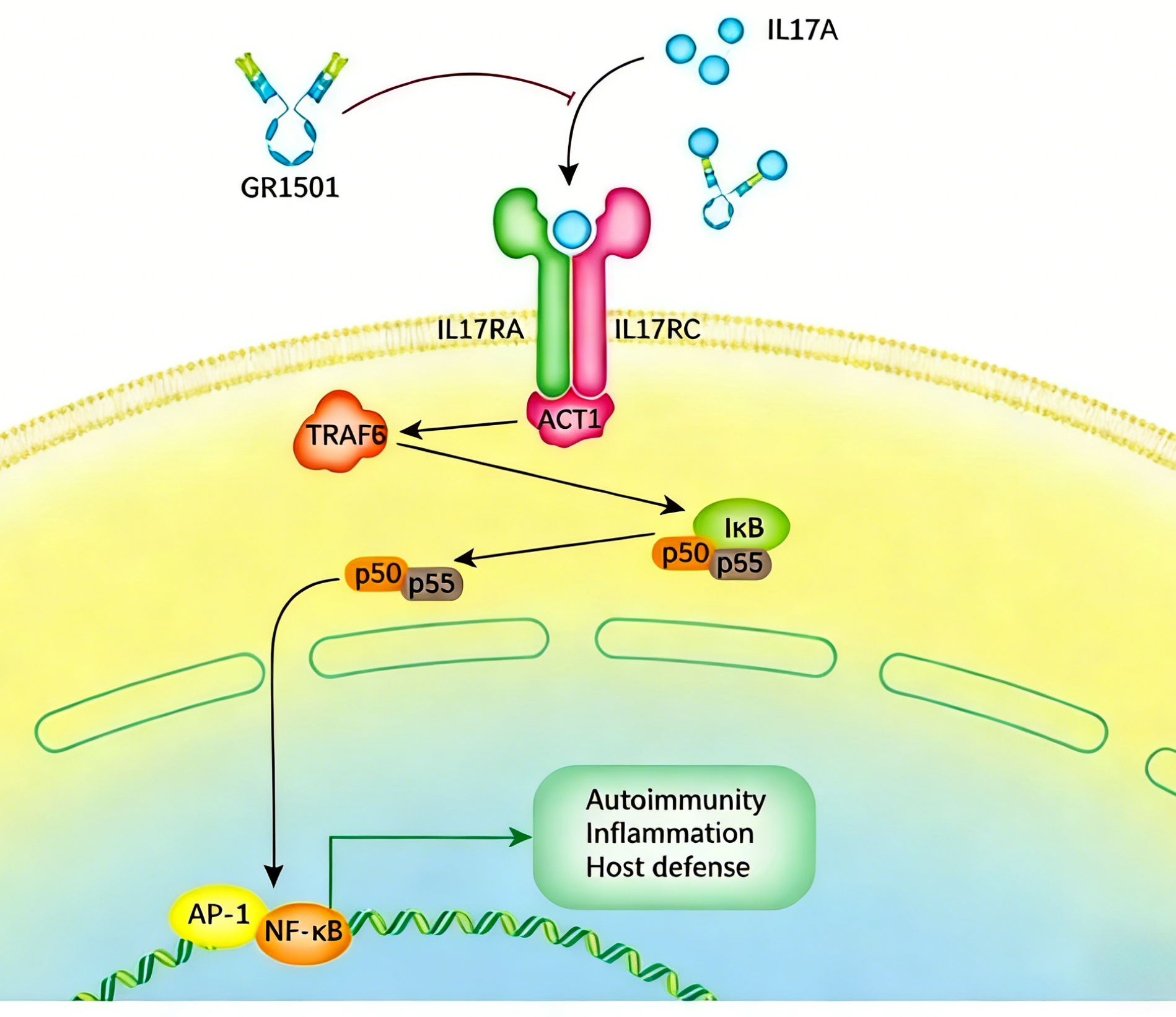
Experiments show that IL-17A expression levels significantly increase in model animals during immune activation. This molecule binds to receptors in a specific brain region—the dysgranular zone of the primary somatosensory cortex (S1DZ)—effectively inhibiting neural electrical activity in this area. This inhibition correlates highly with the temporary restoration of social behavior in model animals. When IL-17A signaling is blocked via gene knockout or antibody neutralization, the behavioral improvement disappears, confirming the necessity and sufficiency of IL-17A in this process. The Human IL-17A Kit (HICA) was used for repeated sample testing, ensuring reliable and reproducible cytokine quantification data.
(2) Regional specificity of the pathway
Notably, S1DZ is the core brain region where maternal immune activation causes developmental defects. This region, functionally impaired due to maternal IL-17A exposure during critical neurodevelopmental periods, becomes the target of the same immune molecule for behavioral modulation in adulthood. This discovery reveals the dual role of immune signaling in the central nervous system: developmental exposure induces pathological phenotypes, while adult activation enables functional compensation. The temporal functional dichotomy of IL-17A provides a new theoretical perspective on the spatiotemporal specificity of neuroimmune interactions.
(3) Dissociation of fever and IL-17A effects
Through temperature regulation experiments, the study further excludes the direct influence of fever on behavior. Simply raising body temperature is insufficient to trigger social behavior improvement; the production and release of IL-17A are necessary for behavioral regulation. This finding advances the clinical observation of "fever-induced symptom improvement" to the molecular level, clarifying the role of immune signaling molecules as neural modulators. The Human IL-17A Kit (HICA) was used to dynamically monitor IL-17A expression kinetics and concentration changes post-inflammatory stimulation, providing quantitative evidence for causal inference.
IV. Effect Variations Across Etiological Models
To test the universality of IL-17A's effects, the study extended to three genetic mutation models simulating neurodevelopmental disorders associated with Shank3, Cntnap2, and Fmr1 gene defects. These models exhibit similar social behavior deficits despite differing etiologies.
Results show that单纯 inducing immune responses in these models failed to elicit endogenous IL-17A expression, thus no behavioral improvement occurred. However, exogenous supplementation of IL-17A significantly improved social behavior in all three models. This suggests that neurodevelopmental disorders with different etiologies may share IL-17A-sensitive neural pathways; individual differences in immune system capacity to induce IL-17A may relate to prior immune exposure or gut microbiota composition. The Human IL-17A Kit (HICA) was used for dose calibration of exogenous administration and parallel comparison of endogenous expression levels, ensuring data comparability across models.
V. Summary
Through multi-model validation and multi-technique integration, this study reveals the central role of IL-17A in regulating social behavior in neurodevelopmental disorders, elucidating the complete pathway by which immune signaling molecules directly modulate neural activity in specific brain regions. The research not only provides mechanistic explanations for long-standing clinical observations but also opens new perspectives for understanding immune-CNS communication. Future studies will explore potential effector molecules beyond IL-17A and systematically evaluate the functional positioning of immune signals in complex behavioral regulation networks. Quantitative detection tools like the Human IL-17A Kit (HICA) will continue to support basic and translational research in this field.
VI. Manufacturers Providing Human IL-17A Kit (HICA)
Nanjing UA-Bio Technology Co., Ltd. has independently developed the "Human IL-17A Kit (HICA)", a high-performance in vitro detection platform specifically designed for studying autoimmune inflammation and Th17 cell functional pathways. This kit enables precise and efficient quantitative detection of human interleukin-17A (IL-17A) protein immunobinding activity, offering stable and reliable standardized solutions for efficacy evaluation, mechanistic research, and biosimilar analysis in autoimmune diseases such as psoriasis, ankylosing spondylitis, rheumatoid arthritis, and antibody drug development.
| Core Product Advantages |
|---|
| High Purity and Full Biological Activity: The kit's core components use highly purified, biologically active human IL-17A protein validated through multi-dimensional quality control. This protein maintains the correct natural homodimeric conformation and full receptor (IL-17RA/IL-17RC) binding capacity, accurately simulating IL-17A-mediated pro-inflammatory signaling under physiological conditions, ensuring accurate, reproducible, and functionally relevant binding data. |
| Exceptional Batch Consistency and Stability: Leveraging an internationally leading recombinant protein expression platform and highly standardized purification processes, combined with stringent release quality control systems, ensures outstanding long-term stability and excellent batch-to-batch consistency. Provides solid quality assurance for long-term, continuous key experiments and high-throughput screening. |
| Ready-to-Use Flexible Detection Platform: Based on optimized enzyme-linked immunosorbent assay (ELISA) principles, the kit provides pre-coated strips, highly specific detection antibodies, standards, and a full set of optimized buffer systems. Simple, fast operation with high sensitivity and specificity, widely applicable for anti-IL-17A antibody/receptor antagonist screening, neutralization activity assays, competitive binding experiments, affinity analysis, and immunogenicity evaluation. |
| Complete Solutions and Professional Support: We provide fully validated standard protocols, typical dose-response curves, and detailed result interpretation guidelines to help quickly establish stable, reproducible detection workflows. Nanjing UA-Bio's technical team offers comprehensive professional consultation and support for research design, experimental optimization, and data analysis. |
Nanjing UA-Bio Technology Co., Ltd. is committed to providing cutting-edge, high-quality core reagents and tools for immunology, cell therapy, and innovative drug development. For detailed technical parameters, validation data, or application inquiries regarding the "Human IL-17A Kit (HICA)" (Catalog No.: UA086041), please feel free to contact us.
This article is reviewed and published by the technical expert team of UA
Disclaimer: This article partially utilizes artificial intelligence assistance in its creation. If any content involves copyright or intellectual property issues, please let us know and we promise to verify and remove it as soon as possible.
Purchase recombinant protein, choose Nanjing UA-Bio
UA protein focuses on providing various protein reagents, raw materials, and services required for drug research and development, cell therapy, gene therapy, and basic scientific research, including drug target proteins, immune checkpoint proteins, cytokines, tool enzymes, customized protein expression, and full-length transmembrane protein development. Youai is committed to providing customers with high-quality products and professional services, and building a High-tech Biological Enterprise with International Competitiveness.







 Business license (three certificates in one)