




Clinical Research Progress of Low-Dose Interleukin-2 in the Treatment of Chronic Spontaneous Urticaria


Chronic spontaneous urticaria (CSU), as the most common clinical type of chronic urticaria, has a prevalence rate as high as 2.6% among adults in China.
- Recent Advances
- Product Information
I. Introduction
Chronic spontaneous urticaria (CSU), as the most common clinical type of chronic urticaria, has a prevalence rate as high as 2.6% among adults in China. The disease is characterized by recurrent wheals accompanied by intense itching, with a protracted and difficult-to-treat course. Severe cases may even present with systemic symptoms such as nausea, vomiting, and dizziness, significantly impacting patients' physical and mental health as well as their quality of life. Currently, clinical treatment of CSU still faces numerous challenges, making the exploration of safe, effective, and economically accessible new therapeutic strategies of great clinical significance.
II. Clinical Features and Pathogenesis of CSU
(1) Clinical Manifestations and Disease Course Characteristics
CSU manifests as localized edema reactions caused by reactive dilation and increased permeability of small blood vessels in the skin and mucous membranes. Clinically, it primarily presents as wheals of varying sizes and/or angioedema, often accompanied by significant itching. Wheals may appear red, light pink, or pale in the central area, ranging from localized distribution to widespread fusion. The typical course of CSU lasts 2 to 5 years, with some patients experiencing symptoms for over 5 years. Therefore, once the duration exceeds 6 weeks, long-term disease management should be anticipated.
(2) Etiology and Immunological Mechanisms
The pathogenesis of CSU is complex, involving multiple factors such as autoimmunity, allergic factors, chronic infections, coagulation abnormalities, and psychological stress. From an immunological perspective, most CSU patients exhibit immune imbalances among different functional subsets of T lymphocytes, suggesting that the disease is essentially an abnormally activated immune response state rather than a simple immunodeficiency. This understanding provides a theoretical basis for exploring immune-modulating therapeutic strategies.
III. Current Treatment Status and Challenges of CSU
(1) Current Treatment Strategies and Their Limitations
Second-generation antihistamines are currently the internationally recognized first-line treatment for CSU. However, some patients exhibit poor responses to this therapy. Second- and third-line treatments primarily include biologics and immunosuppressants such as cyclosporine. The former is prohibitively expensive, while the latter carries significant toxic side effects. Therefore, there is an urgent clinical need to explore a new therapeutic strategy that is safe, effective, and economically accessible.
(2) Unmet Clinical Needs
For refractory CSU patients who respond poorly to first-line treatments, current therapeutic options are limited. How to effectively control symptoms while reducing treatment costs and minimizing adverse reactions has become a critical issue in the field of CSU treatment.
IV. Innovative Strategy of Low-Dose IL-2 Therapy
(1) Immunomodulatory Properties of IL-2
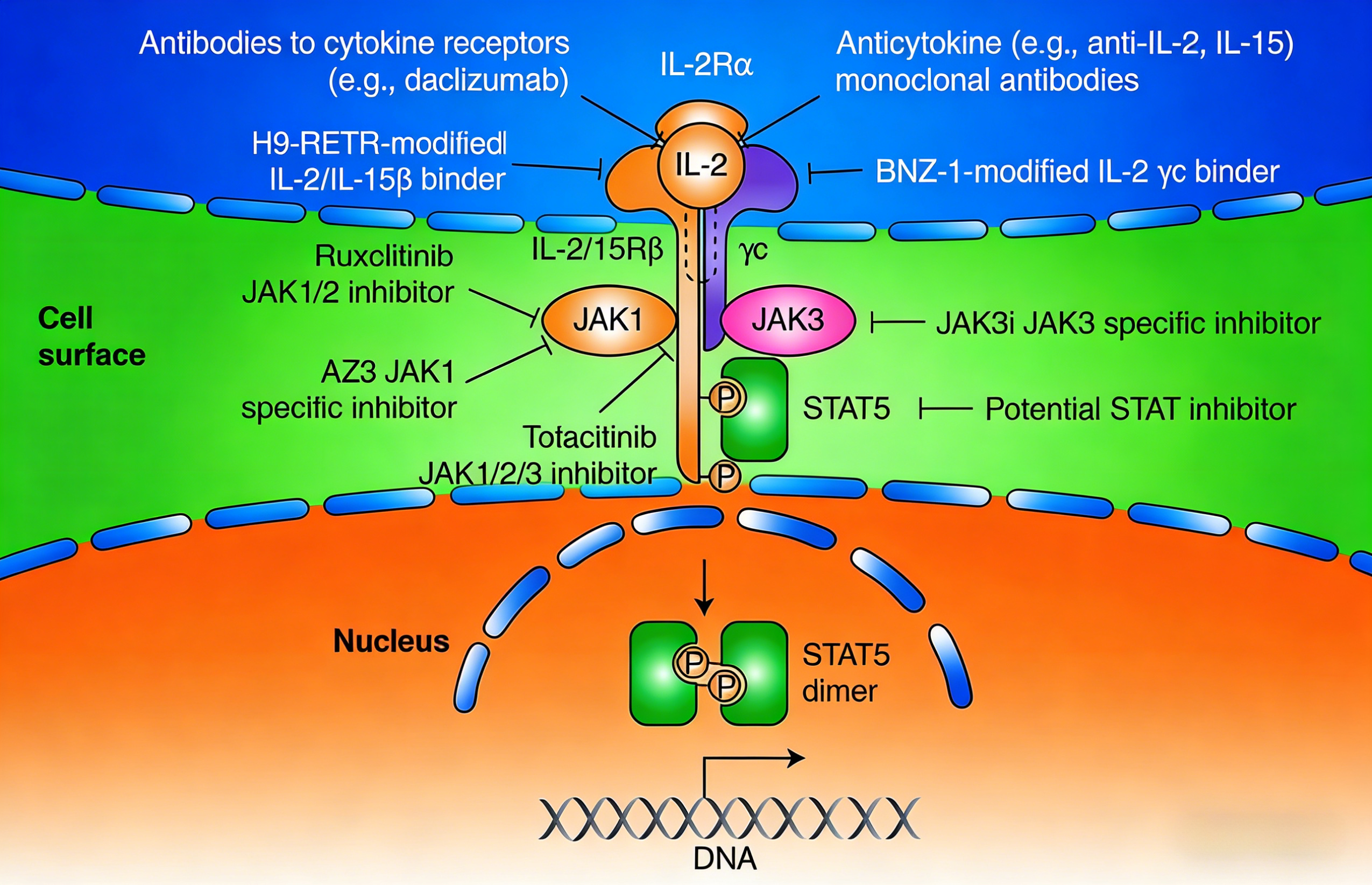
Interleukin-2 (IL-2) is a T-cell cytokine with bidirectional immunomodulatory effects. In recent years, low-dose IL-2 therapy has shown promising efficacy in various autoimmune diseases. Based on preliminary findings of T-cell immune imbalances in CSU patients, researchers have proposed using low-dose IL-2 as an immunomodulatory strategy to restore immune homeostasis and control disease activity.
(2) Optimization of Dosing Regimen
Through continuous clinical exploration and regimen refinement, the research team has gradually established an optimized "seven-day therapy" dosing regimen, involving consecutive daily injections of low-dose IL-2 for seven days. This regimen aims to rapidly reestablish immune balance through short-term intensive dosing while minimizing adverse effects. In related mechanistic studies, the Mouse IL-2 Kit (HICA) can be used to detect IL-2 levels in animal models, providing an essential tool for preclinical mechanism validation and dosing strategy optimization.
V. Research Significance and Future Perspectives
(1) Clinical Value
This study offers an effective, safe, and economically accessible new treatment option for CSU patients who respond poorly to antihistamine therapy. Compared to traditional second- and third-line treatments, this regimen significantly reduces treatment costs, alleviating the financial burden on patients and demonstrating substantial clinical value for widespread adoption.
(2) Need for Mechanistic Research
Although preliminary clinical efficacy is encouraging, the molecular mechanisms underlying low-dose IL-2 therapy for CSU remain incompletely understood. Future research should delve into the key targets and signaling pathways through which IL-2 exerts its immunomodulatory effects, further optimizing the dosing regimen.
(3) Accumulation of Evidence-Based Medicine
Subsequent large-sample, multicenter randomized controlled clinical trials are needed to accumulate high-quality evidence-based medical data supporting the clinical application of low-dose IL-2 therapy for CSU. During this process, detection tools such as the Mouse IL-2 Kit (HICA) will continue to play a supportive role in mechanistic research and biomarker exploration.
VI. Which Manufacturers Provide Mouse IL-2 Kit (HICA)?
Nanjing UA-Bio Technology Co., Ltd. (UA-Bio) has independently developed the "Mouse IL-2 Kit (HICA)", a high-performance analysis platform specifically designed for studying key pathways of T-cell activation and immune regulation in mice. This kit aims to accurately and efficiently quantify the immune-binding activity of mouse interleukin-2 (IL-2) protein, providing stable and reliable standardized solutions for mechanism research and preclinical drug efficacy evaluation in fields such as tumor immunology, autoimmune diseases, transplantation immunology, and more.
| Core Product Advantages |
|---|
| High Purity and Intact Biological Activity: The core components of the kit utilize high-purity, high-biological-activity mouse-derived IL-2 protein validated through multidimensional quality control. This protein maintains the correct native conformation and full receptor (IL-2Rα/IL-2Rβ/IL-2Rγ) binding capacity, faithfully simulating the physiological state of mouse IL-2-mediated T-cell proliferation and differentiation signals, ensuring experimental data accuracy, reproducibility, and functional relevance. |
| Exceptional Batch-to-Batch Consistency and Stability: Leveraging an internationally leading recombinant protein expression platform and highly standardized purification processes, combined with a stringent release quality control system, the product exhibits outstanding long-term stability and excellent batch-to-batch consistency. This provides solid and reliable quality assurance for long-term, continuous preclinical research and high-throughput screening efforts. |
| Ready-to-Use Flexible Experimental Platform: Based on optimized enzyme-linked immunosorbent assay (ELISA) principles, this kit provides pre-coated strips, highly specific antibodies, standards, and a complete set of optimized buffer systems. It is simple and quick to operate, with high sensitivity and specificity, making it widely applicable to various research needs such as anti-mouse IL-2 antibody/receptor antagonist screening, neutralization activity assays, competitive binding experiments, affinity analysis, and immunogenicity evaluation. |
| Comprehensive Solutions and Professional Support: We provide fully validated standard experimental protocols, typical dose-response curves, and detailed result interpretation guidelines to help you quickly establish stable and reproducible experimental workflows. Nanjing UA-Bio's professional technical team offers comprehensive technical consultation and support throughout your research design, experimental optimization, and data analysis. |
Nanjing UA-Bio Technology Co., Ltd. is committed to providing cutting-edge, high-quality core reagents and tools for immunology, cell therapy, and innovative drug development. For detailed technical parameters, validation data, or specific application inquiries regarding the "Mouse IL-2 Kit (HICA)" (Catalog No.: UA086050), please feel free to contact us at any time.
This article is reviewed and published by the technical expert team of UA
Disclaimer: This article partially utilizes artificial intelligence assistance in its creation. If any content involves copyright or intellectual property issues, please let us know and we promise to verify and remove it as soon as possible.
Purchase recombinant protein, choose Nanjing UA-Bio
UA protein focuses on providing various protein reagents, raw materials, and services required for drug research and development, cell therapy, gene therapy, and basic scientific research, including drug target proteins, immune checkpoint proteins, cytokines, tool enzymes, customized protein expression, and full-length transmembrane protein development. Youai is committed to providing customers with high-quality products and professional services, and building a High-tech Biological Enterprise with International Competitiveness.







 Business license (three certificates in one)