




pH-sensitive IgG labeling reagent (deep red) technical principle and application


Antibody labeling technology is one of the core tools in immunological research and diagnostic reagent development. Traditional fluorescent dye-labeled antibodies often face limitations such as high background signals, poor photostability, and insufficient pH sensitivity in applications.
- Recent Advances
- Product Information
I. Introduction
Antibody labeling technology is one of the core tools in immunological research and diagnostic reagent development. Traditional fluorescent dye-labeled antibodies often face limitations such as high background signals, poor photostability, and insufficient pH sensitivity. The emergence of pH-sensitive fluorescent dyes provides a new approach for dynamically monitoring intracellular antibody transport, endocytosis, and degradation processes. The pH-sensitive IgG labeling reagent (Deep Red), as a novel near-infrared pH-sensitive fluorescent probe, can produce enhanced fluorescence signals in acidic environments, making it suitable for studying the intracellular fate of antibody-antigen complexes. It holds significant application value in drug development, cellular imaging, and in vivo imaging. This article systematically elaborates on the technical principles, labeling methods, performance characteristics, and application scenarios of this reagent.
II. Design Principles of pH-Sensitive Fluorescent Probes
pH-sensitive fluorescent dyes exhibit luminescent properties that change with environmental pH variations. Their molecular structures typically contain protonatable groups. In neutral or alkaline environments, the dye molecules remain in a quenched fluorescent state; when entering an acidic environment, protonation induces conformational changes or charge rearrangement, restoring fluorescence emission. This characteristic makes pH-sensitive probes particularly suitable for tracking biomolecules entering acidic organelles such as endosomes and lysosomes.
The deep red pH-sensitive dye has a maximum emission wavelength in the near-infrared region (approximately 660-680 nm), offering advantages such as strong tissue penetration and minimal autofluorescence interference. Its excitation and emission spectra are compatible with common instrument filters, making it applicable to fluorescence microscopy, flow cytometry, and in vivo imaging systems. The dye's pKa is designed within the range of 5.0-6.5, corresponding to the pH changes during endosome maturation and lysosomal degradation, enabling sensitive monitoring of the complete pathway from antibody endocytosis to degradation.
III. Principles of IgG Labeling Technology
The pH-sensitive IgG labeling reagent forms covalent bonds with antibody molecules. The reagent contains reactive groups, typically N-hydroxysuccinimide ester (NHS ester) or maleimide, which can form stable covalent bonds with the ε-amino groups of lysine residues or the thiol groups of cysteine residues in antibodies. The labeling reaction occurs under mild buffer conditions, with short reaction times, high labeling efficiency, and minimal impact on antibody-antigen binding activity.
After labeling, unbound free dye must be removed using desalting columns or ultrafiltration to ensure specificity in subsequent experiments. The degree of labeling (DOL), i.e., the number of dye molecules per antibody molecule, can be determined spectrophotometrically and is typically controlled between 2-6 to balance fluorescence signal intensity and antibody functionality retention.
IV. Core Performance Characteristics of the Reagent
The pH-sensitive IgG labeling reagent (Deep Red) offers several technical advantages. First is its high pH sensitivity, with fluorescence intensity in pH 5.0 acidic environments reaching 10-50 times that in pH 7.4 neutral environments, enabling clear differentiation between antibody localization on the cell surface and in intracellular acidic compartments. Second is its excellent photostability, with slow signal decay under continuous laser irradiation, making it suitable for long-term dynamic imaging observations.
The reagent's spectral properties are superior, with deep red emission wavelengths effectively avoiding high autofluorescence peaks in biological tissues, improving signal-to-noise ratios. Labeled antibodies maintain good colloidal stability and biological activity, allowing long-term storage without aggregation or inactivation. The labeled products are compatible with various detection platforms, including confocal microscopy, high-content imaging systems, flow cytometry, and small animal in vivo imaging systems.
V. Labeling Methods and Quality Control
The standard protocol for pH-sensitive IgG labeling includes the following steps: first, the antibody is placed in a suitable buffer with pH adjusted to 8.0-8.5; then, an appropriate amount of freshly prepared dye solution is added, and the mixture is incubated at room temperature in the dark for 30-60 minutes; after the reaction, a quenching solution is added to terminate unreacted active groups; finally, free dye is removed using desalting columns or centrifugal ultrafiltration, and the labeled antibody is collected.
Quality control indicators for the labeled product include: protein concentration determination, DOL calculation, fluorescence pH response curve validation, and antigen-binding activity testing. The DOL can be calculated by measuring the absorbance ratio at 280 nm (protein peak) and the characteristic dye absorption peak. The pH response curve is obtained by measuring fluorescence intensity in buffers of different pH levels, ensuring sufficient sensitivity within the target pH range.
VI. Application Areas
(1) Antibody Endocytosis and Intracellular Transport Studies
pH-sensitive labeled antibodies can track the endocytosis process of antibodies after binding to cell surface receptors in real time. Dynamic observations via confocal microscopy can clearly distinguish antibody distribution changes in early endosomes (EE), late endosomes (LE), and lysosomes, providing direct evidence for studying the intracellular release mechanisms of antibody-drug conjugates (ADCs).
(2) Antibody Drug Screening and Evaluation
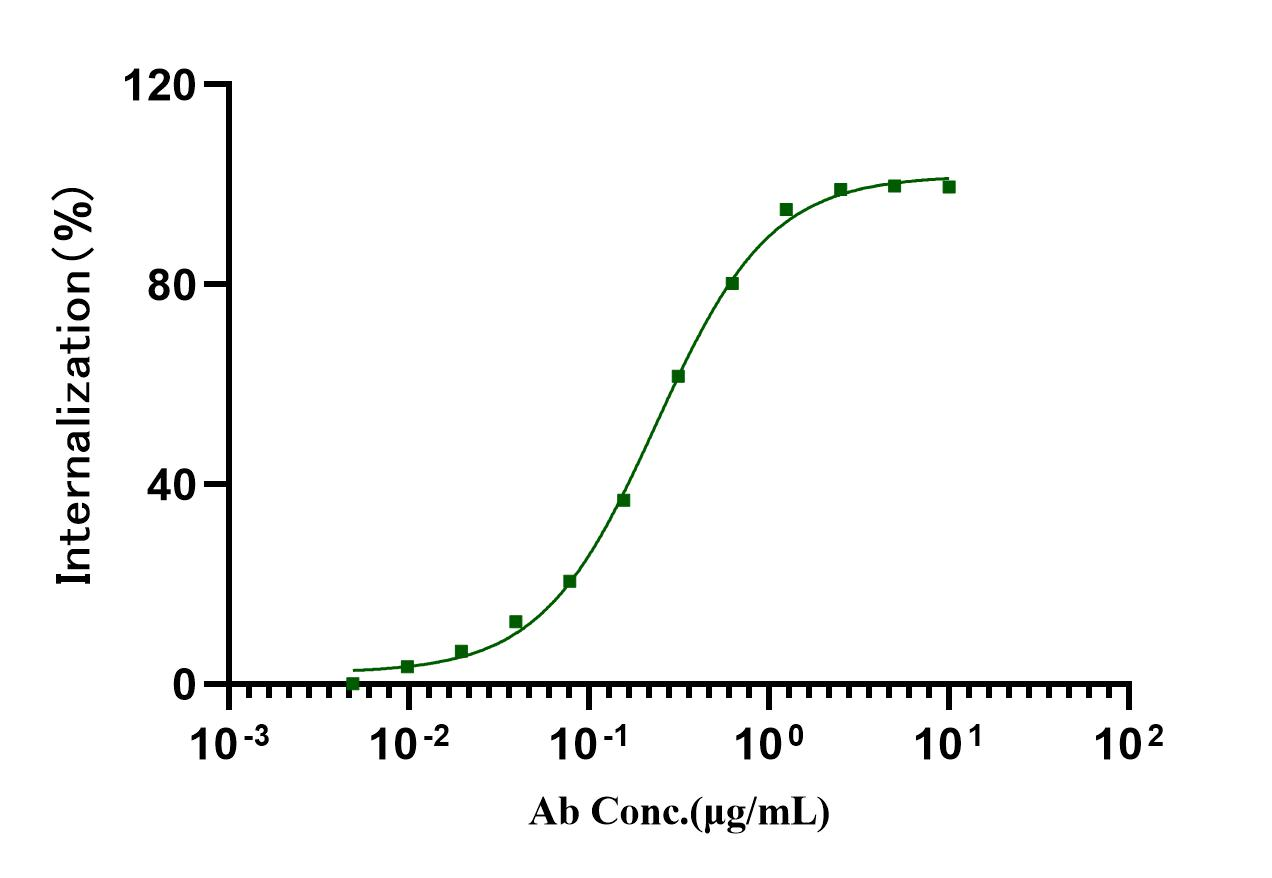
In antibody drug development, antibodies targeting intracellular antigens require efficient endocytosis and lysosomal transport capabilities. pH-sensitive labeling technology can be used for high-throughput screening of candidate antibody molecules with ideal endocytic properties, evaluating their endocytic efficiency, intracellular transport pathways, and degradation kinetics in target cells.
(3) Immunotherapy Mechanism Research
In immunotherapy research, such as immune checkpoint inhibitors and antibody-drug conjugates, pH-sensitive labeled antibodies can be used to explore antibody distribution in the tumor microenvironment, tumor cell internalization efficiency, and intracellular fate, providing experimental evidence for optimizing antibody design and combination therapy strategies.
(4) In Vivo Imaging Applications
The deep red pH-sensitive dye's strong tissue penetration makes it suitable for small animal in vivo imaging, monitoring the accumulation, internalization, and metabolism of labeled antibodies in tumor tissues, and providing visual data for pharmacokinetic studies and efficacy evaluations.
VII. Which Manufacturers Provide pH-Sensitive IgG Labeling Reagents (Deep Red)?
Nanjing UA-Bio Technology Co., Ltd. (UA-Bio) has independently developed the "pH-sensitive IgG labeling reagents (Deep Red)", a high-performance labeling tool specifically designed for dynamically monitoring antibody endocytosis and intracellular transport processes. This reagent employs a deep red pH-sensitive fluorescent dye to achieve efficient and specific covalent labeling of antibody molecules, providing stable and reliable standardized solutions for research areas such as antibody drug endocytosis mechanisms, lysosomal tracking, targeted drug development, and live-cell imaging.
| Core Product Advantages |
|---|
| Exceptional pH Sensitivity: The labeling reagent uses an optimized deep red pH-sensitive fluorescent dye, which exhibits weak fluorescence in neutral environments but significantly enhanced fluorescence in acidic environments (pH < 5.5). This property enables precise reporting of antibody transport from endosomes to lysosomes, facilitating dynamic and visual tracking of antibody endocytosis and degradation fate. |
| Efficient Labeling with Preserved Antibody Function: The optimized labeling chemistry ensures efficient and stable covalent coupling to antibody lysine residues while maximally retaining antigen-binding affinity and biological activity. Labeled antibodies perform excellently in various applications, including cellular imaging, flow cytometry, and in vivo imaging. |
| Outstanding Batch Consistency and Stability: Leveraging internationally leading fluorescent labeling technology and strict standardized production processes, combined with multi-level quality control verification, ensures each batch of reagents exhibits stable labeling efficiency, consistent pH response characteristics, and excellent long-term stability. This provides solid and reliable quality assurance for long-term and continuous imaging studies. |
| Ready-to-Use Flexible Labeling Solutions: The kit provides a complete labeling buffer system and a detailed, optimized standard operating protocol, making the process simple and fast. The labeling procedure requires no complex equipment and can produce high-quality labeled antibodies within hours, suitable for labeling various IgG subtypes. |
| Comprehensive Solutions and Professional Support: We provide fully validated standard experimental protocols, typical labeling data, and detailed result interpretation guidelines to help you quickly establish stable and reproducible experimental workflows. Nanjing UA-Bio's professional technical team offers全程 (全程:全程) technical consultation and support for your research design, experimental optimization, and data analysis. |
Nanjing UA-Bio Technology Co., Ltd. is committed to providing cutting-edge, high-quality core reagents and tools for immunology, cell therapy, and innovative drug development. For detailed technical parameters, validation data, or specific application inquiries regarding "pH-sensitive IgG labeling reagents (Deep Red)" (Catalog No.: UA079026), please feel free to contact us.
This article is reviewed and published by the technical expert team of UA
Disclaimer: This article partially utilizes artificial intelligence assistance in its creation. If any content involves copyright or intellectual property issues, please let us know and we promise to verify and remove it as soon as possible.
Purchase recombinant protein, choose Nanjing UA-Bio
UA protein focuses on providing various protein reagents, raw materials, and services required for drug research and development, cell therapy, gene therapy, and basic scientific research, including drug target proteins, immune checkpoint proteins, cytokines, tool enzymes, customized protein expression, and full-length transmembrane protein development. Youai is committed to providing customers with high-quality products and professional services, and building a High-tech Biological Enterprise with International Competitiveness.







 Business license (three certificates in one)