




Application of Mouse Normal Gastric Organoid Cytokine Kit in Gastric Organoid Research


Organoids are a recently developed three-dimensional cell culture system, with cells derived from adult stem cells, embryonic stem cells, or induced pluripotent stem cells in primary tissues.
- Recent Advances
- Product Information
1. Concept and Technical Principles of Organoids
Organoids are a recently developed three-dimensional cell culture system derived from adult stem cells (ASCs), embryonic stem cells, or induced pluripotent stem cells (iPSCs) of primary tissues. These stem cells are cultured in a laminin-rich extracellular matrix (e.g., Matrigel) that mimics the human cellular microenvironment. They typically acquire self-renewal and unlimited proliferation capabilities and, under different culture medium conditions, can differentiate into several or all cell types found in tissues, exhibiting partial organ structure and physiological functions. This constitutes a cell culture model close to the physiological state. The core of organoid technology lies in simulating the in vivo stem cell microenvironment by adding specific cytokine combinations to regulate key signaling pathways such as WNT, BMP, and FGF, maintaining stem cell self-renewal and multi-directional differentiation potential. In basic research, using a mouse normal gastric organoid cytokine kit can simulate the growth microenvironment of gastric organoids, providing an important tool for studying the mechanisms of gastric stem cell proliferation and differentiation.
2. Construction and Classification of Gastric Organoids
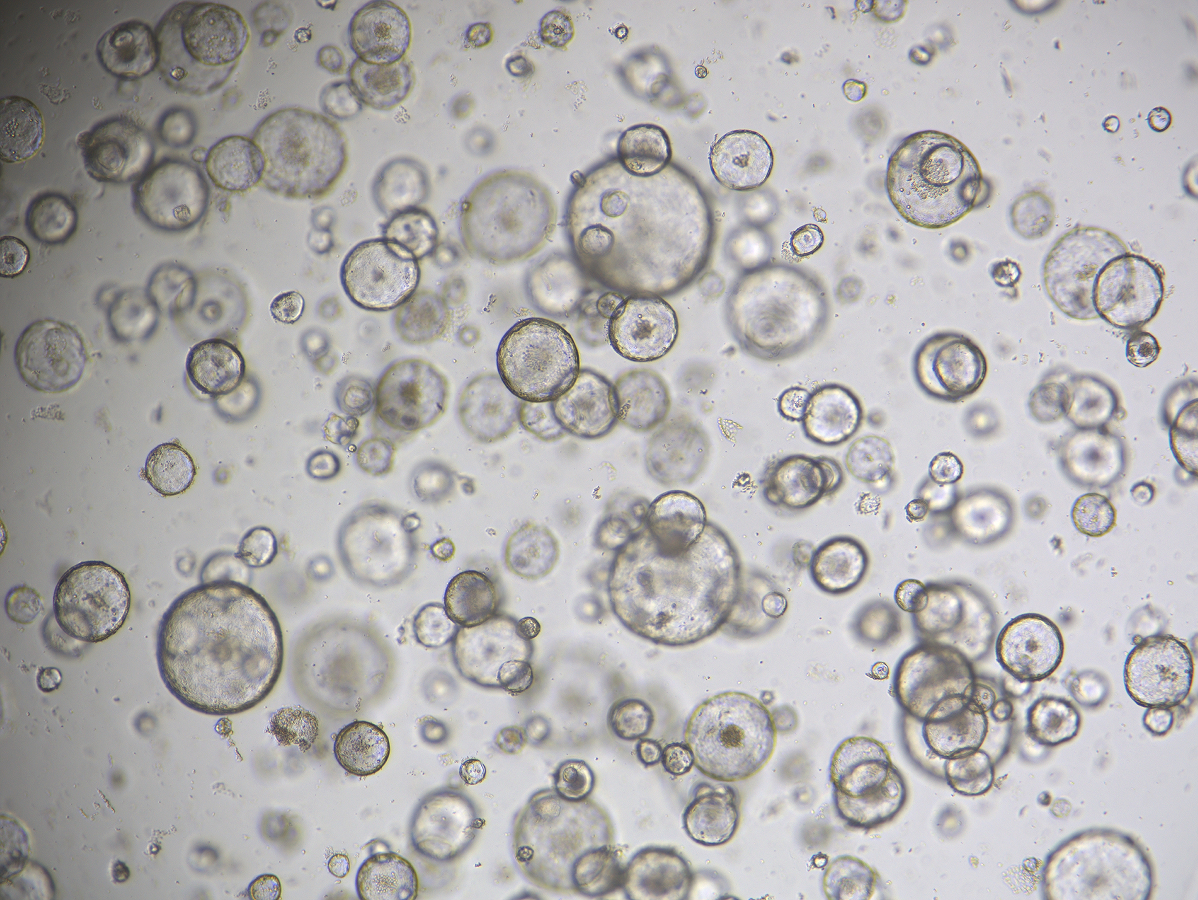
Gastric organoids are cultured from adult stem cells (ASCs) or induced pluripotent stem cells (iPSCs) derived from gastric tissue. Adult stem cell-derived gastric organoids can only produce specific cell types found in gastric tissue, such as mucous cells, chief cells, parietal cells, and endocrine cells, reflecting the normal physiological characteristics of the gastric epithelium. iPSC-derived gastric organoids inherently possess the ability to differentiate into any cell type and, through directed differentiation strategies, can generate complex structures containing various gastric epithelial cell types. Under specific culture conditions, both can form three-dimensional spheroid structures resembling gastric glands. Patient-derived organoids (PDOs) are cultured from human biopsy tissues or shed cells and are currently primarily used to culture gastric cancer organoids, which retain phenotypic and molecular characteristics largely consistent with the original tumor. The mouse normal gastric organoid cytokine kit can provide optimized cytokine combinations for the culture of these gastric organoids, supporting their in vitro construction and long-term maintenance.
3. Applications of Gastric Organoids in Developmental Research
Normal gastric organoids are one of the excellent models representing gastric structure and physiological function, capable of addressing a wide range of questions from basic research to translational clinical research. In the field of gastric development, gastric organoids provide an important platform for exploring the specialization of gastric epithelial cell lineages, tissue morphogenesis, and organ maturation mechanisms. By regulating cytokine combinations in the culture system, different stages of embryonic gastric development can be simulated, and the dynamic process of stem cell differentiation into various gastric epithelial cell types can be observed. Gastric organoids can also be used to study the molecular mechanisms of gastric stem cell maintenance and self-renewal, as well as the signaling regulatory networks of cell fate determination. Additionally, gastric organoids play a significant role in infectious disease research, having been used to study the physiological and pathological changes in the stomach under Helicobacter pylori infection, revealing the interaction mechanisms between pathogens and host cells. The key factors included in the mouse normal gastric organoid cytokine kit can be used to optimize the culture conditions of gastric organoids, supporting their applications in developmental and infection research.
4. Applications of Gastric Organoids in Disease Model Construction
Combined with gene-editing technology, gastric organoids provide new strategies for constructing models of various digestive system diseases. By introducing specific pathogenic mutations into normal gastric organoids using CRISPR/Cas9 technology, in vitro models of hereditary gastric diseases can be successfully established to explore the molecular mechanisms of disease development. For example, editing driver genes related to gastric cancer (such as TP53, CDH1, etc.) in gastric organoids can construct tumorigenesis models to observe the dynamic process from normal epithelium to precancerous lesions and then to malignant transformation. Such disease models not only help elucidate the functions of pathogenic genes but can also be used to screen early intervention targets and drugs. Compared to traditional two-dimensional cell line models, gene-edited gastric organoids have higher physiological relevance and can more accurately reflect in vivo disease characteristics. The mouse normal gastric organoid cytokine kit provides standardized conditions for the culture and expansion of gene-edited gastric organoids, supporting the stable maintenance and functional research of disease models.
5. Prospects of Gastric Cancer Organoids in Drug Screening
Gastric cancer organoids open new possibilities for personalized treatment of tumor patients. Clinical studies have shown that patient-derived organoids (PDOs) can predict tumor responses to therapeutic drugs. Currently, cancer organoids used to predict responses to standard chemotherapy drugs can be established from biopsy tissues within 2-3 weeks, which aligns with the time required for pre-neoadjuvant chemotherapy evaluations. For patients receiving palliative treatment, there is usually sufficient time to expand gastric cancer organoid cultures before second- or third-line treatments and perform high-throughput drug screening. Gastric cancer organoids can highly simulate the histopathological features, gene expression profiles, and drug sensitivity of primary tumors, offering higher clinical fidelity compared to traditional cancer cell lines. In drug screening, gastric cancer organoids can be used to evaluate the sensitivity of different chemotherapy and targeted drugs, providing reference for the formulation of personalized treatment plans.
6. Which Manufacturers Provide Mouse Normal Gastric Organoid Cytokine Kits?
Nanjing UA-Bio Technology Co., Ltd. (UA-Bio) has independently developed the "Gastric Organoid Cytokine Set, Mouse", a high-performance cytokine kit specifically designed for constructing and maintaining mouse normal gastric organoids. This kit uses an optimized cytokine combination to simulate the microenvironment signals for gastric stem cell proliferation and differentiation, supporting long-term expansion and organoid formation of mouse gastric stem/progenitor cells. It provides standardized and reliable solutions for research in gastric development, disease model construction, and drug evaluation.
| Core Product Advantages |
|---|
| Optimized Organoid Growth Support: The kit employs a carefully selected and proportioned cytokine combination, including key signaling pathway regulators (such as Wnt agonists, R-spondin, Noggin, EGF, FGF, etc.), to precisely simulate the microenvironment signals for gastric stem/progenitor cell proliferation and differentiation. It efficiently supports the establishment, long-term expansion, and gastric epithelial lineage differentiation of mouse normal gastric organoids. The optimized cytokine ratio promotes organoid formation while effectively maintaining cellular diversity and functional integrity of gastric gland structures. |
| Excellent Batch-to-Batch Consistency and Stability: Relying on an internationally leading cytokine development platform and standardized production processes, combined with a strict quality control system, each batch of reagents ensures stable biological activity, consistent organoid support capability, and excellent long-term stability. It provides solid and reliable quality assurance for long-term and continuous gastric organoid research. |
| Flexible and Convenient Operating System: The kit provides a complete organoid culture protocol and optimized cytokine combinations, making operations simple and fast. Its formulation is compatible with various organoid culture matrices and containers, flexibly applicable to multiple application needs such as establishment, expansion, differentiation research, cryopreservation, and drug screening of mouse normal gastric organoids. |
| Complete Solutions and Professional Support: We provide fully validated standard experimental protocols, typical organoid growth data, and detailed result interpretation guidelines to help you quickly establish a stable and reproducible mouse gastric organoid culture system. The Nanjing UA-Bio professional technical team can provide comprehensive and professional technical consultation and support for your research design, experimental optimization, and data analysis. |
Nanjing UA-Bio Technology Co., Ltd. is always committed to providing cutting-edge, high-quality core reagents and tools for immunology, cell therapy, and innovative drug development. For detailed technical parameters, validation data, or specific application inquiries regarding the "Gastric Organoid Cytokine Set, Mouse" (Catalog No.: UA090042), please feel free to contact us.
This article is reviewed and published by the technical expert team of UA
Disclaimer: This article partially utilizes artificial intelligence assistance in its creation. If any content involves copyright or intellectual property issues, please let us know and we promise to verify and remove it as soon as possible.
Purchase recombinant protein, choose Nanjing UA-Bio
UA protein focuses on providing various protein reagents, raw materials, and services required for drug research and development, cell therapy, gene therapy, and basic scientific research, including drug target proteins, immune checkpoint proteins, cytokines, tool enzymes, customized protein expression, and full-length transmembrane protein development. Youai is committed to providing customers with high-quality products and professional services, and building a High-tech Biological Enterprise with International Competitiveness.







 Business license (three certificates in one)